


In an age dominated by dizzying digital speeds, perpetual connectivity, and the ceaseless hum of urban life, the human spirit frequently seeks a primitive, grounding counterweight—a deep-seated urge to unplug, disconnect, and wander back into the quiet, immense sanity of the raw natural world. Responding to this profound modern yearning is the Wolf Trail, Europe’s newest and transitionally most ambitious long-distance hiking challenge designed specifically for those who wish to measure their days in heartbeats and footsteps rather than notifications and deadlines. This is not a path for the casual weekend walker or the faint-hearted; it is a monumental 3,494-kilometer pilgrimage that weaves a single, continuous line through six diverse European nations. Starting at the windswept, sandy shores of Poland’s Baltic coast, the trail curves down through Germany, cuts across Switzerland and the rugged Austrian Alps, winds through the pristine forests of Slovenia, and finally reaches its dramatic end at the sun-drenched, historic harbor of Trieste, Italy. To truly understand the physical grit required for this trek, one must grasp its staggering topography: hikers will face a cumulative elevation gain of 78,400 meters, which is the mathematical equivalent of summiting Mount Everest approximately nine times over from sea level. Spanning four to six months of continuous travel, the Wolf Trail represents the ultimate slow-travel adventure, inviting modern nomads to witness the shifting cultures, languages, and ecosystems of the European continent at the remarkably intimate pace of a human footprint.
Committing to a journey of this epic scale requires a major psychological and emotional transformation, as the backpacker gradually sheds their identity as a temporary tourist and becomes a permanent citizen of the trail. The physical hardships are immediately apparent—relentless joint fatigue, the slow formation and toughening of blisters, the constant burn of climbing muscles, and the daily reality of carrying one’s entire earthly existence in a single backpack. However, experienced long-distance hikers will tell you that the mental terrain is where the true battle is won, as the initial excitement of the departure inevitably dissolves into the quiet, meditative rhythm of daily mileage. In this simplified lifestyle, the typical anxieties of modern life are stripped away, leaving only the essential, foundational concerns of survival: locating the next source of fresh drinking water, managing food rations, reading weather patterns, and seeking safe shelter before nightfall. This basic relationship with the physical world demands absolute respect for the seasons, as the window for completing the trek is strictly dictated by the volatile alpine climate. Hikers must plan their target schedule with meticulous precision; departing too early in the spring or lingering too late into the autumn exposes walkers to the severe danger of sudden high-altitude blizzards. Between October and March, the high-altitude mountain passes of Austria and Switzerland transform into beautiful but highly treacherous snow traps, meaning that success on the Wolf Trail relies on deep patience, a willingness to humble oneself before the extreme forces of nature, and the wisdom to wait out the storm.
The magnificent journey kicks off on the northern fringe of Europe, situated on the long, narrow, pine-scented sandbar of the Hel Peninsula along Poland’s dramatic Baltic coast. This initial 418-kilometer leg of the path runs west toward the historic port city of Świnoujście, offering sand-draped trails, cooling maritime breezes, and the rhythmic sound of crashing waves—a gentle, flat introduction that allows hikers to establish their steady physical rhythm before the serious climbing begins. As the Polish-German border is crossed, the landscape begins a slow, stunning metamorphosis, shifting from breezy coastal dunes into the deep, mysterious pine woodlands and rolling agricultural plateaus of Central Europe. Across a massive 1,930-kilometer section that bridges northeastern Germany, Switzerland, and the Austrian border, hikers navigate a rich tapestry of dirt paths, ancient trade routes, and pastoral countrysides. Along this sprawling midsection, the trail passes closely by historic, cobblestone cities like Rostock, where medieval architecture, lively taverns, and local markets provide a temporary, comforting taste of civilization before the path pulls the walker back into the tranquil silence of the woods. This slow physical transition provides hikers with a front-row seat to the beautiful, shifting gradients of European culture, allowing them to witness how local dialects, regional food traditions, and architectural styles slowly blend into one another as they walk southward toward the mountains.
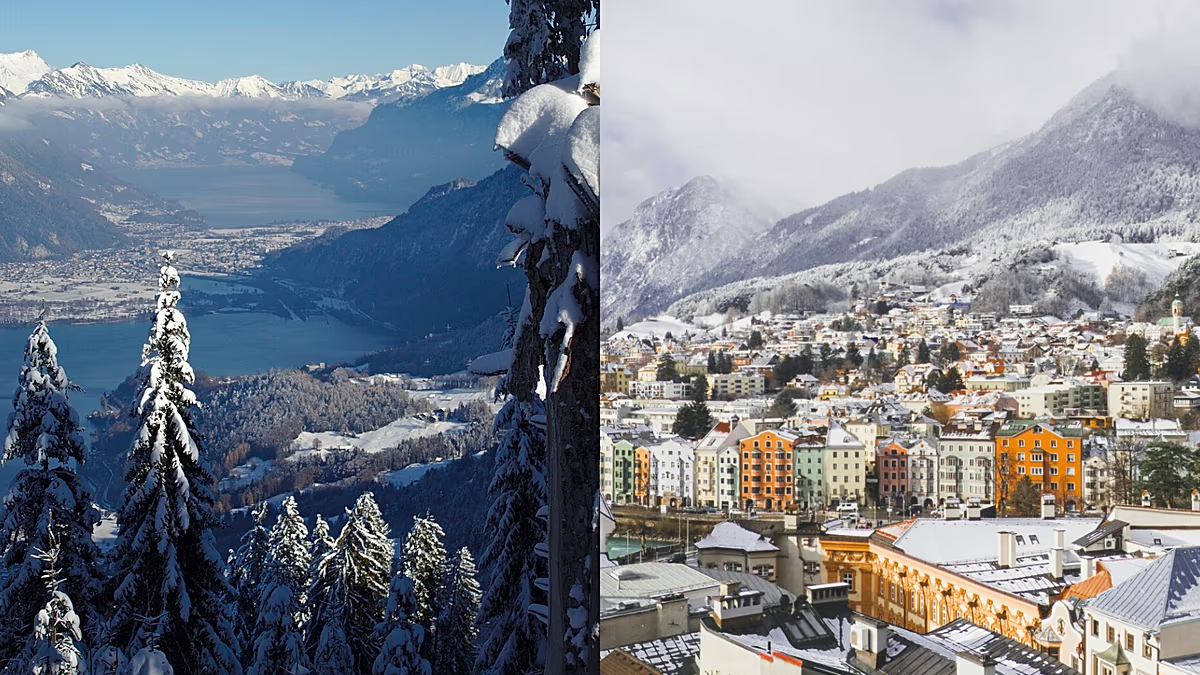
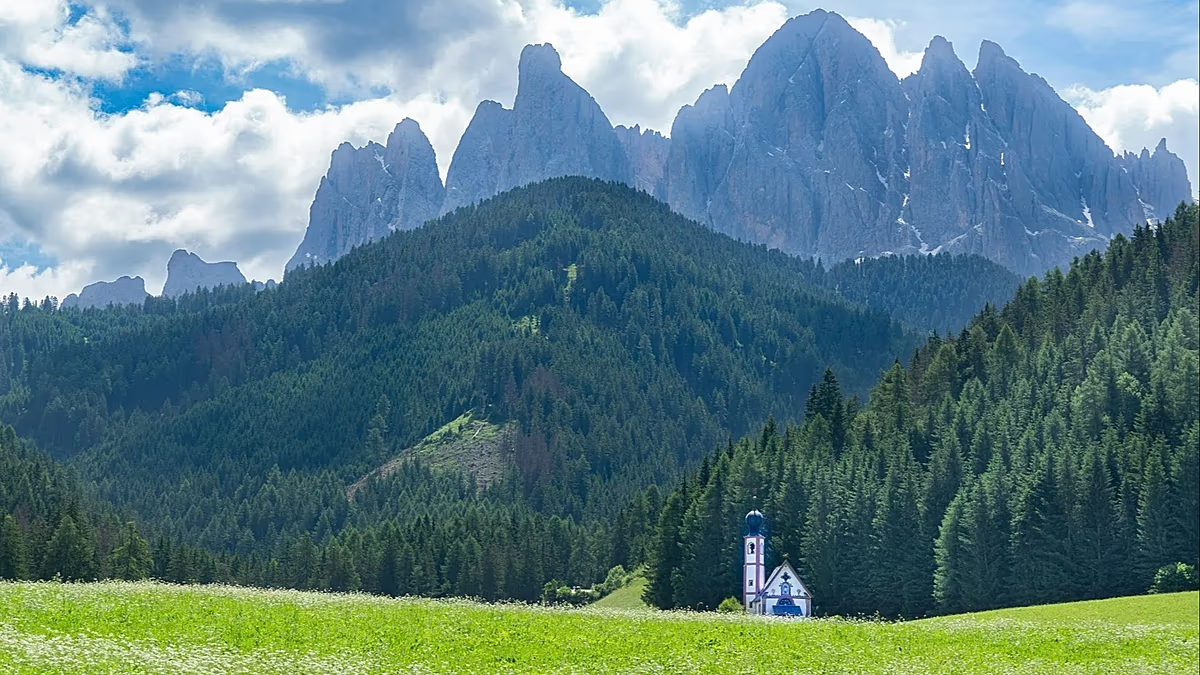
After months of traversing the flat coastlines and rolling lowlands of Central Europe, the horizon suddenly rises up to meet the hiker in a dramatic, jagged wall of limestone, pine, and ice as the path ascends into the roof of the continent. The mountainous core of the adventure begins with a demanding yet incredibly rewarding 392-kilometer stretch through the rugged Allgäu Alps, where flat paths are replaced by steep, rocky switchbacks, narrow ridgelines, and breathtaking panoramas of snow-capped peaks echoing with the distant sound of alpine cowbells. After testing their limits on these mountain passes, walkers descend into the vibrant, peak-ringed valley of Innsbruck, Austria’s historic alpine capital, which serves as a highly anticipated sanctuary for rest, hot meals, and crucial gear adjustments. Moving onward, the trail merges with the legendary Via Alpina, guiding travelers straight through the heart-stopping grandeur of the Italian Dolomites, where massive pink-hued monoliths rise like gothic cathedrals from the earth, glowing with a warm orange light in the late afternoon sun. The route then bends eastward into Slovenia, crossing into the mystical, emerald-green wilderness of Triglav National Park. Amidst crystal-clear glacial streams, roaring turquoise rivers like the Soča, and dense, ancient forests, this alpine section provides a spectacular, spiritual peak to the entire adventure, where the pure grandeur of the mountains humbles the human spirit and offers unmatched natural beauty.
While planning and executing a continuous, multi-country trek across Europe has historically been a logistical nightmare due to the continent’s highly fragmented and exceptionally strict wild camping laws, the Wolf Trail has been masterfully organized to make this journey highly practical. In countries like Germany, setting up an unauthorized tent in the forest can lead to heavy financial fines, making traditional wild backpacking a risky and stressful endeavor. To solve this problem, the innovative minds at outdoor brand Jack Wolfskin stepped forward, painstakingly mapping and linking existing historic pathways to create one continuous, legally compliant 3,500-kilometer mega-trail. Instead of requiring hikers to sleep illegally, the route is designed to connect walkers to a reliable network of overnight options, including pre-approved wilderness trekking camps featuring wooden tent platforms, rustic high-altitude mountain huts (known as Schutzhütten), and welcoming local villages offering cozy guesthouses. To ensure the trail was not just an optimistic line drawn on a digital map, but a safe, highly functional route for real-world hikers, they enlisted professional Canadian long-distance backpacker Lauren Roerick to rigorously scout and vet every single kilometer. Because of her expert, boots-on-the-ground verification, modern adventurers can set off with the comforting knowledge that the trail is safe, well-mapped, and legally secure, leaving them free to focus entirely on the mental and emotional journey.
The final chapters of this life-changing odyssey are written as the jagged alpine peaks slowly soften, giving way to rolling vineyards, warm Mediterranean scrub, and the salty breeze of the Adriatic basin. The Wolf Trail reaches its triumphant, highly emotional conclusion on the sun-baked, historic stone waterfront of Trieste, Italy, where the physical path finally meets the sea. For the traveler who began this journey on the misty, cold shores of the Baltic Sea half a year prior, standing on the edge of the warm Adriatic is a profound, sensory overload, where the clean smell of mountain pine is replaced by the lively chatter of seaside cafes, clinking espresso cups, and the gentle lapping of Mediterranean waves. Sitting on the pier with a cold, celebratory drink in hand, looking out over the water, the true depth of what has been achieved finally settles deep into the bones. This trail is far more than a physical test of cardiovascular endurance; it is a powerful, intentional protest against our hyper-accelerated, modern lifestyles, proving that the most life-altering transformations cannot be rushed or bought, but must be slowly earned step by step. When you finally arrive in Trieste, the deep lines on your face, the dirt on your pack, and the strength in your stride stand as permanent proof that you have truly lived the heart of Europe from the ground up.