

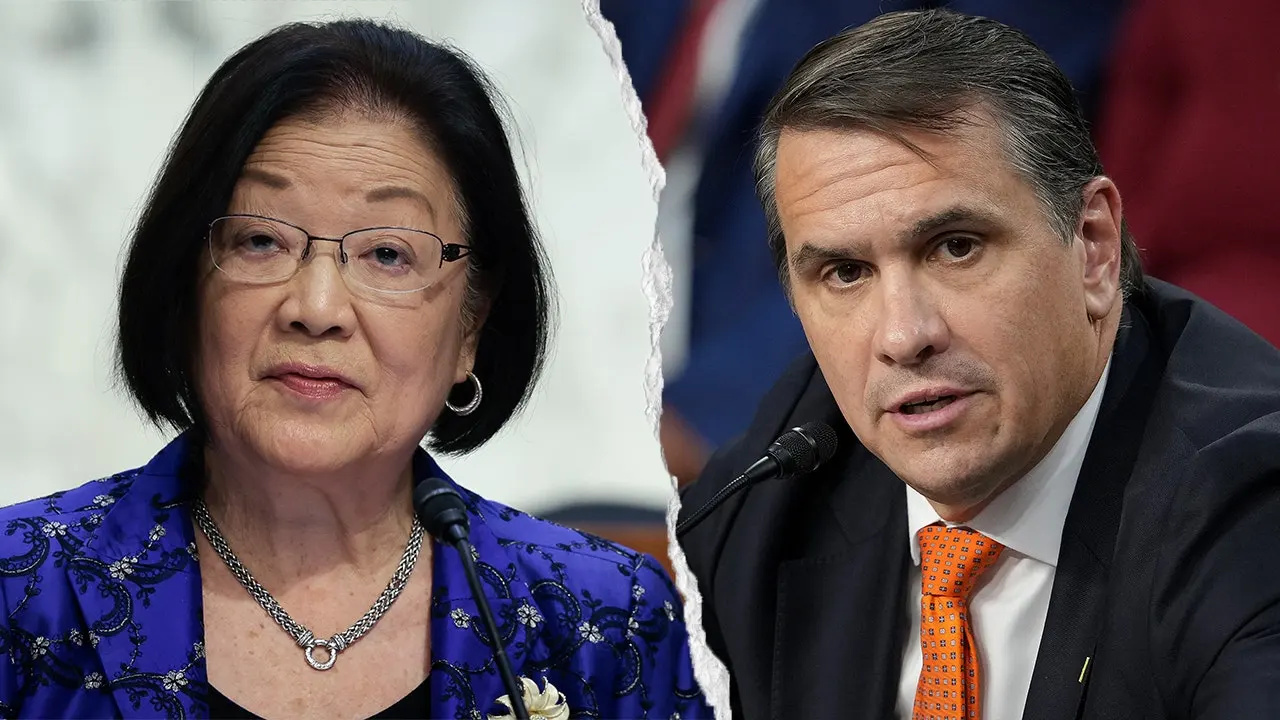
The halls of Congress are no strangers to political theater, but few traditions draw quite as much immediate controversy as Senator Mazie Hirono’s signature opening questions. On a busy Wednesday, the Hawaii Democrat once again turned heads during the confirmation proceedings for acting Attorney General Todd Blanche. Before diving into the complexities of federal law, judicial philosophy, or the Department of Justice’s future, Hirono opened her time at the microphone by asking Blanche if he had ever engaged in sexual harassment or demanded unwanted sexual favors. For Hirono, it was a routine inquiry she has championed for years; for her critics, it was an absurd display that detracted from the serious nature of the hearings.
The exchange itself was brief, straightforward, and delivered with a sense of practiced routine. Facing the nominee, Hirono asked, “Since you became a legal adult, have you ever made unwanted requests for sexual favors or committed any verbal or physical harassment or assault of a sexual nature?” Without missing a beat, Blanche calmly replied, “No, senator.” Undeterred, Hirono pressed on with her follow-up, asking if he had ever faced disciplinary action or settled any legal claims related to such behavior. Once again, Blanche offered a quiet, “No, senator,” allowing the hearing to finally move on to other matters. Though the moment lasted only a minute, its ripples were felt instantly across the political landscape.
Opposition to Hirono’s questioning was swift, particularly from conservative commentators and official channels who wasted no time taking to social media to air their grievances. The official White House Rapid Response team led the charge on X, formerly Twitter, labeling Hirono’s questioning as a “joke” and defending Blanche as an esteemed professional with an honorable record of public service. Other political observers and legal advocacy groups, such as the Republican National Lawyers Association, joined the chorus of disapproval, asking their followers if they were tired of what they described as a tired and predictable Senate Judiciary gimmick. The backlash highlighted the deep partisan divide over how nominees should be vetted.
To understand why Hirono routinely deploys this line of questioning, one has to look back to 2018, a time when the cultural landscape was being dramatically reshaped by the #MeToo and #TimesUp movements. Inspired by the courage of survivors coming forward across various industries, Hirono pledged to hold judicial and executive nominees to the highest behavioral standards. She argued that judges and high-ranking government officials hold immense, life-altering power over others, making it absolutely vital to ensure under oath that they do not have a history of sexual misconduct. Her first target was judicial nominee Kurt Engelhardt during Donald Trump’s first term, and she has since made it a personal mandate to ask the same questions of nearly every nominee who sits before her committee, including Secretary of the Interior nominee Doug Burgum last year.
While supporters view Hirono’s questions as a necessary guardrail to ensure accountability in the highest echelons of government, critics argue the practice has devolved into an empty, performative ritual. Detractors point out that asking a nominee under oath if they have ever committed a crime, without any prior evidence or allegations, is highly unusual and serves more as a political stunt than a genuine pursuit of truth. Many social media users echoed this sentiment, calling the abrupt questions out-of-place and highly repetitive. Yet, for Hirono, the consistency of the question is the entire point—establishing a baseline of accountability that treats all powerful nominees to the same standard of scrutiny.
Ultimately, the clash over Hirono’s questioning reflects a larger, ongoing debate within the Senate regarding the proper tone and scope of confirmation hearings. As nomination battles become increasingly polarized, every word spoken in the committee room is magnified and analyzed for political leverage. Todd Blanche’s hearing was just the latest arena for this cultural tug-of-war, proving that even as administrations change and new faces step up to lead the nation’s legal institutions, the deeply entrenched battles over congressional oversight, decorum, and personal conduct remain as fiercely contested as ever.