



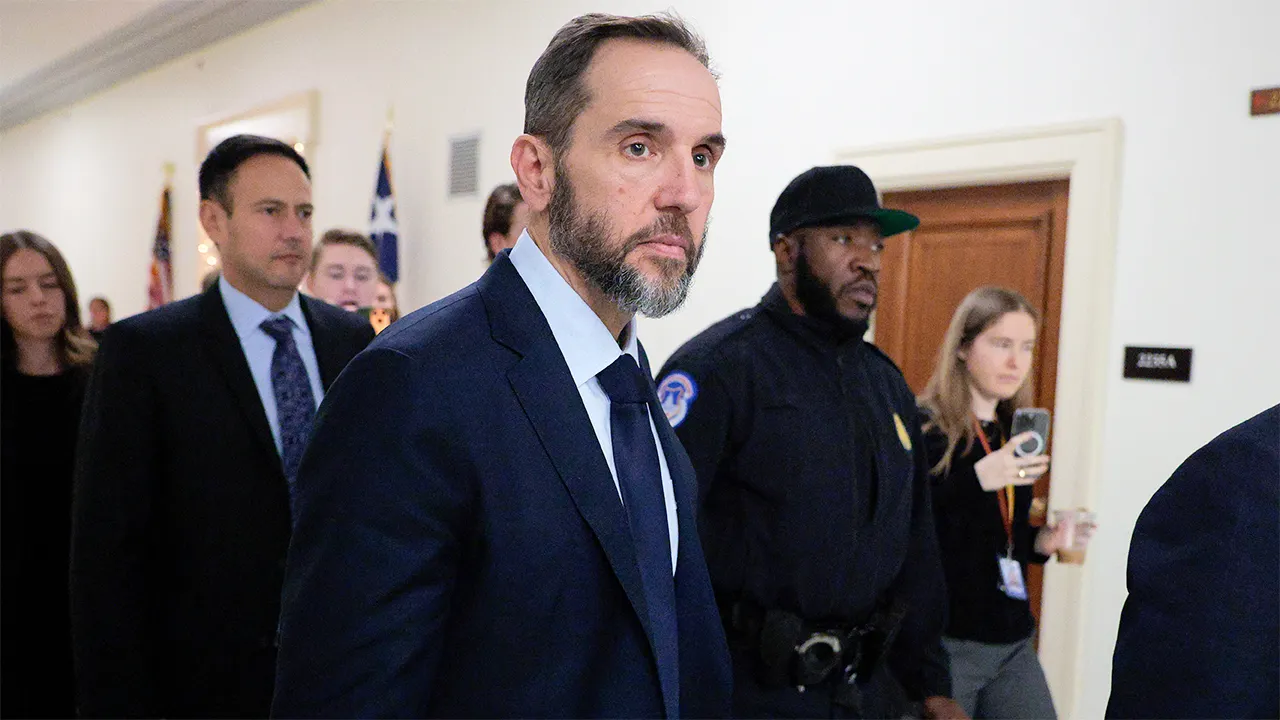
The fallout from former Special Counsel Jack Smith’s investigation into Donald Trump has reached a fever pitch following stunning revelations that his team swept up the private text messages of nearly fifty members of Congress. In what is being decried as a massive constitutional overreach, Senate Judiciary Committee Chairman Chuck Grassley and Senate Investigations Subcommittee Chairman Ron Johnson released joint findings exposing “Operation Arctic Frost”—the code name for Smith’s high-stakes probe. The Republican senators did not hold back, labeling the operation a “runaway train” of federal overreach and characterizing the systemic overstep as a political scandal “worse than Watergate.”
At the heart of the controversy is how these private communications were obtained. Typically, highly sensitive congressional communications must go through a rigorous, independent “filter team” to ensure investigators do not tread on constitutional boundaries or violate attorney-client privilege. However, Grassley and Johnson’s investigation revealed that Smith’s team bypassed these safeguarding protocols entirely, directly accessing and reviewing the personal messages of forty-four lawmakers. This move has sparked intense outrage, with targeted legislators claiming the Justice Department actively ignored its own rules to pry into the private lives and legislative work of elected officials.
The backlash from Capitol Hill was immediate and fierce, transcending typical party lines. Representative Elise Stefanik, whose messages were among those seized, declared the intrusion an unconstitutional violation of the Speech and Debate Clause, which historically shields lawmakers’ internal communications from executive branch interference. Stefanik noted she had long suspected clandestine spying on Congress, calling the newly uncovered records definitive proof of illegal surveillance. Meanwhile, Senator Josh Hawley reacted with fury, claiming the Biden-era DOJ illegally accessed his communications and demanding that those responsible for the breach face criminal prosecution. Senator Rand Paul similarly condemned the actions as a blatant abuse of power that represents the exact executive tyranny the nation’s founders warned against.
The revelation also places Jack Smith in a precarious legal and political position regarding his past testimony before Congress. Investigators pointed out glaring discrepancies in Smith’s previous depositions under oath, where he explicitly denied requesting or obtaining text messages from members of Congress. With physical records now proving otherwise, lawmakers are raising serious questions about whether the former special counsel misled Congress. Senator Grassley indicated that he fully intends to haul Smith back to Capitol Hill for a public hearing to hold him accountable for these discrepancies and the overall conduct of his team.
Importantly, the data sweep was not restricted to Donald Trump’s staunchest Republican allies. While prominent conservatives like Jim Jordan, Mike Lee, and Thomas Massie had their messages intercepted, the dragnet also captured several high-profile Democrats. Among those affected were Los Angeles Mayor Karen Bass, New Jersey Senator Cory Booker, and Representative Adam Smith, the top Democrat on the House Armed Services Committee. Because the surveillance swept up members from both sides of the aisle, Senator Grassley expressed hope that his Democratic colleagues would set aside partisan differences to defend the institutional integrity of Congress and condemn this breach of separation of powers.
Ultimately, this controversy shines a harsh spotlight on the weaponization of federal law enforcement and the fragile boundaries between branches of government. For years, critics have warned that unchecked special counsels operate with too much autonomy and too little accountability. As Congress prepares for a volatile showdown over these surveillance tactics, the focus shifts to how the Department of Justice will justify bypassing explicit legal protections. For a public already cynical about federal institutions, “Operation Arctic Frost” serves as a stark reminder of how easily the lines of constitutional authority can blur in the pursuit of political adversaries.