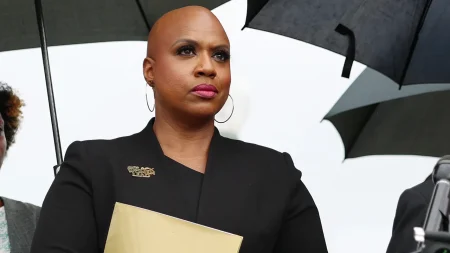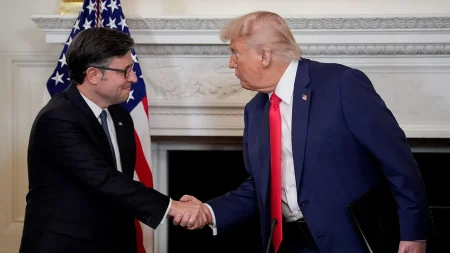



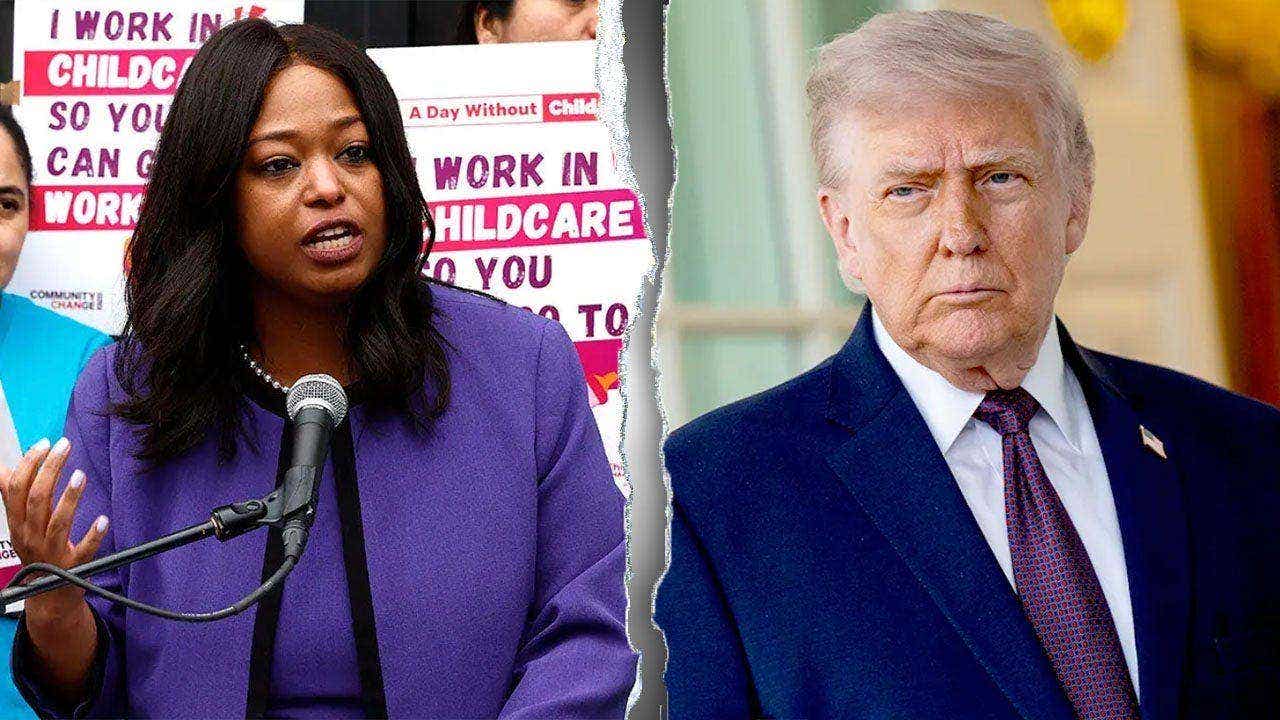
The delicate relationship between the federal government and the local citizens of Washington, D.C., has erupted into a high-stakes ideological battle following a series of sharp public statements from President Donald Trump. Targeting Washington’s progressive D.C. Council member Janeese Lewis George, Trump used his platform on Truth Social to brand her a “communist” and pledged a aggressive federal intervention to block her proposed policies. By framing her impending mayoral run as an existential threat to public safety and municipal order, Trump has signaled a major escalation in his administration’s efforts to control the local governance of the nation’s capital. This sudden visual and rhetorical clash highlights a deep-seated tension between a president determined to project an image of absolute national law and order, and local leaders who believe the city’s safety lies not in policing, but in systemic social reform.
In his lengthy digital address, Trump laid out a stark, highly personalized vision of Washington, D.C., as a city he personally rescued from ruin, warning that Lewis George’s political platform would destroy this progress. He accused the council member of harboring plans to empty local correctional facilities, transition the capital into a sanctuary city, actively oppose Immigration and Customs Enforcement (ICE), and abolish cash bail. For Trump, these progressive policies represent a direct assault on the crime-reduction and beautification efforts his administration has championed. Asserting that he had worked tirelessly to transform the District into the “Envy of the World” with virtually no crime, Trump warned that he would not stand by and watch those achievements dismantled. His rhetoric underscores a belief that federal authority must override local decision-making whenever municipal policies conflict with his administration’s national security and policing ideals.
For her part, Janeese Lewis George represents a vibrant, rising generation of Democratic socialists who view the challenges facing Washington through an entirely different lens. Having recently secured a decisive victory in the Democratic mayoral primary over Kenyan McDuffie and several other candidates, Lewis George is widely expected to succeed Mayor Muriel Bowser in a city where the Democratic primary winner is virtually guaranteed to win the general election. Her rise is a testament to a growing grassroots movement within the District that is eager to move away from traditional corporate politics and embrace bold, community-centered reforms. As a local leader who has spent her career advocating for working-class resident families, her political identity is rooted in democratic socialism, structural racial equity, and a firm belief that true community safety cannot be achieved through the barrel of a gun or the threat of incarceration.
This fundamental ideological divide is most apparent in how both leaders approach policing and public safety. While the president advocates for a robust federal police presence and the continuation of strict deterrence-based justice, Lewis George has argued that true safety is built on community investment. Throughout her campaign, she has consistently pushed back against federal overreach, arguing that the presence of masked federal agents and aggressive ICE enforcement poses a far greater direct threat to the daily well-being of young Washingtonians than juvenile crime. Instead of relying on youth curfews, mandatory minimum sentences, and increased police patrols, her platform advocates for expanding access to mental health services, enhancing youth recreation programs, investing in affordable housing, and creating viable economic pathways for marginalized communities.
At the heart of this conflict lies the fragile concept of D.C. Home Rule, which grants the district’s local government the authority to manage its own municipal affairs. Trump has repeatedly threatened to deploy the National Guard and has even suggested bringing the capital back under direct federal control if local leaders fail to manage crime to his satisfaction. To Lewis George and her supporters, such threats are not merely political theater, but a direct attempt to disenfranchise the city’s overwhelmingly minority population and weaponize federal oversight. They view the deployment of federal troops as a hostile occupation that undermines the democratic self-determination the citizens of Washington have fought decades to achieve. This looming confrontation raises profound constitutional questions about the limits of federal power over a district that lacks voting representation in the United States Congress.
As the nation watches this political drama unfold, Washington, D.C., has become a living laboratory for the broader, highly emotional debate divides the entire country. On one side stands a president determined to enforce a top-down, federal standard of law and order; on the other is a determined local movement demanding the autonomy to heal their communities through grassroots social investments. The impending clash between Donald Trump and Janeese Lewis George is far more than a run-of-the-mill political feud between safe partisans. It is a deeply human drama about power, race, and representation, representing a historic struggle to define who truly gets to write the future of the place that hundreds of thousands of everyday Americans call home.