



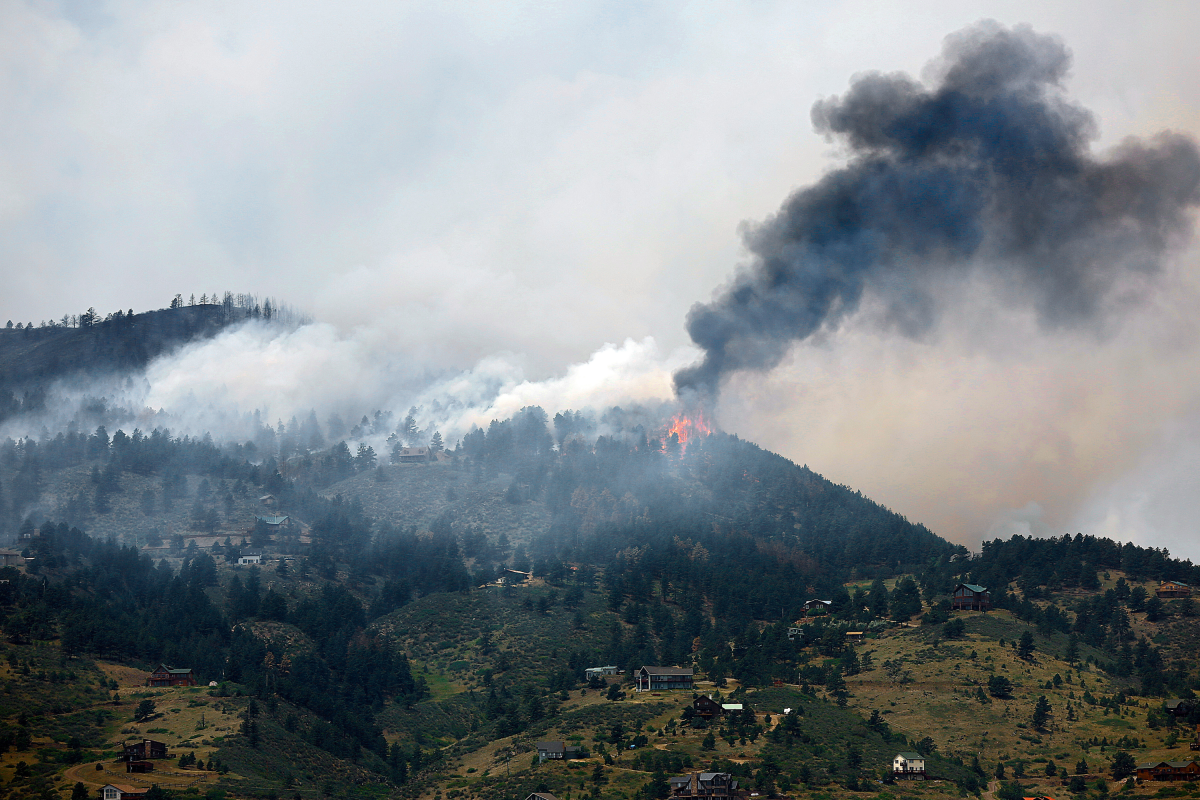
The sprawling, rugged expanse of the American West, where the deep terracotta canyons of eastern Utah bleed into the majestic valleys of western Colorado, is currently playing host to a terrifying and humbling display of nature’s raw, untamed power. What began as scattered, dry lightning strikes cracking across a parched landscape has rapidly escalated into a multi-front crisis along the state border, transforming serene vistas into chaotic battlegrounds of ash and flame. At the dark heart of this unfolding disaster is the Snyder Mesa Fire—a monstrous, fast-moving inferno born from the violent merger of three separate blazes: the Jones, Knowles, and Snyder Mesa fires. Within mere days, this colossal conflagration has consumed more than 28,000 acres of precious high-desert terrain, tearing through ancient pinon-juniper woodlands and dry brush with absolute impunity. As of Saturday, June 27, when Colorado Governor Jared Polis officially declared a state of disaster emergency, the fire remained completely uncontained, casting a long, ominous shadow of uncertainty over nearby communities such as Fruita and Glade Park. Further compounding the crisis, the broader Western Slope is currently freckled with rising plumes of smoke from at least eight other confirmed wildland fires, stretching from the rugged mountains north of Ouray to the dense, vulnerable pine stands of the San Juan National Forest. It is a stark, sobering reminder of how quickly the landscapes we cherish can be transformed into crucible environments, testing the limits of human endurance, ecosystem stability, and community resilience.
Beneath the overwhelming statistics of scorched acreage lies a profound and devastating human tragedy that has cast a pall of grief over the entire wildland firefighting community. The escalating fire conditions turned deadly when a crew was caught in a catastrophic “burnover”—a nightmare scenario where rapidly shifting winds suddenly redirect a wall of flame, overtaking those on the ground before they can escape to safety. In this tragic incident near the Utah–Colorado border, three courageous federal wildland firefighters lost their lives, and two of their comrades were severely injured, suffering intensive burns that required immediate medical evacuation. While authorities have understandably withheld the identities of the fallen to allow their families space to process this unimaginable loss, the collective heartbreak is palpable across the nation. These individuals were not merely statistics or names on a roster; they were sons, daughters, spouses, and friends who stepped into harm’s way so that strangers might remain safe in their homes. Their ultimate sacrifice underscores the immense, quiet heroism of the men and women who run toward danger, armed only with hand tools, heavy gear, and an unwavering commitment to protect the land and its people. As the two injured survivors begin their long, painful roads to physical and psychological recovery, the firefighting community stands united in grief, carrying the memory of their fallen brothers and sisters back onto the smoke-choked fire lines.
On the ground in Mesa County, the immediate reality of the approaching flames has forced hundreds of residents into a state of anxious vigilance and frantic preparation. As the fire crept closer to the Glade Park area, the Mesa County Sheriff’s Office was forced to issue urgent pre-evacuation notices, sending deputies door-to-door along dusty, remote mountain paths to deliver the grim news in person. The initial warnings targeted properties along BS Road, extending west from 11 5/10 Road all the way to the Utah state line, but as the evening progressed and the fire’s behavior grew increasingly erratic, officials were forced to expand the safety zone further eastward to 16 ½ Road. For the rural families living in these rugged pockets of Colorado, evacuation is not as simple as packing a single suitcase; it involves the logistical nightmare of relocating livestock, horses, and beloved farm animals that represent both their livelihoods and their companions. In a heartening display of community solidarity, the Mesa County Fairgrounds quickly opened its gates, transforming into a chaotic yet comforting refuge for displaced livestock, where volunteers worked tirelessly alongside anxious ranchers to corral, feed, and soothe frightened animals. Meanwhile, local road crews worked in tandem with law enforcement to close critical arteries, blocking off A 2/10 Road at DS Road and BS Road near the Bureau of Land Management boundary to keep civilians out of harm’s way and clear the paths for incoming emergency vehicles.
To combat this sprawling emergency, a massive, highly coordinated mobilization of state and federal resources has been deployed to the Western Slope, uniting various agencies in a desperate bid to establish control over the rampaging flames. Following Governor Polis’s disaster declaration, resources from the Division of Fire Prevention and Control, alongside the Division of Homeland Security and Emergency Management, have been funneled directly to the frontlines to support local crews. The Upper Colorado River Interagency Fire Management Unit has assumed a leading role, orchestrating a complex orchestra of ground crews, heavy engines, and aerial tankers that paint the smoky skies with vibrant red streaks of fire retardant. Every single incident across the region is being actively engaged, but the physical and mental toll on these crews is monumental; firefighters are working grueling, sleepless shifts in punishing heat, breathing in toxic fumes while navigating treacherous, vertical terrain. The state’s emergency declaration not only unlocks vital funding to cover the astronomical costs of this multi-agency response, but it also cut through bureaucratic red tape, allowing for the rapid deployment of specialized incident management teams who can bring advanced mapping technology and strategic expertise to the chaotic, evolving theater of war against the flames.
While the immediate threat of fire threatens homes along the border, a silent, secondary hazard has drifted east, blanketing vast swaths of western Colorado in a suffocating shroud of gray soot and heavy smoke. The Colorado Department of Public Health and Environment, in coordination with the National Weather Service, has issued widespread air quality health advisories covering an expansive list of counties, including Mesa, Garfield, Routt, Eagle, Montrose, Delta, Gunnison, and Pitkin. World-renowned mountain destinations like Aspen, Vail, Telluride, and the bustling hub of Grand Junction have seen their postcard-perfect mountain views replaced by an apocalyptic, orange-tinged haze that smells perpetually of burning pine. Public health officials have issued stern warnings, advising residents to retreat indoors, seal their windows, and run air purifiers to filter out the microscopic particulate matter that can lodge deep within the lungs. For vulnerable populations—such as young children, older adults, pregnant women, and individuals battling chronic heart or respiratory conditions like asthma or COPD—this air quality crisis is not a mere inconvenience, but a life-threatening danger. Families have been urged to limit all outdoor activities, wear high-filtration masks if they must venture outside, and seriously consider temporary relocation if the choking smoke begins to seep into their homes and cause physical distress.
Looking ahead, the road to containment and eventual recovery remains fraught with atmospheric challenges, as meteorological forecasts offer very little comfort to the weary communities of the Western Slope. According to meteorologists, firefighters are currently battling a hostile trifecta of extreme weather conditions: howling high winds that embers can ride for miles to spark new spot fires, dangerously low relative humidity that turns sparse vegetation into highly explosive tinder, and a prolonged lack of moisture. The National Weather Service’s short-term forecast shows a disheartening absence of any rain, meaning that the regional fire danger will remain critically elevated and the heavy smoke impacts are virtually guaranteed to persist. Though the initial air quality alerts are scheduled to fluctuate, health officials caution that the atmospheric soup of smoke and ash will likely plague the region for days to come, varying only by the whims of shifting wind patterns. Yet, even as the sky remains dark and the threat looms large, the spirit of the Western Slope remains remarkably unbroken. In the face of nature’s most destructive element, the true character of this community has shone through—defined not by the devastation of the fires, but by the quiet bravery of the firefighters, the tireless work of the volunteers, and the enduring resilience of neighbors standing shoulder-to-shoulder to weather the storm.