


Race Against Time: International Rescue Teams Descend on Earthquake-Ravaged Venezuela as Death Toll Mounts
A Nation in Ruin: The Devastating Impact of Back-to-Back Earthquakes
The shattering silence that followed the twin seismic convulsions on Wednesday has been replaced by the frantic roar of heavy machinery, the desperate scraping of shovels, and the solemn silence of rescue workers straining to hear signs of life beneath the pulverized concrete. In Venezuela, a dual catastrophe has struck with unprecedented fury, leaving behind a trail of flattened high-rises, buckled highways, and communities fractured by grief. The back-to-back earthquakes, which tore through the country’s heavily populated urban corridors, have officially claimed the lives of at least 920 people, a grim figure that local authorities warn represents only a fraction of the ultimate casualty count. As dust continues to settle over unstable debris fields, emergency planners estimate that hundreds of citizens remain entombed in structural voids, their survival dependent on an increasingly narrow window of time. The sheer scale of the structural failures—characterized by “pancake collapses” where entire concrete floors stack upon one another—has overwhelmed local civil defense forces, turning neighborhoods into treacherous labyrinths of exposed rebar, shattered masonry, and unstable ruins that threaten to collapse further with every passing hour.
+—————————————————————–+
| VENEZUELA EARTHQUAKE CRISIS AT A GLANCE |
+—————————————————————–+
| Casualty Count: At least 920 confirmed dead |
| Trapped Citizens: Estimated in the hundreds |
| International Aid: Dozens of nations deploying teams |
| U.S. Commitment: $150M in financial aid & elite USAR units |
+—————————————————————–+
Global Solidarity: The Critical Arrival of Foreign Aid and Specialized Personnel
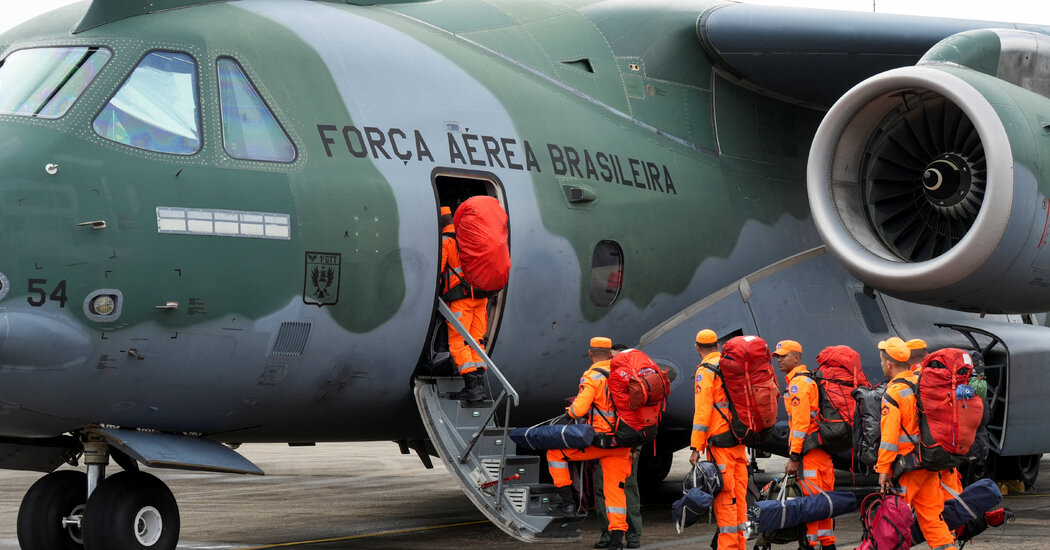
In the wake of this historic tragedy, the international community has responded with swift, coordinated mobilization, transforming Caracas’s Simon Bolivar International Airport into a bustling hub of humanitarian logistics. By Friday morning, search-and-rescue teams from across the globe began arriving on the tarmac, carrying specialized equipment designed to penetrate dense structural collapses and locate survivors who are otherwise invisible to the naked eye. Dozens of nations have set aside geopolitical differences to pledge various forms of critical aid, sending cargo planes loaded with heavy lifting gear, canine search units, medical field hospitals, and technical engineers. The influx of foreign relief teams marks a pivotal turning point in the disaster response, providing the exhausted local volunteers with much-needed technical expertise and cutting-edge tools. Managing this influx of international support presents its own complex challenges, as coordination cells work tirelessly to dispatch incoming units to the most critically damaged sectors, ensuring that rescue assets are distributed efficiently in a race where minutes often dictate the boundary between life and death.
Directing the Lifeline: The Strategic and Geopolitical Dynamics of the U.S. Response
At the forefront of this international mobilization is a massive, multi-faceted relief mission initiated by the United States, representing a significant diplomatic and humanitarian intervention in South America. The U.S. State Department has formally earmarked $150 million in emergency funding dedicated exclusively to Venezuela’s relief and recovery efforts. Recognizing the delicate political landscape of the region, Washington has directed these substantial financial resources to be channeled through established, neutral non-governmental organizations (NGOs) and United Nations agencies on the ground, bypassing political bottlenecks to ensure that food, clean drinking water, emergency medical supplies, and temporary shelters reach the displaced population instantly. This massive financial commitment underscores a strategic policy designed to maximize local impact while fostering cooperative humanitarian corridors, demonstrating to the global audience that the preservation of human life transcends historical geopolitical rivalries in moments of profound natural catastrophe.
Elite Forces on the Ground: The Deployments from Virginia, Los Angeles, and Miami-Dade
Complementing the financial aid, the actual frontline of the American rescue operation is being forged by highly specialized, elite urban search-and-rescue (USAR) teams hailing from Virginia, Los Angeles County, and Miami-Dade County. These premier units, often called upon for the world’s most demanding disaster response operations, arrived in Venezuela on Friday equipped with state-of-the-art diagnostic technology, seismic listening devices, fiber-optic search cameras, and highly trained search-and-rescue dogs capable of detecting human scent deep beneath fractured concrete. These crews are accustomed to working under hazardous conditions, and their immediate integration into the disaster zones brings invaluable experience in cutting, breaching, and shoring up unstable multi-story buildings that are too dangerous for untrained volunteers to navigate. Operating in continuous, rotating shifts, these American teams are working hand-in-hand with local responders, carefully tunneling through the precarious ruins of school buildings, medical offices, and residential towers in an urgent effort to locate the hundreds of victims still unaccounted for.
=== ELITE U.S. RESPONSE UNITS IN VENEZUELA ===[Virginia USAR] ———> Specialized Structural Forensic Engineering
[Los Angeles County] —-> Advanced Deep-Trench Concrete Breaching
[Miami-Dade County] —–> Canine Search & Hydroacoustic Sound Detection
Military Logistics: U.S. Southern Command’s Operational Blueprint in Caracas
To support this complex civilian-led effort, the United States military has established a robust logistics framework overseen by the United States Southern Command (SOUTHCOM), designed to manage the flow of heavy machinery and essential supplies. A highly decorated Marine Corps major general has landed in Caracas to personally direct the military’s relief contributions, ensuring that logistics lines between the U.S. mainland and Venezuela remain seamless and resilient. SOUTHCOM’s involvement is critical to the survival pipeline, as military transport aircraft are uniquely capable of delivering heavy-duty engineering assets, field hospitals, mobile water purification systems, and generators that commercial freight cannot easily accommodate. Under the direction of the joint military-civilian command, these assets are being strategically positioned to rebuild damaged airfields, clear debris-choked roads, and secure supply lines, thereby creating the stable infrastructure required for prolonged rescue campaigns and the subsequent delivery of long-term humanitarian aid.
                +-----------------------------+
                |    U.S. SOUTHERN COMMAND    |
                |      Relief Operations      |
                +--------------+--------------+
                               |
     +-------------------------+-------------------------+
     |                                                   |
     v                                                   v
+————————-+ +————————-+
| TACTICAL AIRLIFT | | INFRASTRUCTURE REPAIR |
| Heavy machinery, water | | Airfield clearing, post |
| purification systems | | quake structural audits |
+————————-+ +————————-+
The Long Road to Recovery: Endurance, Hope, and the Fight Against Time
As the initial shock of the disaster turns into a sustained, grueling recovery campaign, the overriding focus of both local authorities and international allies remains fixed on the ticking clock. Experts in disaster medicine emphasize that the coming days represent a critical period, past which the likelihood of finding survivors trapped beneath the rubble drops precipitously. Beyond the immediate rescue operations, the psychological and structural scars left on Venezuela will require years of sustained global engagement, structural rebuilding, and massive economic investment to heal. Yet, amid the widespread devastation and the overwhelming sorrow that has gripped the country, the arrival of international rescuers has lit a beacon of hope for families waiting outside the ruins of their former homes. The ongoing operations serve as a powerful monument to human resilience and international solidarity, proving that in the face of nature’s most destructive forces, the shared commitment to save a single human life remains one of the world’s most powerful unifying forces.