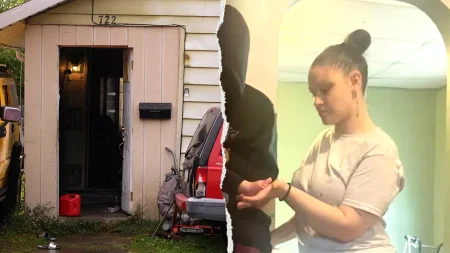



On a quiet Friday morning on East 85th Street, near First Avenue, a routine morning routine was shattered for a 56-year-old New Yorker. Walking to her car, which she had parked on the Upper East Side street three days prior, she was met with a stark and chilling sight: a swastika had been deeply carved into the metal hood of her vehicle. The raw weight of finding such a universal symbol of genocide and hatred on one’s personal property is a deeply unsettling experience, instantly turning a familiar neighborhood block into a landscape of fear. In the back seat of the car sat a small Israeli flag—a quiet expression of personal identity and heritage that investigators believe made her vehicle a target for this venomous hostility.
The act of carving a swastika is not simple vandalism; it is a deliberate attempt to terrorize, relying on historical trauma to inflict maximum psychological harm. For Jewish residents, seeing this symbol etched into the everyday fabric of their neighborhood serves as a jarring and painful reminder of historical atrocities. The victim immediately contacted the authorities, prompting the New York Police Department’s Hate Crime Unit to launch a dedicated investigation. Investigators are treating the targeting of the vehicle as a bias incident, directly linking the desecration to the Israeli flag visible through the window. This physical violation underscores how quickly global tensions can translate onto local streets, leaving individuals feeling exposed and unsafe in their own communities.
In the wake of the disturbing incident, local officials quickly stepped forward to offer solidarity and denounce the attack. Mayor Zohran Mamdani strongly condemned the vandalism, describing the swastika as a despicable act of intimidation targeted at Jewish neighbors and the foundational values of the city. He sought to reassure vulnerable residents by asserting that the city stands firmly with them and will confront antisemitics acts with urgency. City Council Speaker Julie Menin also expressed her deep concern, noting with sadness that this was not the first time such hate symbols had appeared within her district. She emphasized that the city council is working closely with the NYPD, declaring that Jewish New Yorkers refuse to allow bigotry to become normalized in their day-to-day lives.
However, the reassuring words of political leaders often clash with the bleak reality of the local climate, as illustrated by recent statistical trends. According to data provided by the NYPD, hate crimes throughout the city have experienced an alarming surge, rising by 74.4% in a single year, with reported incidents increasing from 39 to 68 in the month of May alone. Within these numbers lies an even more distressing trend: over 60% of these documented bias attacks were identified as anti-Jewish. These statistics represent real New Yorkers—families, students, and workers—who are increasingly forced to navigate their daily lives with an undercurrent of anxiety and hyper-vigilance, wondering if their identity will make them the next target of a bias-motivated crime.
This troubling reality has fueled deep frustration and exhaustion among community advocates, who feel that official rhetoric has failed to produce tangible safety. Moshe Spern, the president of the United Jewish Teachers, voiced this weariness, stating that the dramatic rise in antisemitic incidents is no longer a surprise to the Jewish community. Spern openly criticized the current administration’s approach, arguing that policy measures and political responses have been inadequate in curbing the rising tide of intolerance. When hate crimes begin to feel predictable rather than shocking, it indicates a profound crisis of confidence in the protective institutions of the city, leaving community members feeling isolated and vulnerable as they try to look out for one another.
Ultimately, this incident on the Upper East Side serves as a stark reminder of the ongoing struggle to maintain mutual respect and safety within a diverse metropolis. While the police continue their search for the perpetrator, the long-term healing must happen within the community itself through acts of mutual support and solidarity. Neighbors speaking out against hate, community groups organizing to protect one another, and residents of all backgrounds refusing to stand by in silence are key to overcoming fear. The resilience of the neighborhood lies in its determination to reject intimidation, demonstrating that while hatred can deface physical property, it cannot destroy the collective spirit and unity of the city’s residents.