


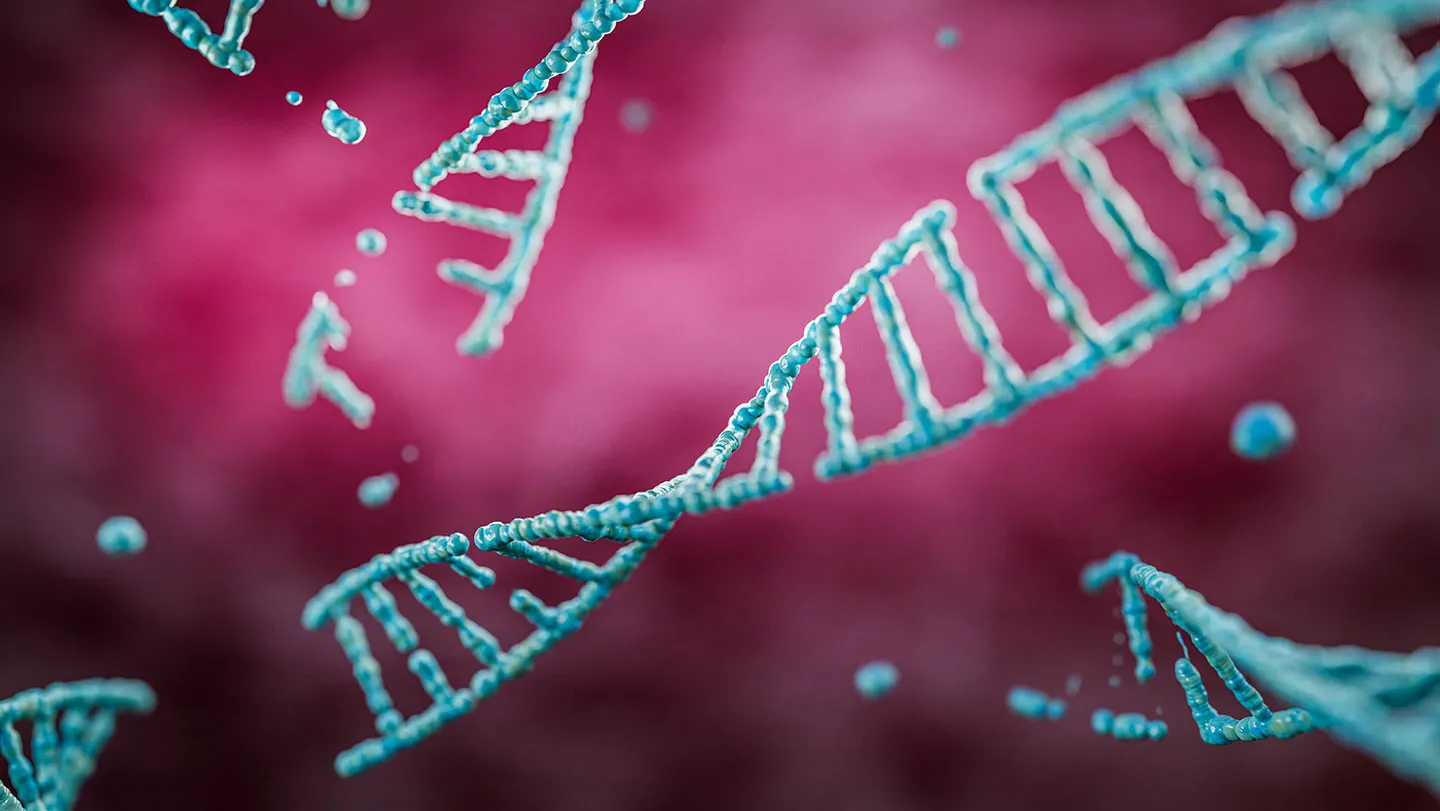
Consider the journey of a single, newborn brain cell. Long before it can transmit a thought, process a memory, or spark an emotion, it must embark on a perilous, epic migration across the packed, shifting terrain of the developing brain. To reach their designated zones, these fragile, newly minted cells must squeeze through incredibly narrow, crowded corridors of dense tissue. In a groundbreaking study published in the journal Nature, scientists discovered that this physical journey is so intense that the mechanical stress literally snaps both strands of the neuron’s DNA. This represents a profound biological paradox of vulnerability and resilience: the very genesis of a healthy mind relies on sustaining a form of genetic damage that would normally kill a cell. It suggests that our neurological pathways are not grown in pristine, undisturbed isolation, but are instead sculpted through a process of physical trial where strength is born directly from vulnerability.
The precise mechanics of this process, observed through meticulous experiments in mice, reveal an astonishing evolutionary strategy of controlled damage and rapid healing. As these newborn neurons force their way through the cramped spaces of the embryonic brain, the physical squeeze causes their double-stranded DNA to shear. In any other biological context, a double-strand break is a catastrophic emergency, but for these migrating neurons, it is simply a typical milestone on their journey. What astounded the research team, led by neurobiologist Mineko Kengaku of Kyoto University, was the sheer speed and efficiency of the recovery; within twenty-four hours of completing their migration, the cells successfully patched their genomes with no signs of mutation or long-term harm. Crucially, Kengaku’s team discovered that these breaks do not occur at random, but are strategically located in non-essential, non-coding regions of the genome. By directing the physical damage to these genetic “safe zones,” the cell ensures its critical functional blueprints remain untouched, showcasing how nature has cleverly integrated physical structural challenges into a normal and healthy developmental milestone.
While this experimental journey was mapped out in mice, the implications for human biology are even more profound and humbling. Human brains are vastly larger, more complex, and take far longer to develop than those of rodents, meaning our newborn neurons must travel significantly longer distances to reach their designated architectural positions. Kengaku points out that this extended migration likely subjects human neurons to even greater mechanical pressures, resulting in a much higher rate of DNA fractures during our early development. This suggests that the evolutionary trade-off for our superior cognitive abilities is an increased exposure to developmental danger. The very physical journey that enables us to eventually think, create, love, and self-reflect also subjects our developing minds to a gauntlet of structural stress, making the successful construction of a human brain one of the most miraculous feats of biological engineering on Earth.
However, this seamless cycle of break-and-repair is not guaranteed to go perfectly every time, and when the delicate molecular machinery falters, the consequences can echo throughout a lifetime. To test what happens when this delicate safety net is removed, the researchers genetically modified mice to lack ligase IV—an indispensable protein that acts as the cell’s primary genetic glue, responsible for sealing double-strand breaks. Without this molecular repair kit, the migrating neurons were unable to mend the physical damage sustained during their journey, leading to a dangerous accumulation of unresolved DNA fractures in the brain areas associated with motor function. As these mice grew, they suffered lasting motor deficits, proving that incomplete early-life repair leads directly to compromised brain function in adulthood. Jan Lammerding, a biomedical engineer at Cornell University, noted that this research beautifully demonstrates how unresolved physical stress on a cellular level can leave permanent scars, potentially laying the groundwork for neurodegenerative illnesses later in life.
This newfound understanding sheds critical light on clinical medicine, particularly regarding how we care for our most vulnerable patients: premature infants. When a baby is born prematurely, their brain is still in the active, chaotic phase of neuronal migration, where billions of cells are actively squeezing through tight tissue spaces and fracturing their DNA. In neonatal intensive care units, doctors must use aggressive medical interventions, including specific antibiotics and therapies, to keep these fragile infants alive. Kengaku warns that some of these routine drugs might inadvertently inhibit the very enzymes, like ligase IV, that the infant’s brain desperately needs to repair its migrating neurons. If we disrupt this delicate developmental window with chemical interventions, we risk leaving these natural DNA breaks permanently unhealed. This insight challenges pediatric medicine to carefully evaluate the side effects of neonatal therapies, ensuring that the medicines we use to save a premature baby’s body do not unintentionally disrupt the delicate, silent healing of their brain.
Ultimately, this research offers a radical new paradigm for exploring the origins of complex, poorly understood brain conditions, from autism spectrum disorders to childhood cancers. Neuro-oncologist Soma Sengupta of Tufts Medical Center described the study as a major conceptual leap, noting that unlike the destructive DNA damage caused by environmental toxins or radiation, these developmental breaks are tightly managed and efficiently repaired. However, Sengupta notes that pediatric brain tumors often arise in cells that are actively migrating and differentiating; a rare, catastrophic misrepair during this critical developmental window could easily introduce an oncogenic mutation into a vulnerable cell. Similarly, minor hiccups in this genetic healing process could subtly alter the neural pathways responsible for social communication, pointing to potential developmental origins of autism. By revealing that healthy brain development is a journey of controlled damage and rapid resurrection, this pioneering study gives humanity a profound new framework to protect, cultivate, and heal the human mind from its very first moments of life.