


The Sunset of Theological Governance: Deciphering the Regional Decline of Political Islam
The long-held assumption that religious dogma would remain the primary engine of Middle Eastern statecraft is undergoing a quiet but profound collapse, signaling a historic retreat from the tenets of political Islam. For decades following the geopolitical reorganizations of the late twentieth century and the intensified scrutiny of the post-9/11 era, political Islam—defined loosely as the utilization of Islamic principles and scriptures to dictate state policy, governance, and domestic law—was viewed by many as an unstoppable regional force. From the absolute clerical dominance in Iran to the grassroots mobilization of the Muslim Brotherhood in Egypt, the rallying cry that “Islam is the solution” seemed to define the destiny of a region home to a significant portion of the world’s two billion Muslims. Today, however, that theological certainty is disintegrating as citizens and rulers alike witness the practical failures of religious governance to solve secular crises, such as economic stagnation, systemic corruption, and administrative incompetence. In countries like Tunisia, early democratic experiments that brought Islamist parties to power ultimately led to widespread voter disillusionment, resulting in the election of populist strongmen who promised executive efficiency over religious purity. This transition reflects a broader, highly pragmatic realization across the Arab world and its neighbors: while personal faith remains a deeply cherished private sanctuary, it is no longer viewed as a viable blueprint for running a modern, functional state.
Tehran’s New Aesthetic: How National Survival is Replacing Devout Clericalism in Iran
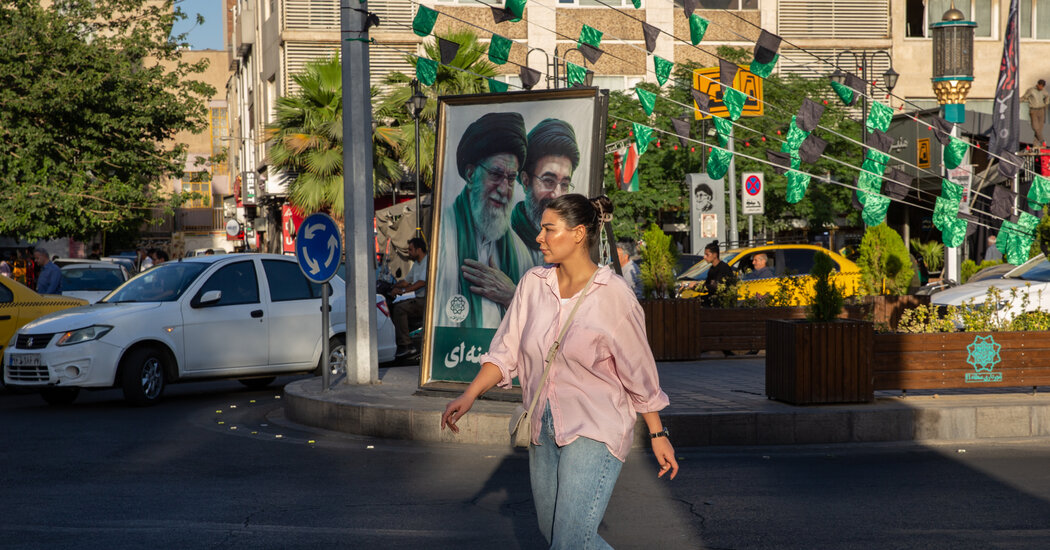
This ideological retreat is perhaps nowhere more apparent than in the Islamic Republic of Iran, the modern world’s most elaborate and historically successful experiment in political Islam, which is currently undergoing a radical superficial and structural rebranding. Facing relentless economic pressure and threat of conflict with foreign adversaries, the establishment in Tehran has increasingly pivoted away from the harsh rhetoric of religious piety toward a strategic embrace of Persian nationalism and military survival. On state-sanctioned television broadcasts, the traditional black-chaddored imagery of revolutionary womanhood is being quietly supplemented by highly stylized, patriotic military parades featuring women handling pink weaponry and driving pink military jeeps. Most remarkably, state media has begun highlighting female citizens who openly declare their loyalty to the homeland while declining to wear the mandatory hijab—a striking concession from a regime that has historically policed women’s attire with brutal rigidity. According to prominent reformist figures and scholars like Mohsen Kadivar, a dissident Iranian cleric currently based at Duke University, the theocratic regime has fundamentally failed to deliver on its revolutionary promises of absolute freedom, social equity, and economic justice through religious doctrine. Instead, the administration has progressively mutated into a militarized autocracy dominated by the Islamic Revolutionary Guard Corps (IRGC) rather than traditional spiritual leaders, leveraging its foundational anti-Zionism and resistance to United States intervention to appeal to a broader, nationalistic desire to defend the ancient Iranian homeland from foreign aggression.
Pragmatism Over Piety: The Parallel Redefinitions of Riyadh and Damascus
This shift away from rigid theological governance toward programmatic survival finds striking parallels in the contrasting geopolitical landscapes of Saudi Arabia and Syria, where leaders have recognized that strict religious governance yields diminishing returns both at home and abroad. In the Kingdom of Saudi Arabia, once the global epicenter of puritanical Wahhabism, Crown Prince Mohammed bin Salman has systematically dismantled the authority of the notorious religious police, permitted women to drive, re-established public cinemas, and hosted massive, mixed-gender music festivals to appease a young, globally connected populace weary of theological austerity. Simultaneously, in the war-weary state of Syria, a bizarre transformation has occurred in the north under the leadership of Ahmed al-Sharaa; once the head of a feared Al Qaeda affiliate who openly swore to establish an uncompromising Islamic state, he has since discarded his militant optics to assume a more secular presidential persona. Now donning tailored Western suits and appearing alongside his wife in public, al-Sharaa has actively avoided the strict enforcement of Shariah law while building diplomatic bridges with Western institutions, realizing that the militant brand of political Islam is globally toxic and economically crippling. As Oxford historian Faisal Devji observes, the international brand of political Islam has been deeply tarnished by decades of violent extremism, prompting a new generation of regional strongmen to realize that domestic stability and international legitimacy require the swift cultivation of a distinct, inclusive national pride over sectarian division.
Fractured Fault Lines: Natural Devastation and Geopolitical Standoffs in South America
While the Middle East renegotiates its ideological foundations, the unpredictable forces of nature have created a major crisis in South America, where a series of catastrophic earthquakes has devastated Venezuela’s northern coastline and initiated a delicate geopolitical dance. The seismic event, which struck the country’s highly populated northern states, has claimed at least 235 lives and left over 4,300 citizens injured, numbers that local authorities fear will continue to rise as rescue crews sift through the rubble of collapsed high-rises in the hard-hit coastal state of La Guaira. This profound humanitarian disaster has hit Venezuela at an incredibly vulnerable moment, occurring amidst ongoing attempts by the United States to counter the influence of the oil-rich state’s socialist administration and guide the country back into the Western economic orbit. In a surprising diplomatic maneuver, United States Secretary of State Marco Rubio announced that Washington would stand ready to deploy specialized rescue personnel and supply millions of dollars in humanitarian aid directly to the disaster zones. This offer of assistance places the Venezuelan government in a complicated position, forcing it to weigh the immediate physical salvation of its citizens against the potential geopolitical intrusion of its northern adversary, underscoring how natural disasters can instantly rewrite international relations.
Monarchies and Milongas: Unpacking Modern Transparency in London and Secular Rhythms in Istanbul
Further to the north, European institutions and Mediterranean cultures are likewise engaging in their own versions of modernization and preservation, seeking to reconcile historical traditions with the demands of twenty-first-century transparency and secular expression. In the United Kingdom, King Charles III has taken the historic and unprecedented step of publicly releasing his personal income tax statements, registering a payment of several million pounds since ascending the throne—a move designed to project royal transparency following years of public relations damage surrounding the royal family. Meanwhile, across the European continent in Istanbul, Turkey, the pursuit of secular sophistication has manifested in an incredibly vibrant and unexpected cultural obsession: the Argentine tango. Istanbul has quietly transformed into one of the premier tango capitals of the world outside of South America, boasting packed dance halls, university-level tango clubs, and specialized industries of custom cobblers and tailors who cater exclusively to local dancers. This deep-seated affinity for the passionate South American dance is not a sudden trend but a direct legacy of Turkey’s secular founder, Mustafa Kemal Ataturk, who passionately promoted ballroom dancing and Western musical styles during the early decades of the twentieth century as part of his sweeping mission to modernize, westernize, and secularize the young Turkish Republic.
The Craft of Progress: Culinary Precision, Professional Feedback, and the Human Element
Whether restructuring an ancient civilization’s political philosophy, recovering from a natural disaster, or seeking personal enrichment through art, the common thread of human endeavor remains the pursuit of slow, deliberate improvement. This philosophy of patient refining is beautifully mirrored in the culinary world, where mastering the classic Breton pastry known as the kouign-amann requires tireless repetition, temperature control, and a absolute refusal to cut corners in order to achieve the perfect balance of buttery, caramelized layers. On an organizational level, this same commitment to rigorous reflection is currently being realized in boardrooms worldwide during midyear performance evaluations, reminding managers that sustained human growth is governed by fragile psychological dynamics. Research in organizational psychology reveals that because human beings process criticism and praise differently—with negative feedback releasing long-lasting stress hormones—maintaining a “magic ratio” of approximately five positive reinforcements for every single piece of constructive criticism is essential to foster development and happiness. Ultimately, from the grand stages of international diplomacy to the intimate interactions of our personal and professional lives, the evolution of human society depends on our ability to embrace structural change, honor transparency, and provide the encouragement necessary to build a more resilient future.