


There is a unique, unspoken romance in the way Australia approaches the beautiful game, an identity forged not in the glamorous academies of Europe, but in the fierce, unyielding crucible of their own domestic sporting culture. For the first time in their storied sporting history, the Socceroos have achieved what many pundits deemed impossible: securing a ticket to the knockout rounds for the second consecutive World Cup. It was a journey that defied the aesthetic purists of the sport, characterized not by samba-style flair or breathtaking tiki-taka passing sequences, but by the relentless, blue-collar work ethic that has long defined the Australian sporting ethos. They did not glide gracefully through Group D; rather, they crawled, clawed, and combated their way through every blade of grass, eventually emerging as the proud runners-up of the group following a nerve-shredding, lung-busting 0-0 draw against an intensely physical Paraguay side. To truly understand the magnitude of this achievement, one must appreciate the sheer gravity of what this squad represents—a collective unit that values sweat over stardom, and defensive discipline over individual glory. It is a monumental milestone for a nation where association football constantly battles for mainstream attention against local giants like Australian rules football and rugby league, proving once and for all that this team possesses a global appeal and a competitive spirit that can stand toe-to-toe with the very best on the planet.
To properly contextualize this triumph, we must first wind back the clock to the nervous days preceding the opening whistle of the tournament, when global sports analysts looked at the draw and collectively shook their heads at Australia’s prospects. Entering the world’s biggest stage with a humble pre-tournament ranking of thirty-five, the Socceroos were widely written off as the designated whipping boys of Group D, with almost every major soccer outlet predicting they would finish dead last. It was hard to argue against that pessimistic consensus when you looked at the intimidating landscape of their opponents, starting with the host nation, the United States, who possessed a formidable home-field advantage and a gold-plated roster. Group D also featured a dazzlingly talented Turkey side, a nation currently enjoying a golden generation of technically brilliant prodigies playing at elite European clubs, and a notoriously rugged Paraguay team that had spent their qualifying campaign frustrating South American powerhouses like Brazil and Argentina with their defensive wizardry. On paper, Australia looked like a collection of hard-working journeymen destined to be overwhelmed by superior individual talent and tactical sophistication. Pundits assumed that while the Aussies would undoubtedly bring their signature enthusiasm and physical exertion, they simply lacked the world-class quality needed to secure anything other than a polite, early exit and a seat on the first plane back to Sydney.
Yet, as is so often the case in the unpredictable theater of international football, matches are played on pristine grass fields rather than the theoretical spreadsheets of transfer market values. The turning point of Australia’s entire campaign came in their monumental clash against Turkey, a match that will be studied by tacticians for years to come as a masterclass in defensive resilience and lethal transition play. Facing a relentless Turkish side that unleashed a terrifying avalanche of shots and controlled the lion’s share of possession, the Australian defensive line bent but absolutely refused to break. Every single member of the squad played with a manic, self-sacrificing energy, throwing their bodies in front of incoming shots, dominating the aerial duels, and closing down spaces with a predatory instinct. Having weathered the initial storm of Turkish dominance, the Australians struck with the cold-blooded efficiency of a viper, executing two breathless counter-attacks to secure a stunning 2-0 victory that sent shockwaves through the tournament. This was not a lucky output, but the fruit of an incredibly disciplined defensive structure that forced Turkey into low-quality shots while maximizing Australia’s rare opportunities in the final third.
This newfound tactical maturity was put to an even greater test when they faced the host nation, the United States, in an atmosphere that was hostile, loud, and emotionally draining. Rather than capitulating to the occasion or embarking on a tactically naive, high-pressing strategy that would have left them exposed, the Socceroos demonstrated a rare level of tournament pragmatism. They understood that in the modern World Cup format, goal differential is a precious currency that must be guarded at all costs, prompting them to play a deeply calculated, defensive game to limit the damage. Even as they succumbed to a 2-0 defeat against the energetic hosts, the Australians never allowed the game to descend into a chaotic blowout, maintaining their shape and restricting the Americans from running up the scoreline. By managing their defensive duties with such discipline, they ensured that their goal differential remained superior to Paraguay’s, setting up a dramatic, high-stakes final fixture where their destiny remained firmly in their own hands. It was a mature display of tournament management that showed this Australian team was playing with their heads just as much as their hearts, refusing to let emotions dictate their defensive integrity.
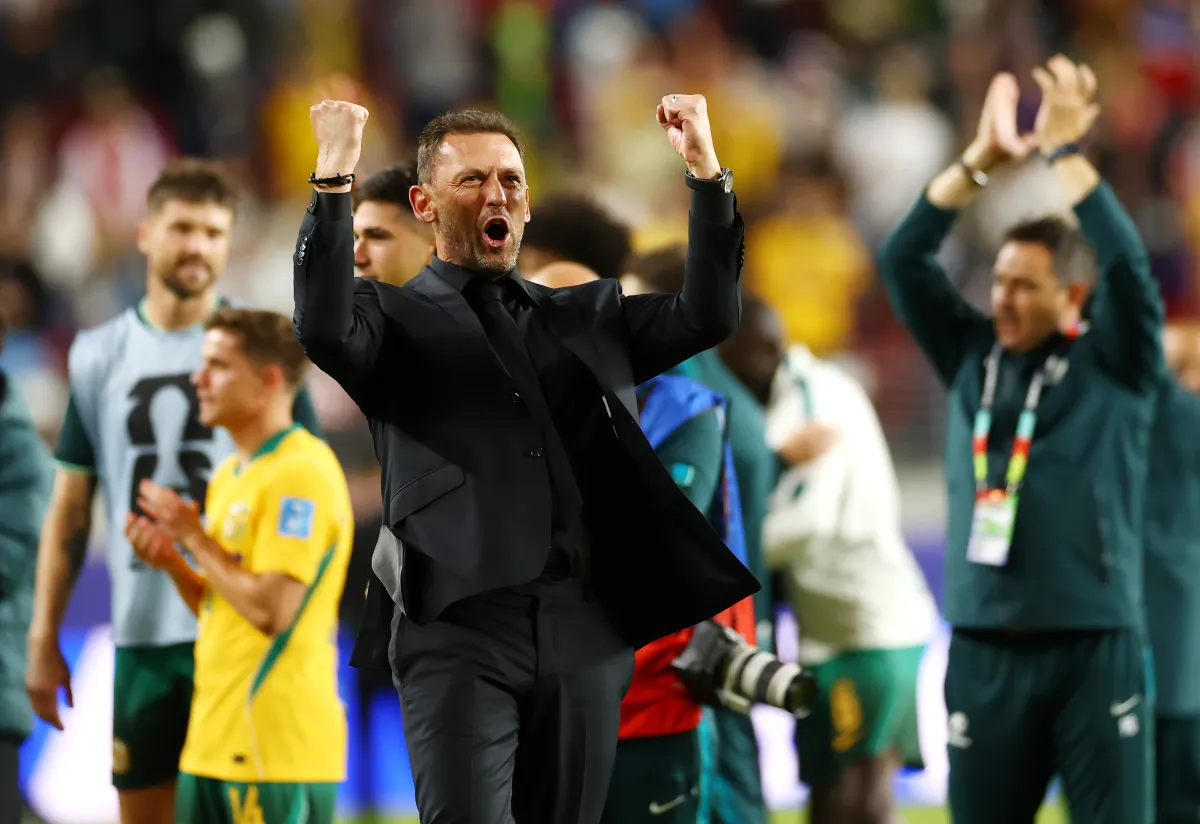
The final group-stage match against Paraguay was a grueling, uncensored battle of wills, a ninety-minute war of attrition that will not be remembered for its artistic merit, but for its sheer visceral intensity. Needing only a draw to secure their historic passage into the round of sixteen, the Australians entered the pitch knowing they would have to endure a physical pounding from a South American side desperate for all three points. What followed was a bruising encounter defined by bone-rattling tackles, endless mid-pitch duels, and a suffocating defensive block that completely neutralized Paraguay’s attacking threat. The Australians chased down every lost cause, contested every fifty-fifty ball, and ran themselves into the ground with a tireless energy that seemed to defy the physical limitations of the human body. When the final whistle blew to confirm the 0-0 draw, the exhausted Australian players collapsed onto the pitch in a mixture of relief and absolute ecstasy. They had done it—not by dazzling the world with individual brilliance, but by executing a collective defensive game plan with an intensity that their opponents simply could not match.
When the dust settled on Group D, Australia emerged with an well-earned B+ grade, a rating that reflects a campaign of immense tactical discipline, physical sacrifice, and historical achievement. It is a grade that acknowledges their limitations but celebrates how masterfully they maximized their strengths, proving that a unified, highly motivated collective can overcome a massive deficit in individual market value. As they march proudly into the knockout rounds, the Socceroos have transformed themselves from tournament afterthoughts into a highly dangerous, incredibly stubborn opponent that no top-seeded nation will look forward to facing. In a sport increasingly dominated by hyper-wealthy elite clubs and superstars, this Australian team serves as a beautiful, humanizing reminder of what can be accomplished through sheer collective will, heart, and an unbreakable team spirit. They have already made their nation immensely proud, and as they prepare for the high-stakes drama of the Round of 16, the rest of the footballing world should be warned: write off these resilient Aussies at your own absolute peril.