


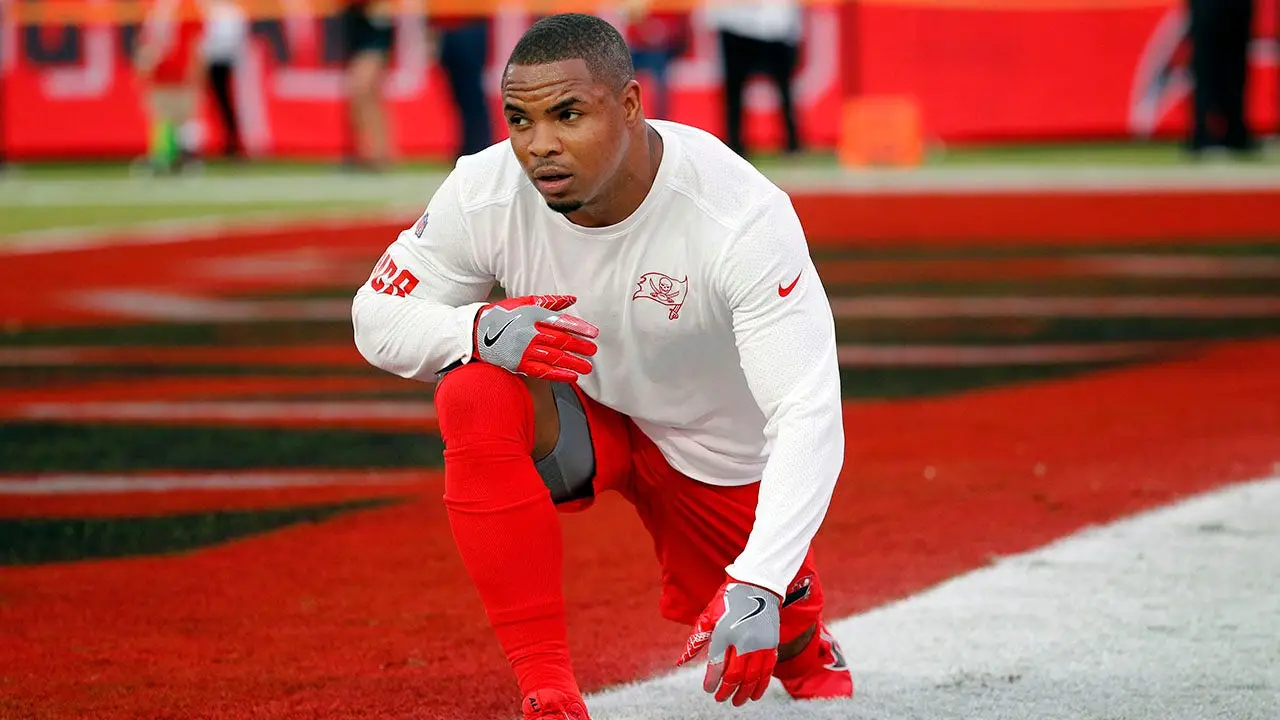
Behind the glittering headlines of professional sports and the adrenaline-fueled cheers of stadium crowds lies a deeply fragile, quiet human reality that we too often ignore until it is too late. For Leslie and Douglas Martin, that reality shattered on the night of October 18, when their son, former NFL running back Doug Martin, began experiencing a severe and terrifying mental health crisis. Once celebrated as a physical force of nature on the gridiron, Doug was navigating a private storm, and in her desperation to save her child, Leslie did what any terrified mother would do: she picked up the phone and called for emergency medical assistance. She did not call for an arrest, a physical confrontation, or a tactical strike; she called for a lifeline, expecting trained medical professionals to arrive with compassion, expertise, and the gentle touch necessary to de-escalate a mind in turmoil. Instead, Doug panicked, fleeing his home in a state of disorientation and hiding in the basement of a neighbor’s house just two doors away. What ensued in those dark, claustrophobic basement shadows was not the healing intervention his family had begged for, but a catastrophic sequence of events that would end the life of the 36-year-old Oakland native. Today, his grieving parents are left to pick up the ruins of their lives, channeling their profound sorrow and anger into a landmark federal lawsuit filed in the U.S. District Court for the Northern District of California. Their legal action against the City of Oakland, its police department, and the private ambulance company Falck Northern California is more than just a demand for financial damages; it is a heartbreaking search for answers and a desperate plea for accountability from a system that they believe failed their son in his hour of greatest vulnerability, turning an urgent cry for medical survival into a tragic death warrant.
The details of the lawsuit lay bare a harrowing, step-by-step account of a tragedy that Leslie and Douglas Martin believe was entirely preventable, highlighting the stark contrast between how Doug should have been treated and how he actually was. According to the court documents, when officers from the Oakland Police Department finally located Doug in the neighbor’s basement, they did not employ gentle crisis de-escalation techniques, psychological pacing, or established mental health protocols; instead, they immediately resorted to physical domination and prone restraint. The suit alleges that officers physically subdued the former athlete, placing him face down on the cold ground while one or more officers pressed heavily on his back. In this prone position—which has been widely discredited and condemned by civil rights advocates, medical experts, and progressive police departments due to its high risk of inflicting suffocating trauma—Doug’s body eventually surrendered to the overwhelming pressure. When law enforcement officers finally rolled him onto his side, the vibrant, once-unstoppable athlete was completely unresponsive. Shockingly, the lawsuit claims that rather than initiating immediate, life-saving cardiopulmonary resuscitation (CPR) or recognizing the obvious physical signs of a medical emergency, the officers on the scene dismissed his comatose state, actively assuming he was merely “sleeping or pretending to be asleep.” This profound, clinical misjudgment delayed critical treatment during the precious, golden minutes where oxygen to his brain might still have preserved his life. By the time officers realized that Doug was not playing games but was actively dying, valuable time had turned into a fatal delay. An unnamed independent pathologist hired by the Martin family’s legal team later confirmed their worst fears, concluding that the likely cause of death was restraint asphyxia—a terrifying condition where a person is literally choked to death by the weight of external forces, leaving his parents with the haunting, agonizing image of their son’s final, breathless moments under the knees of Oakland’s officers.
Beyond the immediate and devastating physical actions of the police officers on the scene, the lawsuit shines a harsh, unforgiving light on the systemic failures of the emergency medical responders, specifically pointing to the actions—and lack thereof—of Falck Northern California. Leslie Martin’s initial call was explicitly for medical aid to manage a psychiatric crisis, yet the lawsuit claims that the paramedics failed to respond with the urgency that a life-or-death scenario demands, taking approximately fifteen agonizing minutes to arrive at the scene after the call for service was first placed. In emergency medicine, where brain damage can occur within mere minutes of oxygen deprivation, a fifteen-minute response time is an absolute lifetime. Worse still, the family alleges that even after the paramedics finally arrived on the scene, they did not act with the immediate, decisive life-saving measures required to revive Doug, failing to promptly provide the emergency medical care that could have stabilized him before he was transported to a local hospital, where he was ultimately pronounced dead. The family’s renowned civil rights attorney, John Burris, emphasized the profound betrayal felt by the family when he spoke to the media, noting that when a mother calls for help because her son is emotionally out of it, she expects a rescue crew of compassionate healers, not a coroner’s wagon. “When you call for help and the police come, it’s not a death warrant,” Burris stated with poignant, raw clarity. “You don’t expect the person to die.” His words capture the universal fear of every parent of a child struggling with mental illness—the terror that the very institutions established to act as a safety net will instead become the instruments of their destruction, turning a cry for basic healthcare into a fatal sequence of clinical neglect, institutional apathy, and a devastating abandonment of medical ethics.
In their profound, life-altering grief, Doug’s parents are not just looking backward in anger; they are also looking inward for deeper, scientific answers about the unseen forces that may have dismantled their son’s mind over time. In a poignant, courageous, and deeply personal effort to understand what drove their once-vibrant son into such a severe mental health crisis, Leslie made the agonizing decision to send Doug’s brain to Boston. There, his neural tissue will be carefully analyzed by the Boston University CTE Center, the nation’s leading research institution for chronic traumatic encephalopathy (CTE)—a progressive, degenerative brain disease caused by repetitive head impacts that can only be diagnosed post-mortem. For years, the public saw Doug as an elite athlete, a powerhouse running back who absorbed and delivered thousands of violent, bone-rattling collisions on the football field. But behind the fame, those repeated blows may have been silently eroding his neurological health, leading to the severe mood swings, cognitive decline, emotional instability, and psychiatric challenges that so often characterize CTE sufferers in their post-career years. While the family’s independent pathologist noted that a post-mortem finding of CTE would have “no consequence as it relates to the immediate cause of death”—which remains the physical trauma of restraint asphyxia—for Leslie and Douglas, learning the truth about his brain health is a vital step toward reclaiming his humanity and understanding his pain. They deserve to understand whether the game he loved so passionately ultimately stole his mind, leaving him vulnerable to the tragic encounter in the basement. By seeking this diagnosis, the Martins are attempting to paint a complete, empathetic picture of their son’s life and struggles, linking the violent physical demands of his athletic career to the mental health crisis that ultimately put him in the path of fatal law enforcement restraint.
To fully comprehend the deep tragedy of Doug Martin’s death, one must remember the life he lived, the communities he uplifted, and the joy he brought to millions of football fans across the country. An Oakland native who never forgot his roots, Doug rose from the local community to become a powerhouse at Boise State University before being drafted in the first round of the 2012 NFL Draft by the Tampa Bay Buccaneers. Known affectionately by fans as “Muscle Hamster” for his compact, incredibly powerful running style, Doug quickly established himself as one of the league’s premier talents, earning two Pro Bowl selections and racking up more than 5,300 rushing yards over his illustrious career. He eventually realized every hometown kid’s dream by playing his final NFL season in 2018 with the Oakland Raiders, performing on the very soil where he grew up and learned to love the game. Yet, the immense public pressure of being an elite modern athlete often comes with heavy, hidden costs that are rarely visible from the stadium seats. In 2016, Doug faced a public struggle when he was suspended for four games for violating the NFL’s substance-abuse policy after testing positive for Adderall. Exhibiting immense courage, Doug did not hide from his struggles; he publicly announced his decision to enter a clinical treatment program, opening up about his battle with mental health and substance abuse in an effort to heal. His story is a poignant reminder that elite athletes are not invincible superheroes; they are complex, feeling human beings who carry immense physical pain and mental burdens. Doug’s struggle was a battle for health, peace, and recovery, making the violent, uncompassionate nature of his death all the more heartbreaking for the community that had cheered his triumphs for so many years.
As the legal battle begins to unfold in federal court, the institutions responsible for Doug’s safety have retreated into a protective silence, leaving his grieving parents to face the emotional storm alone. The Oakland Police Department has maintained its strict policy of refusing to comment publicly on pending litigation, while the Oakland City Attorney’s office and representatives for Falck Northern California have similarly declined to offer any statements, explanations, or condolences to the grieving family. This wall of bureaucratic silence only deepens the agony for the Martin family, who must carry the heavy burden of their grief without any official acknowledgement of wrongdoing or systemic failure. Through their federal lawsuit, Leslie and Douglas are seeking comprehensive damages for wrongful death, medical and hospital expenses, coroner’s fees, funeral and burial costs, and the permanent, irreplaceable loss of their son’s love, companionship, and financial support. Yet, no amount of financial compensation can ever fill the massive, silent void left in their lives by the loss of their beloved child. For the Martins, this legal campaign is a moral crusade to ensure that what happened to Doug never happens to another family experiencing the terrifying ordeal of a mental health emergency. It stands as a powerful indictment of a system that continuously fails to recognize that psychological vulnerability requires patient, therapeutic care rather than physical subjugation, militarized restraint, and clinical neglect. By demanding justice for Doug, his parents are forcing a national conversation about the urgent need for systemic reform, desperately hoping that their tragic loss will finally inspire a future where a mother’s call for help is met with the saving grace of medical compassion rather than the devastating violence of a terminal restraint.