

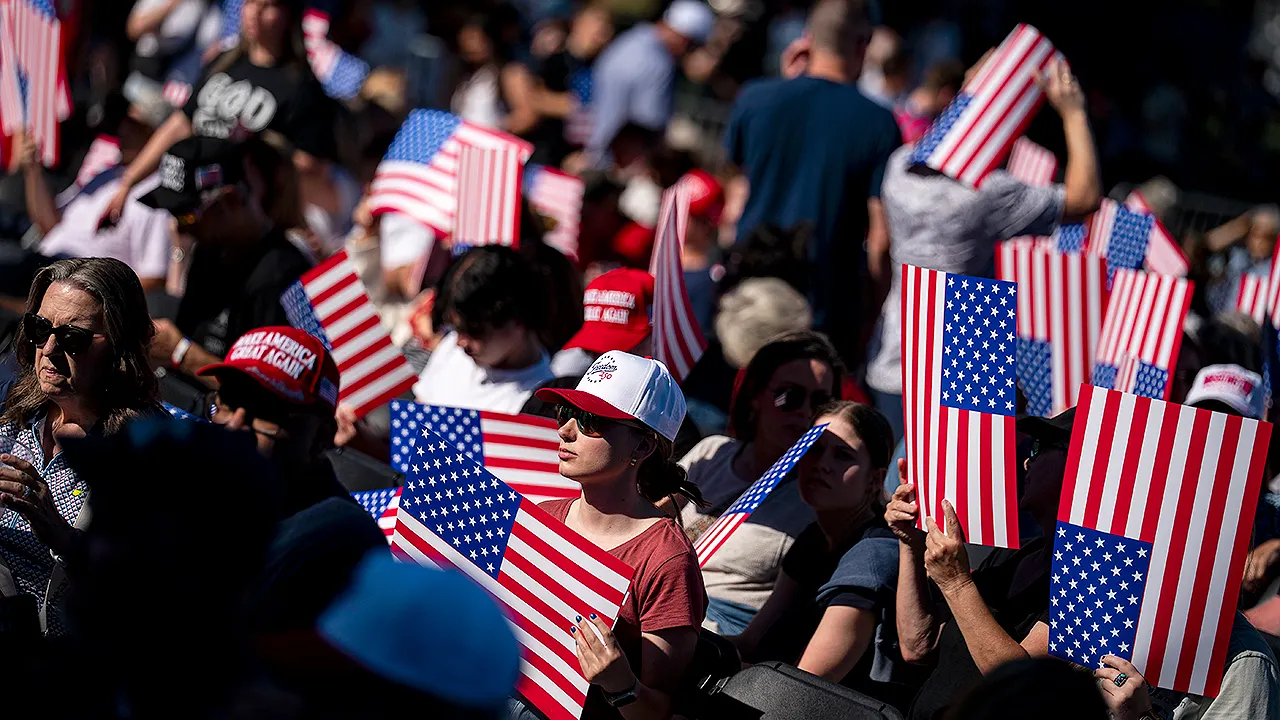
The late afternoon sun cast long, amber shadows across the grassy expanse of the National Mall as a dense crowd gathered, breathing in the warm, expectant air of a Washington midsummer evening. This was no ordinary political rally; it was the grand opening ceremony of the Great American State Fair, a sprawling, multi-week celebration designed to serve as the opening salvo for the United States’ upcoming 250th anniversary. The atmosphere was charged with a heavy mixture of patriotic nostalgia and high-octane modern spectacle. High above the iconic obelisk of the Washington Monument, the sky tore open with the profound, earth-shaking roar of military aviation as B-2 stealth bombers and F-35 fighter jets cut through the clouds, leaving behind them a palpable vibration in the chests of the thousands of onlookers. On stage, the legendary strains of the U.S. Marine Band gave way to the familiar, acoustic strumming of singer-songwriter Lee Greenwood, whose live performance of “God Bless the U.S.A.” acted as a familiar, emotional bridge for the audience. Amidst this sensory barrage of brass instruments, roaring engines, and cheering crowds, President Donald Trump stepped out onto the stage, framing the moment not merely as a celebration of historic longevity, but as a triumphant reclamation of the national spirit.
In a speech that masterfully blended populist fire with the grand traditions of American storytelling, Trump sought to draw a straight line from the revolutionary patriots who birthed the nation to the modern-day supporters standing before him. He spoke to a crowd that felt deeply connected to his message, claiming that over the preceding seventeen months, his administration had successfully wrested control of the nation away from a distant, detached political elite and returned it to the ordinary citizens who form the country’s backbone. By comparing his political movement directly to the revolutionary uprising of 1776, Trump elevated the political battles of the 21st century to a historic, almost mythic level of importance, warning that while the established political class was desperately trying to claw back their lost influence, the momentum of his movement was now irreversible. To those gathered on the Mall, his words were a validation of their struggles and an emotional reassurance that their voices were finally being prioritized. He declared with characteristic bravado that America had clawed its way back to a position of global supremacy, regaining its sovereignty, restoring its economic fortunes, and commanding a level of international respect that had allegedly been lost in years prior, triumphantly asserting that the era of the world laughing at the United States had come to a decisive end.
A central theme of the evening was the physical and aesthetic renewal of Washington, D.C., which Trump presented as a metaphor for the broader restoration of the American republic itself. For visitors and residents alike, the capital city had long been a battleground of competing visual narratives, but the President highlighted a sweeping campaign to clean up and beautify the federal city as proof of a new national pride. He detailed how his administration had aggressively moved to clear away homeless encampments and erase unsightly graffiti, systematically restoring over fifty monuments and memorials that had fallen into disrepair or been defaced. Trump spoke with particular passion about the physical revitalization of historical landmarks like the Reflecting Pool, Meridian Hill Park, Lafayette Square, and the bustling corridors of Union Station, noting with satisfaction that vandals who had previously defaced these sacred civic spaces were being caught and prosecuted to the full extent of the law. This focus on order, cleanliness, and architectural preservation struck a deep chord with a public weary of civil unrest and urban decay, framing the physical washing away of stains from marble statues as a tangible, comforting sign that the nation’s cultural soul was being scrubbed clean and returned to its rightful glory.
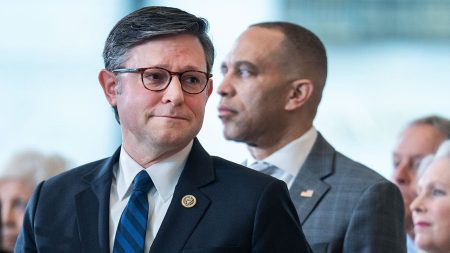
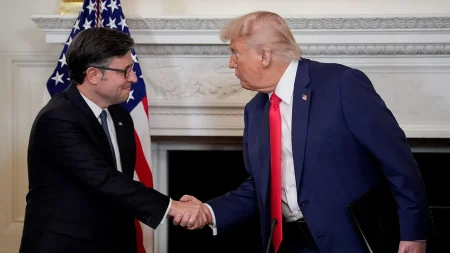
Looking to the future, the President painted a grand visual picture of things to come, outlining a series of massive architectural and cultural proposals meant to permanently alter the landscape of the nation’s capital in honor of the semiquincentennial. He teased the construction of several major projects, including a grandiose new ballroom at the White House to host foreign dignitaries and national celebrations, a majestic “triumphal arc” to be erected near the hallowed grounds of Arlington National Cemetery, and a sprawling National Garden of American Heroes designed to honor the country’s most legendary figures in West Potomac Park. Additionally, he highlighted the upcoming “Spirit of ’76” exhibition at Freedom Plaza, which would immerse visitors in the grit, sacrifice, and ideals of the original revolutionary generation. Surrounded by key political figures like House Speaker Mike Johnson, prominent Cabinet officials, and close administrative allies, Trump framed these physical endeavors not as vanity projects, but as vital monuments to a looming “golden age” for the country. He urged the American people to lift their gazes, expand their imaginations, and abandon the cynical expectations of the modern era, promising that despite the challenges of the past few years, the absolute best chapters of the American story were still waiting to be written.
The Great American State Fair itself, scheduled to run through July 10, was showcased as a living, breathing microcosm of the country’s vast diversity, blending regional folkways with cutting-edge technological prowess. Trump promised that the multi-week fair would feature exhibits from all fifty states and six U.S. territories, offering citizens a rare chance to experience the full, rich tapestry of American life in one central location. The fairgrounds promised a dazzling array of contrasting experiences, ranging from high-stakes, old-fashioned rodeos and live patriotic music to incredibly futuristic displays, including an eleven-foot-tall, artificial-intelligence-designed nuclear test flight vehicle that had been unveiled by the administration to showcase American scientific hegemony. Sports fans were promised a FIFA World Cup fan zone, while the younger generation was courted with the announcement of the “Patriot Games”—a high-profile athletic competition showcasing the country’s elite high school athletes—and the thrilling “Freedom 250 Grand Prix,” which would see race cars tearing down Pennsylvania Avenue and circling the very halls of Congress. Despite facing logistical hurdles and the high-profile withdrawal of several musical acts prior to the opening, the event pressed forward with high energy, anchored by a determination to stage a celebration of freedom that would be impossible to ignore.
As the opening night drew to a close, Trump’s rhetoric shifted toward a sweeping historical perspective, weaving together the diverse threads of the national narrative into a singular, emotional tribute to the generations of everyday Americans who built, defended, and defined the country. He invoked the names of the Founding Fathers, the fiery rhetoric of Patrick Henry, and the freezing battlefields of the Revolutionary War, before tracing the American spirit through the hazardous settling of the wild West, the laying of the transcontinental railroads, the raising of dizzying steel skyscrapers, the trials of two world wars, and the ultimate triumph of the space race. This grand heritage, he argued, was not a dusty collection of history lessons, but an active, living destiny that bound all citizens together as one unified people marching under a single flag toward an incredibly bright and dominant future. He concluded by inviting everyone to return to the National Mall on the upcoming Fourth of July, promising to host a historic celebration featuring the largest and most spectacular fireworks display in human history. With a final wave to the roaring crowd and a heartfelt “Happy birthday, America,” the President left the stage, leaving his audience with a profound sense of national pride and an eager anticipation for the historic milestones still to come.