


The journey from the ration lines of Havana to the glittering apex of the culinary world is a distance that cannot be measured in miles alone; it is measured in the quiet victories of the human spirit. For thirty-six-year-old chef Osmel Gonzalez, this long, winding road recently culminated in a moment of historic triumph that has forever altered the landscape of global gastronomy. Just four months after opening the doors of his restaurant, Emelina, in West Palm Beach, Florida, the establishment was awarded a coveted Michelin star—marking the first time in history that a Cuban restaurant has ever received this legendary culinary distinction. For generations, the Michelin Guide has been synonymous with the hushed, gilded dining rooms of Europe and the hyper-disciplined kitchens of Asia, rarely turning its spotlight toward the warm, soulful flavors of the Caribbean. By earning this star, Gonzalez has done far more than secure a personal accolade; he has shattered a glass ceiling for Cuban cuisine, proving to the world that the food of his homeland, so often stereotyped as rustic and simple, possesses the depth, complexity, and soul to stand alongside the finest culinary creations on earth. This achievement is a beacon of profound pride for the South Florida community and the millions of Cuban exiles worldwide, serving as a powerful testament to what can happen when a talented artist is finally granted the freedom to dream without boundaries.
To fully comprehend the magnitude of this triumph, one must understand the stark, creative wilderness from which Chef Gonzalez emerged. Having spent the first twenty-two years of his life living under the heavy, stifling shadow of Cuba’s communist regime, his relationship with food was forged not in an environment of abundance and exploration, but in one of relentless, systemic scarcity. Decades of economic isolation and authoritarian central planning have reduced the act of cooking on the island to a daily exercise in survival, where grocery shopping is a high-stress logistical battle rather than an act of creative inspiration. “Surviving is surviving,” Gonzalez explains, his words carrying the quiet, heavy weariness of someone who remembers the dull ache of constant deprivation. “When you’re surviving, you cannot be creative.” Under the crushing weight of a sixty-seven-year-old political revolution, generations of talented Cuban cooks have seen their culinary potential systematically erased, their minds occupied entirely by the exhausting quest to find basic necessities like cooking oil, salt, garlic, or rice. In a society where the simple act of putting a meal on the family table requires hours of waiting in line or bartering on the black market, there is no psychological room left for artistic innovation; culinary evolution on the island was effectively frozen in time, preserved in amber by the cold realities of poverty.
It is against this backdrop of historical erasure that Emelina was born, serving not merely as a commercial venture, but as a living, breathing love letter to the maternal heart of Gonzalez’s family. Named in honor of his beloved grandmother, the restaurant functions as an elegant temporal bridge, connecting the sophisticated, vibrant Cuba of the pre-revolutionary era with the infinite possibilities of the American dream. To Gonzalez, his grandmother Emelina represented the quintessence of “that beautiful Cuban woman” from an era before the revolution stripped the country of its color—an archetype of undeniable grace, resilience, warmth, and quiet dignity. The physical atmosphere of the restaurant is meticulously curated to evoke this nostalgic elegance, wrapping guests in a sensory experience that feels less like a modern dining room and more like stepping into a sun-drenched, welcoming Havana home of the mid-twentieth century. For the older generation of Cuban exiles who walk through its doors, Emelina is a sanctuary that restores a piece of their stolen past; for younger diners, it is an evocative education in what Cuban culture can look like when it is allowed to flourish in the light. By anchor-pointing his modern culinary laboratory to the memory of his grandmother, Gonzalez ensures that every high-concept dish remains deeply rooted in the soil of genuine human connection and ancestral love.
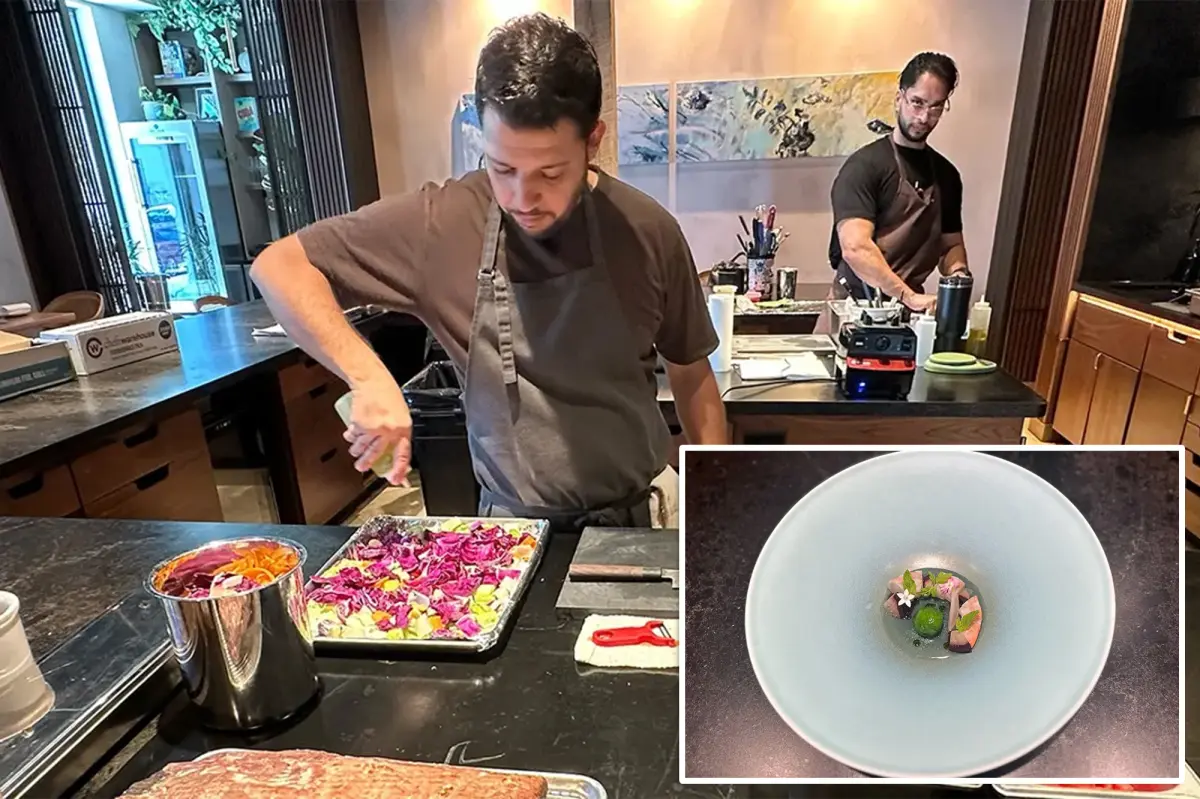
The culinary philosophy of Emelina is a masterclass in balance, choosing not to discard the beloved traditions of Cuban cooking, but to build upon them with a level of refinement and technical precision never before seen in the diaspora. Gonzalez is quick to emphasize that his goal is never to erase or reinvent the classic dishes that have comforted his people for decades; rather, he seeks to take those familiar, comforting flavors on a journey of boundless creativity. This thoughtful approach is beautifully illustrated in the restaurant’s menu, which sources local ingredients from the fertile lands and coastal waters of South Florida to tell a unique geographic story. Diners are treated to astonishing creations like poached local oysters enveloped in a cloud of velvety yucca foam and dusted with earthy mushroom powder, a dish that transforms a humble, heavy starch into a gossamer-light textural masterpiece. In another offering, simple, vibrant cherry tomatoes are paired with a bright, herbaceous Cuban oregano chimichurri and a delicate macadamia milk foam, demonstrating how basic, accessible ingredients can be elevated to the heights of fine dining through sheer imagination and culinary respect. Through these dishes, Gonzalez honors the ingenuity of his ancestors—who always had to make do with very little—by showing what can happen when those same flavor profiles are nurtured by the boundless resources of a free society.
Nowhere is the subversive and liberating nature of Gonzalez’s menu more apparent than in his deliberate, triumphant inclusion of beef. On the island of Cuba, beef is not merely a dinner choice; it is a highly controlled, illegal commodity, a symbol of extreme luxury and state oppression where the unauthorized slaughter of a cow can carry prison sentences harsher than those for violent crimes. For decades, the average Cuban citizen has been barred from consuming beef, a luxury reserved strictly for wealthy tourists in state-run resorts or high-ranking government officials, making it a mythical ingredient to millions of ordinary families. “Beef was never part of our menu in regular life,” Gonzalez recalls, pointing to a glaring omission that shaped his childhood and the culinary memories of his peers. By making premium beef a centerpiece of the dining experience at Emelina, Gonzalez is participating in a quiet, delicious act of poetic justice. He presents the meat in a way that honors how Cuban families would have prepared and enjoyed it had their culinary traditions not been hijacked by authoritarian rule. This culinary choice is a declaration of freedom, transforming a long-cherished forbidden fruit into a celebrated centerpiece of abundance, healing, and cultural reclamation.
As the initial whirlwind of excitement surrounding the Michelin star begins to settle into the daily reality of running an internationally acclaimed kitchen, Chef Gonzalez remains remarkably grounded, acutely aware of the monumental path that lies ahead. While achieving a Michelin star is the lifelong summit of many a chef’s ambitions, he understands that the true test of greatness lies in the relentless, grueling discipline required to maintain it. “Every chef’s dream is to have a Michelin star,” he says with a mixture of reverence and determination, “but keeping this star is what’s the really hard work.” Far from being intimidated by this pressure, Gonzalez views the spotlight as an invaluable opportunity to elevate the entire culinary community of West Palm Beach, predicting that his success will inspire a wave of adventurous, creative chefs to set up shop in the area over the next five years. Ultimately, his journey from the silenced kitchens of Havana to the absolute pinnacle of culinary achievement in America stands as a profound monument to human resilience. Chef Osmel Gonzalez has proven that you can take a chef out of a land of scarcity, but when you free his mind to create, he will build a legacy of abundance that feeds the soul of an entire culture.