



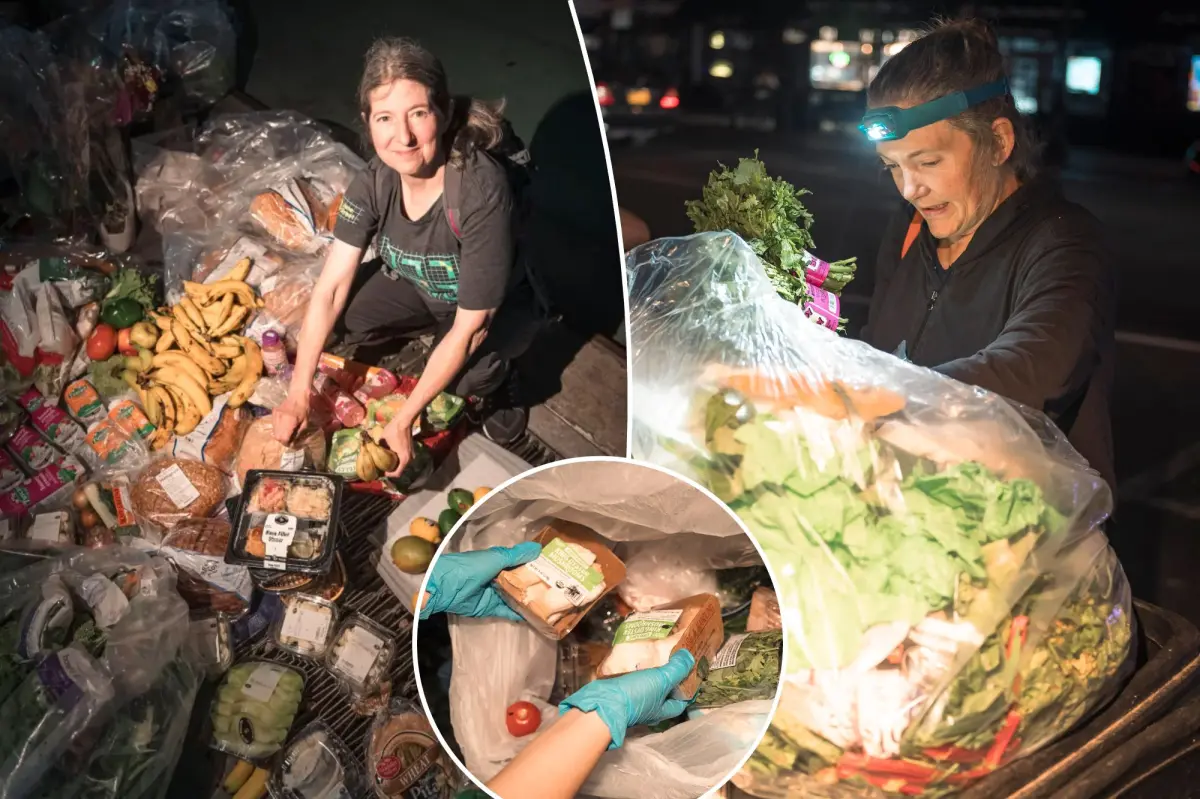
On a humid Tuesday evening at exactly 9:30 PM, on the quiet borders of Manhattan’s affluent Sutton Place, a quiet and orderly revolution takes shape against the backdrop of towering luxury apartments and darkened storefronts. A small, eclectic group of ten to fifteen individuals, wearing protective face masks and heavy-duty gardening gloves, quietly gathers around a row of neat, black plastic trash bags resting on the pavement outside a high-end neighborhood supermarket. They are the New York City Freegans, a diverse and largely anonymous collective of modern-day urban foragers whose ages span from eager twenty-somethings to experienced sexagenarians, representing a kaleidoscope of professions, backgrounds, and personal philosophies. Far from the chaotic, foul-smelling heaps of rotting refuse depicted in cinematic tropes of urban decay, these curbside bins reveal a surprising, meticulously packaged sanctuary of high-quality, boutique-grade food that was sitting on pristine supermarket shelves just hours prior. Armed with narrow flashlight beams and clear-eyed intent, these garbage gourmands quickly and quietly unearth immaculate packages of organic guacamole, unblemished artisanal loaves of sliced bread, vacuum-sealed gourmet salmon filets, and multiple chilled cartons of organic heavy cream that normally retail for upwards of ten dollars a pint. It is a stunning visual confirmation of the ancient adage that one person’s discarded junk is indeed another’s prized treasure, challenging the very definition of what we deem waste in a society built on rapid, disposable consumption.
At the heart of this curious expedition is Janet Kalish, a 63-year-old retired schoolteacher who has dedicated the last two decades of her life to championing the Freegan philosophy and organizing public “trash tours” across the boroughs of New York. Having spent twenty-nine years working within the structured confines of the public school system, Janet’s entry into this alternative lifestyle began in 2004 with a healthy dose of skepticism when she first heard whisperings of people feeding themselves entirely for free; however, after joining a single tour out of curiosity, she was instantly captivated by the sheer logic, abundance, and ethical clarity of the practice. Today, she credits her early and financially secure retirement—free from the crushing economic anxieties that plague many older New Yorkers—to the fact that she successfully supplements over ninety percent of her daily diet with perfectly good, salvaged foods. Janet organizes these regular, educational walks through online platforms like Meetup, introducing curious newcomers to the precise choreography of the forage, which requires an intimate, mental map of neighborhood trash schedules to catch the fresh inventory in the brief window between supermarket closure and municipal sanitation pickup. Out of a deep ethical respect for the local ecosystem, Janet and her core group purposely avoid leading these tours in the same location twice, ensuring they do not deplete resources or bring unwanted attention to the specific dumpsters that vulnerable, low-income individuals quietly depend upon for their daily nutritional survival.
This quiet, street-level crusade arrives at a moment of acute economic and environmental crisis, as ordinary consumers battle stubbornly high grocery costs fueled by historic inflation and volatile global supply chains. As grocery prices continue to climb, forcing many working-class families to make hard compromises in their weekly budgets, the astronomical scale of American food waste stands out as a glaring systemic failure, with statistics revealing that the United States discards approximately 120 billion pounds of food annually—roughly forty percent of the country’s entire food supply. Supermarkets routinely purge perfectly fresh inventory from their shelves simply to make room for incoming shipments, choosing to discard premium goods rather than discount them or manage the logistical overhead of donating them to local food pantries. This stark corporate excess has found a powerful counter-narrative online, where the dumpster diving movement has transcended its old underground status to become a highly visible digital trend spearheaded by charismatic “bin-fluencers” like Anna Sacks. Known to her half-million Instagram followers as “The Trashwalker,” Sacks demystifies the haul by posting viral videos that show her rescuing high-end items, from mountain-sized piles of brand-name chocolate bars outside chain drugstores to fully functioning luxury home appliances like a five-hundred-dollar rose gold slow juicer, proving to a global audience that our trash bins are practically overflowing with unexecuted wealth and usable beauty.
The tales of abundance shared among the seasoned veterans of the Freegan community often sound more like the spoils of a high-end shopping spree than a frantic search through curbside refuse. Gil, an passionate environmental educator who often joins the tours to share his knowledge of ecological systems, recalls a staggering raid on a cold storage facility where he salvaged six massive, imported gourmet cheese wheels worth roughly four hundred and fifty dollars each, carrying them home in large, heavy-duty reusable IKEA bags. He speaks fondly of his early days in the city when an experienced mentor showed him a hidden spot in Long Island City behind an industrial bakery that supplies Manhattan’s most luxurious hotels, where three massive dumpsters would regularly fill with warm, freshly baked artisanal bread that had simply exceeded the maximum daily order limit. For Gil and his peers, the secret to unlocking this hidden, parallel world of luxury lies simply in shedding one’s social conditioning, dropping the ego, and looking past the superficial stigma associated with the word “trash.” From finding mint-condition laptops and university textbooks during student move-out weeks to dining on premium imported delicacies, these foragers prove that a highly comfortable, resource-rich lifestyle is completely attainable if one is willing to step off the conventional consumer treadmill and embrace local abundance.
Naturally, the path to becoming a Freegan requires overcoming deep-seated psychological barriers and societal taboos, as most people are conditioned from childhood to view anything associated with a garbage can as inherently contaminated, dangerous, or dirty. Seasoned foragers like Cindy Rosin work to demystify these fears by teaching practical food-safety protocols, advising searchers to use their natural senses—smell, sight, and touch—to evaluate items, while emphasizing that packaged items are hermetically sealed and offer a reliable barrier against dirt. Others, like Cooper Union graduate Violet Caleca, confidently dismiss the hygiene anxieties with the simple, proud testimony of having eaten salvaged “trash bagels” for five consecutive years without ever experiencing a single day of illness or stomach discomfort. Beyond personal safety, the Freegans adhere to a strict ethical code designed to maintain harmony with local store owners and the public, emphasizing the crucial importance of opening bags carefully at the knot rather than tearing them open, and leaving the sidewalk cleaner than they found it to ensure merchants do not face city sanitation fines. Because dumpster diving is generally legal on public sidewalks in New York City as long as participants do not trespass on fenced private property, these careful stewardship practices are what allow the community to guide public tours openly and keep the peace with the neighborhoods they visit.
Ultimately, Freeganism is far more than a practical survival tactic in an expensive city or an eccentric hobby; it is a warm, deeply humanizing philosophy centered on community, creative reuse, and mutual aid. Beyond the late-night street tours, the group hosts regular craft salons where discarded packaging and materials are lovingly transformed into works of art, as well as communal feasts where members gather to cook, share stories, and enjoy the delicious fruits of their combined foraging labor. During the tours, the infectious spirit of the foragers often bridges the gap between different social worlds, drawing in skeptical onlookers, intrigued neighbors, and curious college students who drop their hesitation to join the hunt, filling their backpacks with fresh fruit, bright flowers, and packaged goods that were destined for a landfill. By turning an act of survival into a celebratory, educational, and deeply social gathering, the Freegans light a hopeful path forward, showing us that by simply looking at our waste with a sense of wonder, resourcefulness, and empathy, we can cultivate a more generous, connected, and sustainable way of living together in the heart of the metropolis.