


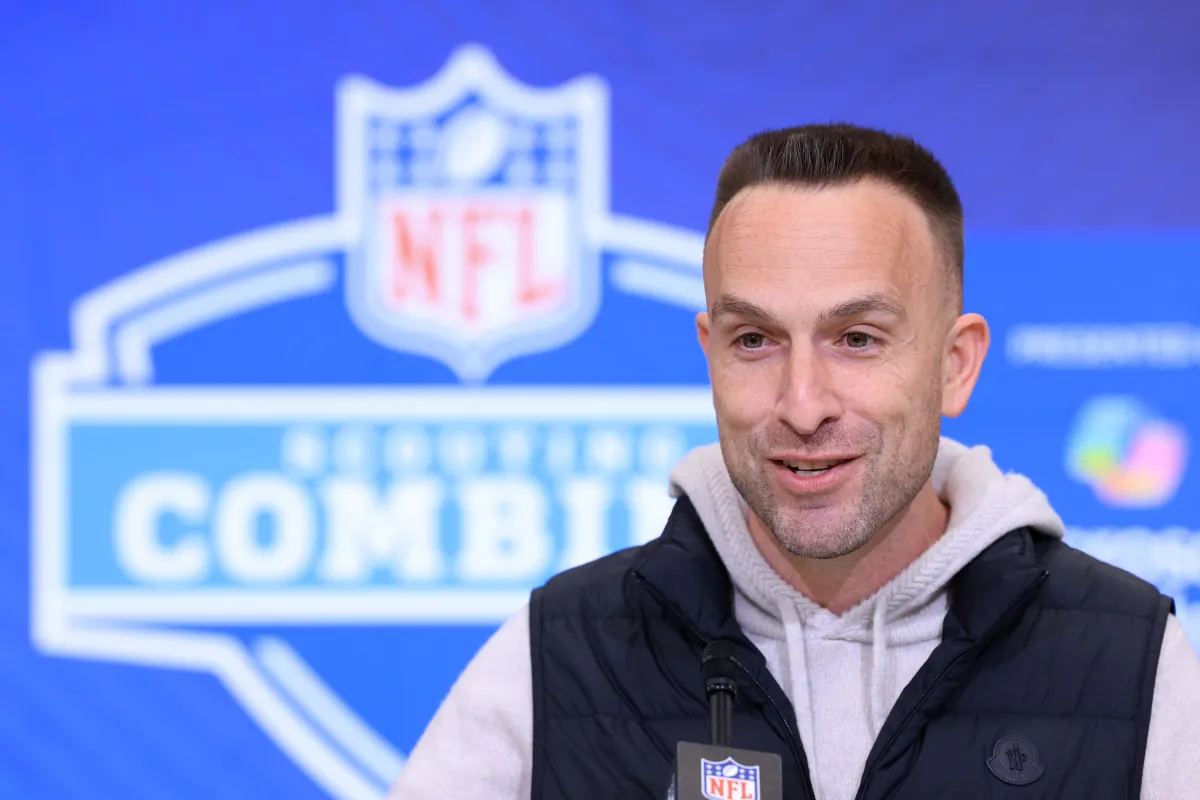
The Miami Dolphins are currently navigating a turbulent and deeply unsettling offseason, characterized by a level of systemic disarray that has left both local fans and national analysts scratching their heads in disbelief. Yet, when you peer beneath the chaotic surface of these sudden personnel changes, a sobering truth emerges: this massive disruption was entirely by design. The franchise had reached a critical plateau where incremental adjustments and minor roster tweaks were no longer enough to break their cycle of late-season collapses; they needed to violently shake up a formula that had grown incredibly soft, predictable, and stale. This realization culminated in the dramatic, polarizing decision to part ways with head coach Mike McDaniel, whose high-concept, track-meet offense defined the team’s identity from 2022 through 2026. While McDaniel’s whimsical personality and offensive genius brought excitement back to South Florida, his teams ultimately lacked the physical toughness and defensive resilience required to win grimy, cold-weather games in January. To replace him, the front office made a stark, calculated pivot by hiring Jeff Hafley, a no-nonsense defensive mind known for his strict structural discipline and defensive rigor. Hafley’s arrival signals the dawn of a demanding new era in Miami—a “new sheriff in town” dynamic that has already resulted in a ruthless stripping down of the previous regime’s roster. In order for this complete philosophical transformation to work, however, Hafley must make one more critical, stabilizing move before the regular season begins in September, before the harsh reality of live NFL action exposes the terrifying gaps in his newly minted squad.
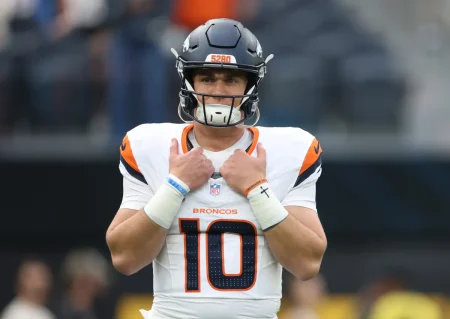
The most gaping, undeniable void left in the wake of this cultural purge lies at the wide receiver position, a unit that went from being the envy of the entire league to an absolute barren wasteland practically overnight. A team’s competitive soul is often defined by its star power, and the Dolphins recently ripped that soul out by trading away their dynamic playmaker, Jaylen Waddle, to the Denver Broncos. Waddle was far more than just a speed sterilizer on the perimeter; he was the ultimate safety net, an elite route-runner capable of taking any five-yard slant the distance, and the emotional spark plug of an offense that relied heavily on his chemistry with the quarterback. To make matters worse, this devastating loss coincides with the quiet, unceremonious departure of long-time starting quarterback Tua Tagovailoa. While critics spent years pointing to Tua’s physical limitations and his dependency on a perfect system, his incredible anticipation and lightning-fast release masked a perennially weak offensive line and kept the offense ahead of the chains. Stripping away both your franchise quarterback and your elite, home-run-hitting wide receiver in the very same offseason is an incredibly high-stakes gamble. This roster tear-down has left the current depth chart looking virtually unrecognizable, sparking intense debates in sports bars across Miami about whether the front office is executing a brilliant, long-term strategic rebuild or simply waving the white flag of surrender before a single snap has even been played.
With the deck completely shuffled and the old regime’s stars scattered across the league, the Dolphins have decided to hand the starting quarterback job to Malik Willis. This decision represents one of the most volatile, high-risk experiments in recent NFL memory, as Willis is a wildly athletic but historically unproven signal-caller whose professional career has been defined far more by raw, unpolished potential than by consistent, on-field production. To successfully transition a young, developmental quarterback like Willis into a reliable starter, an organization must build a highly supportive ecosystem around him—a unit featuring a dominant run game, a protective offensive line, and, most importantly, veteran pass-catchers who can bail him out when his pocket awareness fails. Unfortunately, the Dolphins’ current offensive line is highly suspect, and the wide receiver room lacks any semblance of proven talent, meaning Willis is being thrust directly into a pressure cooker without any of the tools necessary to survive. History is loaded with the cautionary tales of young, highly athletic quarterbacks whose careers were permanently ruined because they were forced to play behind porous lines with wide receivers who couldn’t separate. If the Dolphins truly want to evaluate whether Willis can be their long-term solution under center, they cannot simply throw him to the wolves and hope his scrambling ability saves him; they must actively invest in his survival by bringing in a proven weapon who can consistently win one-on-one matchups on third downs.
This bleak, highly concerning situation has caught the attention of prominent national commentators, with Bleacher Report’s Brent Sobleski delivering a incredibly harsh yet accurate assessment of the franchise’s current trajectory. Sobleski pulled no punches in a recent analytical piece, pointing out that the Miami Dolphins are widely considered by many to be the single worst team in the National Football League heading into the upcoming season. While preseason rankings are subjective and games are ultimately decided on the grass rather than on paper, Sobleski’s core argument is virtually impossible to dispute: the front office has actively failed to place their new starting quarterback in an environment where he can actually develop post-snap processing skills and find any semblance of rhythm. However, Sobleski’s grim diagnostic also highlights a highly unique, silver-lining opportunity for any free-agent receiver looking for a fresh start. Because the Dolphins’ current wide receiver depth chart is so thoroughly devoid of proven production, an established veteran would not have to fight through a crowded room or compete for playing time; they could walk into the facility on day one, unpack their bags, and immediately claim the undisputed wide receiver number one spot. It is a rare market dynamic where a receiver is guaranteed a massive target share simply by virtue of showing up, making Miami an ideal destination for a player looking to resurrect their own statistical profile.
To prevent what is already a highly volatile transition year from collapsing into an unwatchable, double-digit loss season, Miami must aggressively target a proven veteran wideout like Deebo Samuel, or even a slightly lower-profile veteran who understands the nuances of defensive coverages. A versatile, physical player like Samuel would be the absolute perfect antidote to the offense’s current limitations, providing Willis with a dynamic weapon who excels at creating yards after the catch on simple, high-percentage throws. Furthermore, a seasoned veteran brings an invaluable psychological element to a struggling locker room that goes far beyond any box score or statistical category. Young wide receivers and developmental quarterbacks do not just need coaching in the film room; they need to observe how a true professional carries himself during a grueling week of practice, how he reads complex safety rotations on the fly, and how he adjusts his route running when a play breaks down. Without this stabilizing, veteran presence on the field, the offensive huddle can quickly devolve into a chaotic environment of confusion, leading to rapid three-and-outs, devastating turnovers, and toxic sideline finger-pointing. By neglecting the wide receiver position, the front office is not just risking losses on Sunday; they are risking the long-term, psychological development of their young coaching staff and their raw, athletically gifted quarterback.
Ultimately, the choice the Dolphins’ front office makes over the coming weeks will send a loud, unmistakable signal to the locker room and the fan base about their true competitive intentions for the year. If they choose to stand pat with their current, unheralded group of receivers, they are essentially admitting that this is a total throwaway season designed purely to tank for a high draft pick in next spring’s draft—a defeatist strategy that rarely sits well with highly competitive professional athletes who risk their physical health on every single play. Football players do not put their bodies on the line to be passive participants in a multi-year rebuilding project, and asking Jeff Hafley’s defense to play lights-out football while the offense consistently stalls is a recipe for a fractured, resentful locker room. Signing a respected veteran wide receiver is the perfect middle ground, allowing the franchise to remain highly competitive and maintain its organizational dignity while still focusing heavily on the long-term development of Malik Willis. Shaking up the organization and moving on from the comfortable mediocrity of the Mike McDaniel era was undoubtedly a brave and necessary decision, but there is a major difference between a calculated house renovation and letting the entire structure burn to the ground. For the sake of their young quarterback and the sanity of their fans, Jeff Hafley and the front office need to pick up the phone, make a deal, and bring a legitimate threat to the Miami passing game before the season slips away.