


In the cathedral of modern professional sports, the baseball diamond has long served as a reflection of American society, representing both our shared pastimes and our deepest cultural divisions. This delicate balance was recently disrupted when Major League Baseball issued a stern warning to three San Francisco Giants players—pitchers Landen Roupp, JT Brubaker, and Ryan Walker—who had chosen to write a Bible verse on their team-issued Pride Night caps. What began as a personal gesture of faith by three young athletes navigating their private moral convictions in a highly public arena has quickly ballooned into a high-stakes legal and cultural battleground. The league’s decision to penalize these players for displaying scripture during an evening dedicated to celebrating the LGBTQ+ community struck a sensitive nerve, igniting a storm of public controversy and drawing the immediate, forceful intervention of state prosecutors. For many observers, this clash highlights a growing tension in contemporary America: the difficult intersection of corporate diversity initiatives, individual religious freedom, and the right of workers to express their deepest personal identities without fearing career-ending professional repercussions.
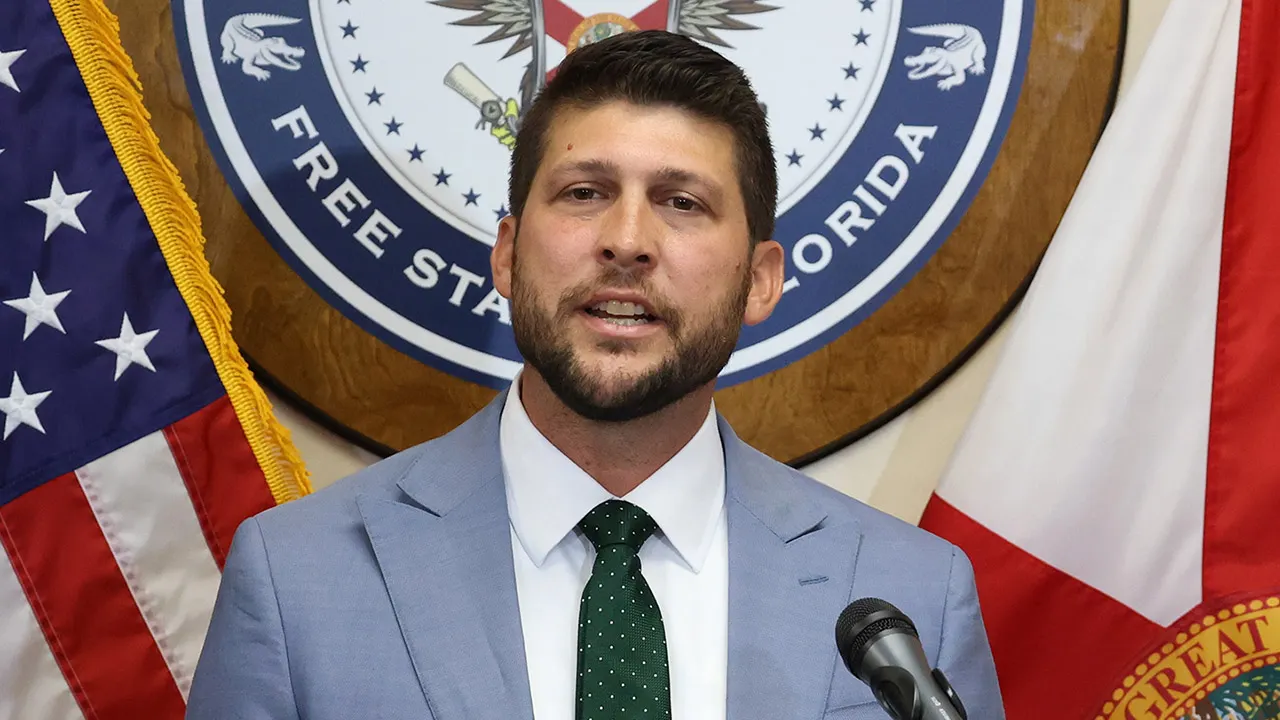
Responding to what they view as a clear case of ideological overreach and faith-based discrimination, the attorneys general of Florida and Missouri have stepped forward to challenge the league’s authority, elevating the incident from a locker-room dispute into a full-scale civil rights investigation. Leading the charge, Florida Attorney General James Uthmeier has launched a formal probe by serving Major League Baseball with an official subpoena. The broad scope of this legal action seeks to determine whether the league’s corporate policies and uniform practices violate state laws protecting workers from religious discrimination and deceptive business practices. According to the documents obtained by Fox News Digital, Florida’s investigation is focused heavily on potential infractions under both the Florida Civil Rights Act and the Florida Deceptive and Unfair Trade Practices Act. In a strongly worded letter to MLB Commissioner Robert Manfred, Uthmeier warned that selectively enforcing uniform rules to suppress religious viewpoints while simultaneously promoting favored secular ideologies constitutes a hypocritical double standard that is not only deeply unfair to the players but potentially illegal under state law.
At the heart of the legal dispute is Major League Baseball’s defense that its warning to the Giants players was strictly a matter of maintaining uniform consistency rather than a suppression of religious expression. The league has repeatedly maintained that its rules against altering team-issued gear are absolute, claiming that the warning issued to Roupp, Brubaker, and Walker was simply a routine enforcement of the uniform code. However, Attorney General Uthmeier and other critics have pointed out that this push for absolute uniformity does not align with the league’s recent practices. In his communication to Commissioner Manfred, Uthmeier highlighted several instances where the league actively encouraged or permitted modifications to player uniforms for ideological, social, or personal causes. He noted that in 2019, a Cincinnati Reds player was permitted to write a visible tribute on his cap following a tragic mass shooting nearby, and in 2020, Major League Baseball enacted sweeping, formal exceptions to its uniform codes, allowing players to wear Black Lives Matter patches on their sleeves to support social justice campaigns. This historical discrepancy has led critics to argue that the league is engaging in selective policing, welcoming secular social causes while penalizing expressions of traditional religious devotion.
The legal pressure on Major League Baseball intensified dramatically with the specific provisions outlined in Florida’s subpoena, which demands a massive, comprehensive production of internal documents by July 23, 2026. Under the terms of the subpoena, the league must turn over all communications, drafts, and deliberations concerning how the June 2026 cap-writing incident was classified and evaluated by league officials. Specifically, investigators want to see whether the league categorized the Bible verses as religious expression, political messaging, a protest, or a simple violation unrelated to content. Furthermore, the subpoena requires the disclosure of what prompted the league’s review in the first place—such as internal complaints, media inquiries, or external pressures—along with the precise timing of these communications relative to the warnings issued to the players. By pulling back the curtain on the league’s internal decision-making processes, the investigation seeks to expose whether MLB officials engaged in deliberate bias, analyzing whether the treatment of the Giants players aligned with how the league handled comparable, non-religious uniform alterations in the past.
At the same time, Missouri Attorney General Catherine Hanaway has taken an equally confrontational stance against the league, demonstrating a unified front between the two states. Hanaway recently sent her own formal letter to Commissioner Manfred, demanding explicit and immediate assurances that no baseball player who chooses to abstain from wearing Pride Month paraphernalia, or who chooses to include scripture on their team gear, will face disciplinary action, benching, or career retaliation. Setting a strict deadline of June 25, Hanaway warned that a failure by the commissioner’s office to confirm these protections would prompt Missouri to launch its own independent, formal civil rights investigation into the league. This dual-state intervention carries significant practical weight because, while these attorneys general only have jurisdiction within their respective state borders, their joint actions directly impact four highly prominent Major League Baseball franchises. Florida is home to the Tampa Bay Rays and the Miami Marlins, while Missouri hosts the historic St. Louis Cardinals and the Kansas City Royals, meaning any legal ruling or policy change resulting from these investigations will have a profound ripple effect across the entire landscape of professional baseball.
Ultimately, this unfolding controversy represents much more than a debate over cap designs or professional dress codes; it serves as a powerful humanizing lens on the complex realities faced by modern athletes who find themselves caught between their private souls and public expectations. For players like Roupp, Brubaker, and Walker, the simple act of writing scripture on their gear was likely a quiet way to ground themselves in their faith amidst the high-pressure environment of professional sports. When corporate mandates conflict with those deep personal beliefs, it forces a difficult choice between career security and spiritual conscience. As the investigations by Florida and Missouri move forward, they challenge Major League Baseball to define the true boundaries of its commitment to diversity, equity, and inclusion. If a sports league truly values a diverse and inclusive environment, critics argue, it must make room for the personal religious convictions of its athletes just as readily as it accommodates broader cultural movements. In the end, this battle will likely shape how we view the rights of employees in the modern corporate era, serving as a reminder that even in the multi-billion-dollar business of professional sports, the human element of individual belief must never be completely sidelined.