


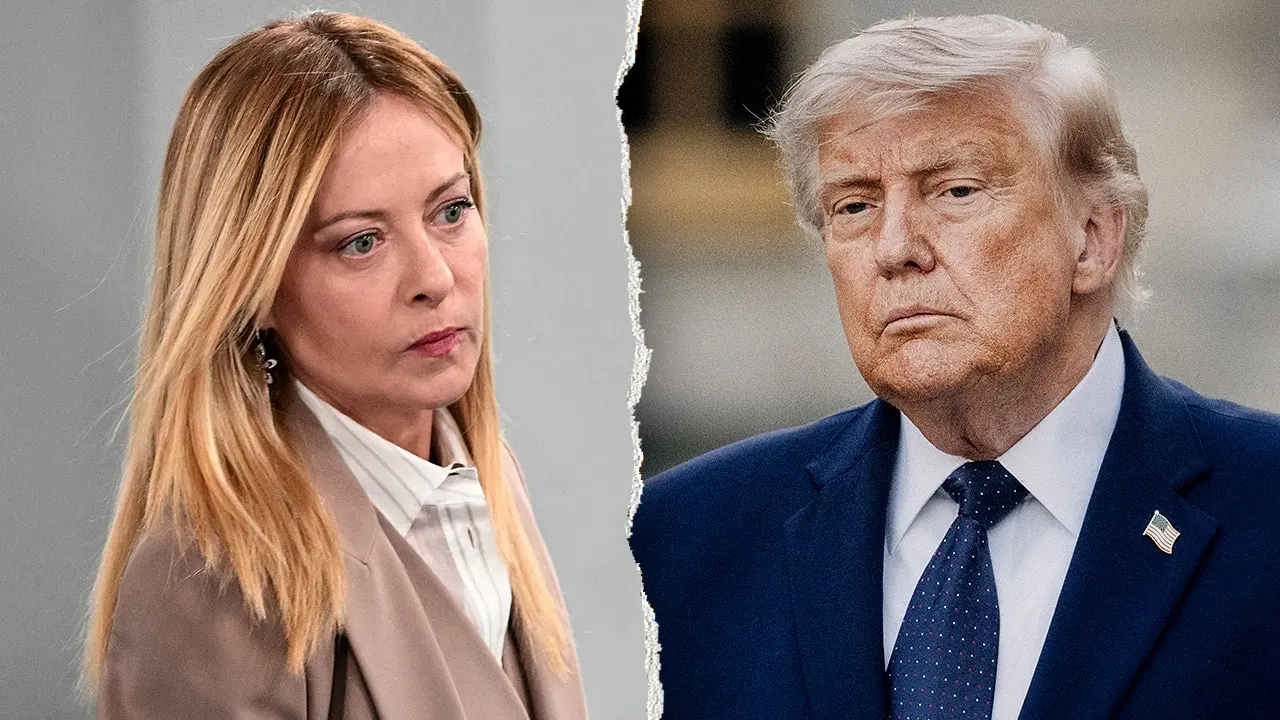
The political world has long watched the unlikely but powerful ideological synergy between Donald Trump and Giorgia Meloni with a mix of fascination and geopolitical anxiety. Meloni, who made history as Italy’s first female prime minister, had carefully cultivated a reputation as one of the American leader’s most reliable, articulate, and steadfast allies on the European continent. Her presence at his 2025 presidential inauguration—where she stood as a solitary beacon of European populist solidarity—was meant to signal an unshakeable bond destined to reshape transatlantic relations. Yet, the delicate and highly publicized architecture of this political alliance collapsed with stunning rapidity following the recent G7 summit, revealing a raw and surprisingly personal rift that has burst into the open. The catalyst for this public dissolution was not a complex regional treaty dispute or a grand ideological divergence, but rather a characteristically transactional and boastful claim made by Trump to the Italian television network La7. Asserting that Meloni had practically “begged” him for a photograph during their summit meetings, Trump remarked with a glib, patronizing indifference that he only capitulated out of pity, suggesting she should simply be happy he deigned to speak to her at all. This offhand dismissiveness instantly transformed a carefully managed diplomatic partnership into a highly public trial of personal and national honor, catching diplomats on both sides of the Atlantic completely off guard and exposing the fragile, volatile egos that often lie just beneath the surface of global populism.
Meloni’s response was swift, cutting, and calculated to strike directly at the heart of Trump’s self-styled persona as a strongman leader who respects only strength and dominance. Rejecting his version of the G7 exchange as a complete fabrication, Meloni expressed a mixture of deep disappointment and astonishment at how the American president chose to treat his closest international partners, noting with a touch of weariness that this was far from the first time such erratic behavior had occurred. By declaring unequivocally that “neither I nor Italy ever beg,” she did not merely defend her personal reputation as a formidable leader; she reframed the insult as a direct assault on the sovereignty, cultural pride, and collective dignity of the Italian nation. Meloni then launched a devastating rhetorical counter-offensive by drawing a sharp contrast between how Trump treats his allies versus how he interacts with global adversaries. She openly lamented that the American president seemed incapable of directing the same fierce determination toward actual enemies of the Western world—such as authoritarian regimes in Iran and elsewhere—whom he instead frequently treats with a baffling degree of indulgence, flattery, and leniency. This spirited defense signaled that Meloni would not play the submissive, quiet junior partner in a geopolitical hierarchy, establishing a clear boundary that prioritizing her own national self-respect and the dignity of her office would always supersede the preservation of a volatile, one-sided political friendship.
The immediate, tangible fallout of this rhetorical clash traveled swiftly from television screens to the highest corridors of international diplomacy, proving that this was far more than a passing war of words or a playground spat. The most dramatic manifestation of this anger came from Italian Deputy Prime Minister and Foreign Minister Antonio Tajani, who took the extraordinary and abrupt step of canceling a highly anticipated diplomatic and economic mission to the United States. Tajani’s planned visit to Miami, Florida, for the Italy-United States Business, Investment, Science, and Innovation Forum was intended to be a cornerstone event reinforcing trade, tech collaboration, and bilateral investment between the two nations. However, Tajani declared publicly on social media that Trump’s offensive and derogatory remarks toward Italy’s premier were an insult to the entire Italian populace, rendering his official presence in America untenable at that moment. This sudden diplomatic freeze put a spotlight on the frantic, behind-the-scenes damage control being waged by other key political figures, notably US Secretary of State Marco Rubio, who had recently traveled to Rome to smooth over previous frictions involving Meloni, Trump, and Pope Leo XIV. Rubio was left holding the pieces of a fractured alliance, scheduled to deliver remarks at the very Florida conference that the Italian delegation had just boycotted in protest. The rapid escalation of this incident underscored how quickly personal insults can disrupt vital economic, scientific, and strategic conversations, demonstrating that when populist leaders clash over personal pride, the institutional mechanisms of international statecraft are often the first casualties.
While the immediate spark of the conflict appeared trivial, the dry tinder of resentment had been quietly accumulating for months due to deep policy rifts concerning the volatile situation in the Middle East. As Trump consistently advocated for a highly aggressive, unilateral confrontation with Iran, urging Western allies to adopt an uncompromising, hawkish stance, Meloni found herself walking an incredibly difficult political and domestic tightrope. Facing mounting domestic pressure from an Italian public weary of foreign interventions and navigating complex regional diplomatic realities, she chose to stay on the sidelines, refusing to drag her country into another open-ended foreign conflict. Italy’s geographic proximity to the Mediterranean basin and its historic energy and security ties across North Africa and the Middle East mean that any escalation with Iran carries severe economic and security implications for Rome. For Meloni, the primary responsibility was to protect her citizens, maintain stability, and manage Italy’s internal political landscape, even if it meant defying the hawkish, high-pressure expectations of her powerful American counterpart. This divergence exposed a fundamental, structural flaw in the global populist alliance: while both leaders champion national sovereignty in their campaigns, their practical national interests are often fundamentally incompatible when crises arise. What Trump viewed as a lack of resolve and personal betrayal, Meloni saw as pragmatic, defensive self-preservation, highlighting the inevitable limits of political solidarity when world events force leaders to choose between foreign approval and domestic survival.
Beyond the immediate crisis in the Middle East, the tension between the two leaders taps into a broader, ongoing debate regarding the future of the transatlantic security architecture and the physical presence of American military power in Europe. Italy acts as a critical strategic hub for the United States, hosting approximately 13,000 active-duty American military personnel across six major bases, representing a vital geopolitical launchpad for operations in Eastern Europe, Africa, and the Mediterranean. Trump has long maintained a highly transactional view of military alliances like NATO, frequently threatening to reduce American troop commitments or pull out of defense agreements if European nations do not significantly increase their domestic defense spending. Meloni, conversely, has taken a firm stand against any potential reduction of the American military footprint within Italy’s borders, recognizing the stabilizing influence of the US presence for both Italian security and broader European defense. This creates a fascinating paradox where Meloni, a nationalist leader who fiercely guards Italian sovereignty against foreign meddling, is simultaneously the strongest defender of maintaining thousands of foreign troops on her home soil as a bulwark against global instability. Their clash over the G7 photo incident thus reflects a much deeper disagreement about the nature of defense partnerships, contrasting Trump’s isolationist “America First” withdrawal doctrine with Meloni’s traditionalist, albeit sovereignty-focused, commitment to collective Western defense.
Ultimately, the sudden and dramatic fracture of the Meloni-Trump alliance serves as a cautionary tale about the inherent volatility of international partnerships built on personal charisma, political theater, and populist rhetoric. While traditional alliances are anchored by institutional treaties, shared bureaucratic systems, and long-standing democratic values, populist alignments are highly vulnerable to the volatile temperaments and fragile egos of their individual figureheads. When political leaders prioritize performative dominance and personal branding over strategic, quiet cooperation, even the most promising alliances can crumble over something as minor as a dispute over a photograph. For Meloni, this falling-out may mark a pivotal transition, forcing her to redefine her foreign policy and seek more stable, institutional relationships within the European Union and the broader G7, rather than relying on the unpredictable goodwill of a transatlantic partner. For Trump, the public spat illustrates the challenges of managing relationships with modern foreign leaders who refuse to accept a subordinate, submissive role on the global stage. As the dust settles from this post-G7 fallout, it is clear that the path forward for US-Italian relations will require a delicate, humanized effort to look past the political theater and rebuild trust, proving once again that in the high-stakes arena of global statecraft, dignity and mutual respect are not optional luxuries, but the very foundation of lasting stability.