



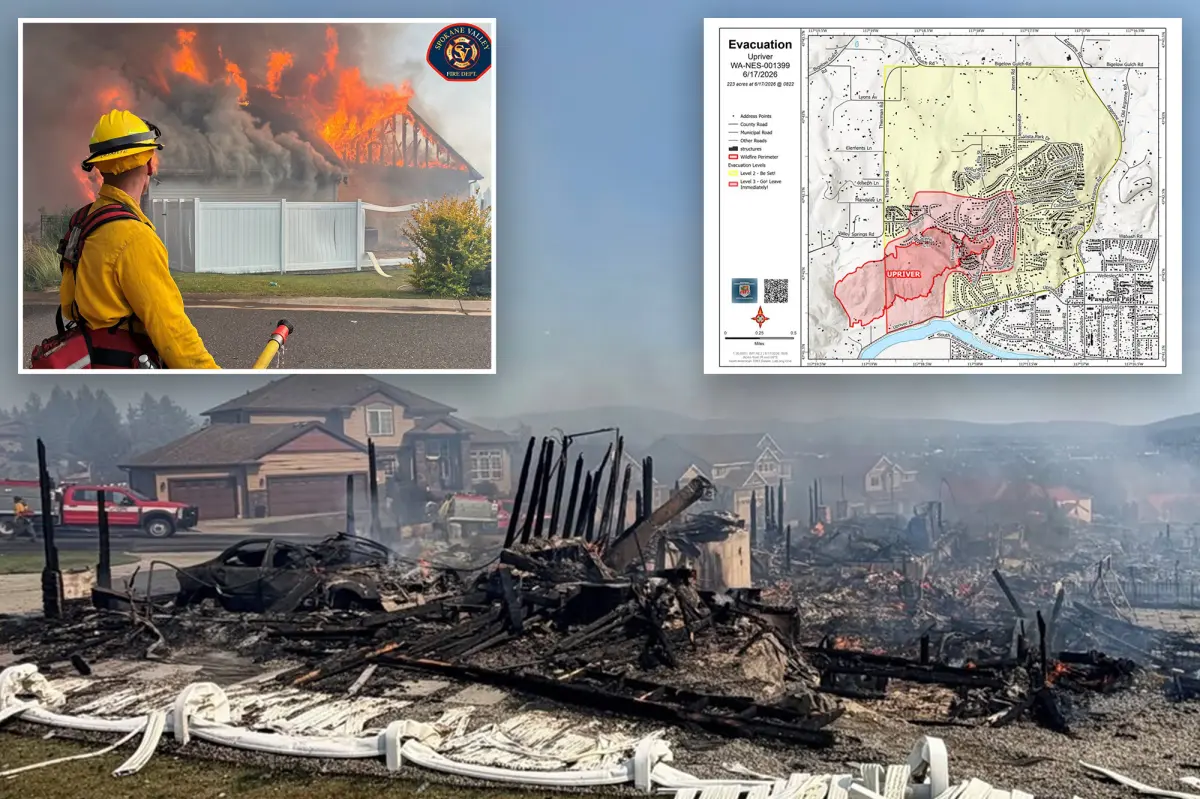
On the afternoon of June 16, what began as a routine summer day in Spokane, Washington, quickly dissolved into a terrifying struggle for survival as a fast-moving wildfire, later dubbed the Upriver Fire, ripped through the dry brush north of the Spokane River. It started with a whisper of smoke but rapidly escalated under dry, windy conditions into a towering wall of flame, threatening the historic and tranquil neighborhoods lining Upriver Drive. Residents looked up to see their blue skies choked by thick, black plumes of smoke, and within hours, the merciless blaze had scorched over 200 acres of land. The landscape, prized for its lush pine trees and scenic river views, suddenly transformed into a chaotic furnace of heat and ash. As the embers jumped from treetop to treetop, twelve cherished homes—places built on years of memories, family dinners, and quiet retirements—were reduced to smoldering ash in what felt like the blink of an eye. The wildfire moved with a terrifying, unpredictable speed that left local authorities with no choice but to immediately sound the alarm, triggering urgent Level 3 “Go Now” evacuation orders for hundreds of residents who were forced to flee with little more than the clothes on their backs.
Amidst the looming threat of the advancing flames, the true mettle of local first responders was put to the test as Spokane County Sheriff’s deputies and firefighters plunged directly into the danger zone. With neighboring houses already fully engulfed in violent sheets of fire and a rain of burning embers falling around them, these brave men and women went door-to-door, their voices hoarse from shouting over the deafening roar of the inferno. They pounded on doors, urged panicked families into vehicles, and cleared streets filled with rolling smoke. At one residence, knowing the high stakes of a Level 3 evacuation, responders found the front door unlocked. Acting on pure instinct to save lives, firefighters pushed their way inside the smoky home, shouting into the empty rooms in a desperate attempt to find anyone who might be trapped or unaware of the approaching catastrophe. They received nothing but silence. Within moments, the heat grew so intense and the flames closed in so quickly that commanders were forced to issue a life-saving retreat order to the responders themselves, pulling them out of the house just before the structure was completely consumed by the unforgiving fire.
While the physical battle against the flames raged on, a quieter, deeply personal agony was unfolding for one local family. As the hours ticked by on that fateful Sunday evening, relatives of a resident living in the heart of the evacuation zone grew increasingly sick with worry. They tried repeatedly to make contact, calling the resident who had stubbornly or fearfully refused to evacuate despite the clear and present danger outside their door. Left with agonizing silence as their only answer, the desperate family eventually contacted the Spokane County Sheriff’s Office to request a welfare check, praying that their loved one had somehow found safety or was merely unable to reach a phone. The agonizing psychological toll of waiting for news in the middle of a natural disaster is a pain known to too many families during wildfire season, as they are left to watch the news and hope against hope that the stubborn attachment to one’s home did not turn a sanctuary into a tragic trap.
The morning of June 17 brought a somber shift in atmosphere as the smoke began to settle over the charred ruins of what had been a vibrant Spokane neighborhood. When sheriff’s deputies, detectives, fire investigators, and forensic specialists finally returned to the address of the resident who had refused to flee, their worst fears were realized. The home was completely gone, reduced to a pile of twisted metal, blackened timbers, and gray ash. Sifting through the debris with solemn care, investigators discovered what appeared to be human remains hidden beneath the wreckage. The discovery cast a heavy, heartbreaking pall over the entire emergency response effort; what was once a mission of containment and property protection instantly became a scene of profound grief and tragedy. While formal identification would take time, the reality of a life lost in the flames served as a grim and devastating reminder of the ultimate cost of these growing environmental crises, turning a statistic of property damage into a deeply human tragedy.
The news of the suspected casualty rippled through the state, prompting expressions of profound grief and solidarity from community leaders, including Governor Bob Ferguson. Taking to social media to share his condolences, the Governor reflected the heavy hearts of many Washingtonians, stating that his prayers were with the family of the individual presumed dead and expressing deep gratitude for the emergency responders who had successfully evacuated hundreds of others. This tragedy highlighted the emotional toll of wildfires, which do not just burn acres of land or destroy buildings, but shatter families and leave lasting scars on the collective consciousness of a tight-knit community. Neighbors who had managed to escape with their lives found themselves mourning not just their lost possessions, but the loss of a fellow community member who had shared their streets, their views of the Spokane River, and their daily lives. The empty spaces left behind in the neighborhood would now stand as a quiet, somber monument to the unpredictability and fury of natural disasters.
Today, the battle against the Upriver Fire continues, as the community attempts to heal while still facing the ongoing threat of the landscape. As of Thursday morning, the fire was estimated at 217 acres and was only 10% contained, a stark reminder that the danger is far from over. Ground crews, heavy engines, and specialized aircraft continue to work tirelessly under challenging conditions, dropping water and retardant to draw a line in the dirt against the stubborn flames and protect the remaining threatened homes in Spokane County. The dedication of these crews represents the resilient spirit of the region, where neighbors help neighbors rebuild, and first responders continue to stand between the public and the fire’s path. Ultimately, the story of the Upriver Fire is a sobering narrative of natural fury, heartbreaking human loss, and the enduring strength of a community bound together by tragedy, determined to rise from the ashes and protect one another against the unpredictable forces of nature.