


In the heart of the Pacific Northwest, a region long celebrated as the historic birthplace of cloud computing and enterprise titan-scale software, Seattle-based startup Gradial is orchestrating a remarkable shift in how global businesses operate. In a venture capital market currently characterized by careful deliberation, Gradial’s monumental fundraising momentum reads like a high-octane tech chronicle. The company recently announced a massive sixty-five million dollar Series C funding round, spearheaded by the renowned global firm Insight Partners and enthusiastically backed by existing early-stage champions VMG, Madrona, and PruVen Capital. This major capital injection arrives hot on the heels of a thirty-five million dollar funding round finalized just last December. Collectively, Gradial has amassed over one hundred and ten million dollars in a mere sixteen months, propelling its market valuation to an eye-popping six hundred and seventy-five million dollars. Far from being just numbers on a balance sheet, this financial milestone serves as a definitive market endorsement, signaling that the theoretical promise of “agentic AI” is rapidly transitioning into a tangible, high-value reality for modern enterprises.
The genius of Gradial lies in its direct assault on some of the most frustrating, labor-intensive bottlenecks in modern marketing operations. While creative teams are exceptional at inventing ideas and writing scripts, the mechanical realities of getting those assets onto public-facing channels are famously slow. Thousands of marketing professionals spend their workdays buried under the administrative maintenance of massive enterprise platforms like Adobe Experience Manager, Salesforce, and Sitecore. A simple promotional rewrite, local pricing update, or regulatory disclosure adjustment often requires countless hours of manual authoring, repetitive design checks, painstaking quality assurance, and endless manual routing through complex corporate approval chains. Gradial resolves this exhausting systematic bottleneck by seamlessly plugging autonomous digital agents directly into these legacy systems. Instead of forcing companies to overhaul their existing software investments, Gradial’s agents act as tireless, highly efficient digital coworkers that handle the tedious operational chore of authoring, brand compliance, and workflow routing behind the scenes, effectively freeing human staff to focus on strategy and creativity.
This automated agility is especially crucial in today’s rapidly shifting digital ecosystem, where the traditional search engine optimization playbook is being rewritten by generative AI. As online search evolved into LLM-driven answer engines and conversational search portals, brands faced a dangerous vulnerability: AI-generated search results are frequently plagued by factual errors, omissions, and outdated information. Under traditional corporate structures, correcting an inaccurate search result generated in real time was a slow process, involving human detection, internal tickets, external agency briefings, manual content adjustments, and slow republishing phases. Gradial addresses this vulnerability by deploying proactive AI agents that continuously scan for inaccuracies in AI search engine results. When a discrepancy is spotted, these agents autonomously draft precise corrections, run them through pre-established compliance filters, and push them live to the corporate codebase without requiring any human triage. This changes the game for corporate communications, turning a slow, defensive, and ticket-based response system into a proactive, real-time protection of brand truth across the internet.
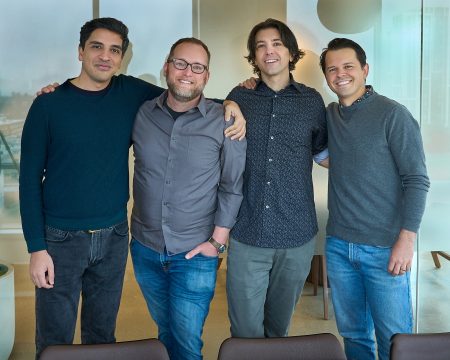
Behind this powerful enterprise tech engine is a compelling story of lifelong collegiate friendship and shared professional ambition. Gradial was co-founded in 2023 by a tight-knit quartet who first met as students at Dartmouth College: Chief Executive Officer Doug Tallmadge, Chief Growth Officer Anish Chadalavada, Chief Technology Officer Deip Kumar, and Chief Operating Officer Anup Chamrajnagar. Their combined career histories read like a masterclass in modern technology execution and financial market discipline. Tallmadge developed his software engineering and management chops at SpaceX, an environment where technical failure is not an option. Kumar similarly honed his engineering skills at SpaceX and Microsoft. Chadalavada contributed deep insights into enterprise AI from his time at Microsoft and Point72 Ventures, while Chamrajnagar brought sharp financial discipline and operations experience from Point72. Together, they have transitioned from former college dorm mates to a highly synchronized leadership unit, combining the structural perfectionism of aerospace engineering with the agility of financial markets.
The quality of Gradial’s software is proven by its prestigious and highly risk-averse client roster, which includes AWS, Prudential, T-Mobile, Vanguard, Kaiser Permanente, and US Bank. In heavily regulated industries such as healthcare, finance, and telecommunications, there is no room for error. A single compliance slip, inaccurate statement, or unapproved update can lead to catastrophic legal liabilities, heavy regulatory fines, and permanent brand damage. The willingness of financial giants like Vanguard and healthcare titans like Kaiser Permanente to trust Gradial with their operational workflows and brand validation is a massive endorsement. Rather than pushing erratic AI experiments, Gradial built its platform around the concepts of absolute compliance, predictability, and safety, proving to cautious corporate boards that agentic AI can be a trusted and reliable business partner.
Looking forward, this new round of funding will help Gradial expand its talented, one-hundred-person team, hiring across engineering, sales, and marketing to keep pace with demand. Yet, as the startup expands, its core mission remains deeply human. The co-founders are driven by a philosophy that AI should not replace the human workforce, but rather liberate it. By automating the repetitive, manual tasks that have long turned creative professionals into administrative handlers, Gradial is restoring humanity to the office, allowing people to focus on raw creativity, emotional connection, and strategic foresight. As Gradial begins its next chapter, it is paving the way for a collaborative future, proving that when humans and intelligent agents work in unison, the potential for enterprise productivity is limitless.