

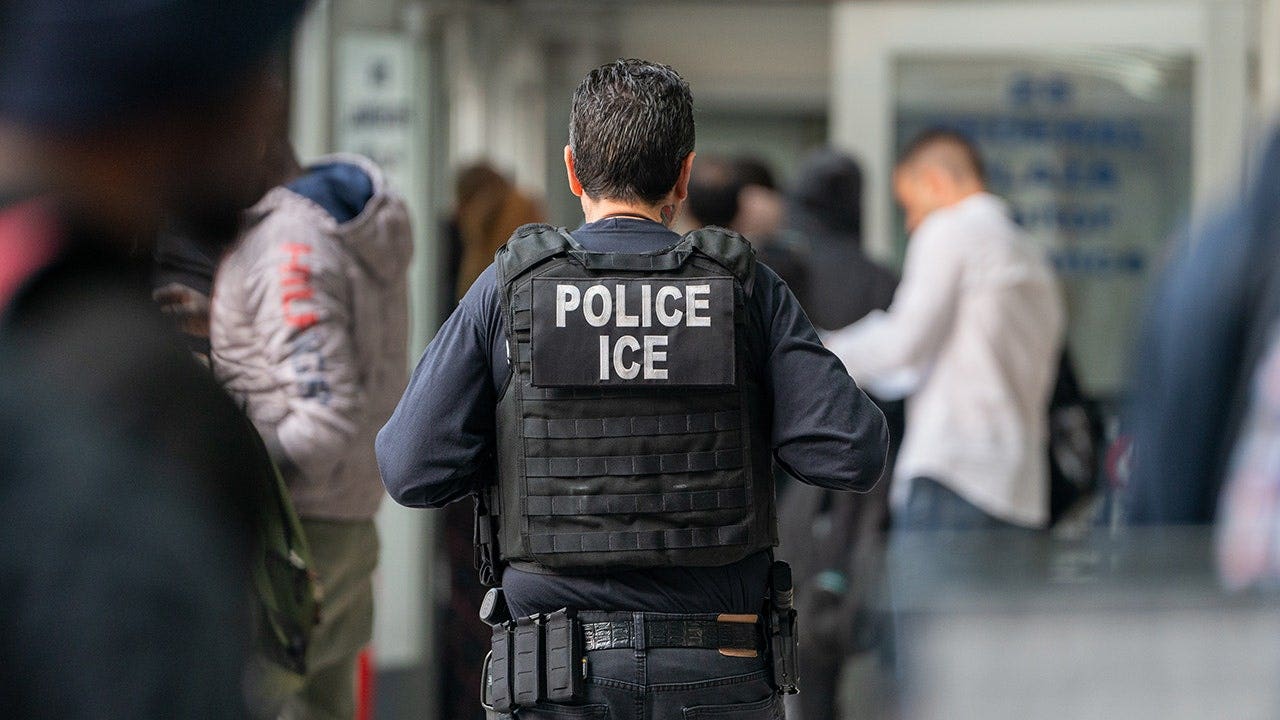
For over thirty years, Salah Sarsour lived a quiet, deeply rooted life in Milwaukee, serving as a pillar of his local community and eventually becoming the president of Wisconsin’s largest mosque. As a legal permanent resident of the United States, he built a sprawling, warm family of U.S. citizens that includes his wife, six children, and nine grandchildren. However, this decades-long journey of peaceful integration was abruptly shattered on March 30, when armed U.S. Immigration and Customs Enforcement (ICE) agents took him into custody. He was transported to an Indiana county jail, where he was kept in a stark, windowless basement cell for eighty grueling days. For an aging man managing Type 2 diabetes, the physical toll of his sudden confinement was severe; he lost more than thirty pounds as jail staff allegedly checked his blood sugar levels only once a month, a dangerous neglect that his legal team warned could have triggered organ failure or death. This dramatic arrest was not prompted by any new local crimes, but rather by his public, passionate advocacy for Palestinian human rights, turning his quiet life into a battleground over the boundaries of free speech and executive power in America.
The Department of Homeland Security (DHS) attempted to justify this sudden detention by branding Sarsour a “foreign policy threat” and a terrorist, pointing to his decades-old convictions in an Israeli military court. According to government records, Sarsour was convicted in Ramallah in 1989 for throwing a Molotov cocktail and stones at Israeli soldiers, and again in 1995 for illegal weapons possession—charges that Sarsour has consistently and firmly denied. The defense highlighted the notorious reputation of Israeli military courts, which are widely criticized by international human rights organizations for their lack of due process and near-total conviction rates for Palestinians. Crucially, Sarsour’s legal team revealed that the U.S. government had been fully aware of these Israeli charges for over twenty-five years, having reviewed them at least four times during his previous applications for naturalization without ever deeming him a risk to national security. The sudden decision to arrest him now, his lawyers argued, was a retaliatory act of political intimidation aimed at silencing an influential Muslim leader who dared to criticize Israel’s policies of occupation and state violence.
This high-stakes standoff culminated in a federal courtroom, where U.S. District Judge James Patrick Hanlon, a nominee of President Donald Trump, issued a blistering ruling that rejected the government’s overreach. Government attorneys had argued that because Sarsour was a non-naturalized foreign national, he did not possess the same robust First Amendment protections as native-born U.S. citizens. Judge Hanlon soundly dismissed this argument, affirming the long-standing constitutional principle that once cooperative immigrants lawfully enter and reside in the United States, they are immediately invested with the same fundamental rights guaranteed to all residents by the Constitution. The judge noted that simply invoking “foreign relations concerns” does not give federal agencies a blank check to override the First Amendment. Hanlon ruled that the government had failed to present any credible evidence to disprove Sarsour’s allegations of retaliation, nor could they explain why a man who had lived peacefully in the country for over three decades was suddenly deemed an imminent threat to the nation.
In addition to upholding constitutional liberties, Judge Hanlon’s ruling was deeply informed by Sarsour’s strong human ties to his community and his fragile medical state. Recognizing that Sarsour posed no flight risk and had a massive, supportive family waiting for him, the judge ordered his immediate release from the Indiana jail while his broader immigration case slowly wound its way through the legal system. Within hours of the ruling, the heavy iron doors of the facility opened, allowing Sarsour to step out into the warm air and reunite with his family. The emotional wave of relief was palpable for his loved ones, who had spent nearly three months living in a constant state of anxiety, fearing for his health and safety. His son, Kareem Sarsour, expressed the family’s profound relief, describing the eighty-day ordeal as a living nightmare and speaking of his immense pride in his father’s courage as a community leader who has always strived to be a voice for the voiceless.
Upon stepping into the sunlight of freedom, Sarsour expressed his deep gratitude to his family and legal team while underscoring the deeper political stakes of his confinement. He described the suffocating psychological weight of being locked away for nearly three months without fresh air, but emphasized that his personal suffering was part of a much larger, collective struggle. “This experience is a reminder to all of us that we must fight together for our right to be a voice for the silenced,” Sarsour declared, asserting that no amount of state intimidation would ever quiet his advocacy for Palestine and global humanity. His attorneys echoed this sentiment, warning that if federal agencies can target a respected mosque president for speaking his mind, the free speech rights of every activist, immigrant, and citizen in the United States are in serious jeopardy.
Ultimately, the case of Salah Sarsour serves as a powerful cautionary tale about the fragile state of civil rights in a highly polarized political landscape. It highlights the dangerous ease with which national security and immigration laws can be weaponized by federal agencies to suppress political dissent and marginalize minority communities. Yet, the decisive intervention of an independent judiciary in this case offers a glimmer of hope, proving that the constitutional protections of free speech and due process remain a vital shield against executive overreach. As Sarsour returns to Milwaukee to heal alongside his children and grandchildren, his victory resonating far beyond Wisconsin, it stands as a testament to the resilience of community solidarity and the enduring belief that the right to advocate for justice and human dignity must never be compromised by fear.