


Geopolitics in the Balance: The Strategic Reality Behind the Vance-Iran Peace Deal
Vance’s White House Defense: High-Stakes Diplomacy Under Fire
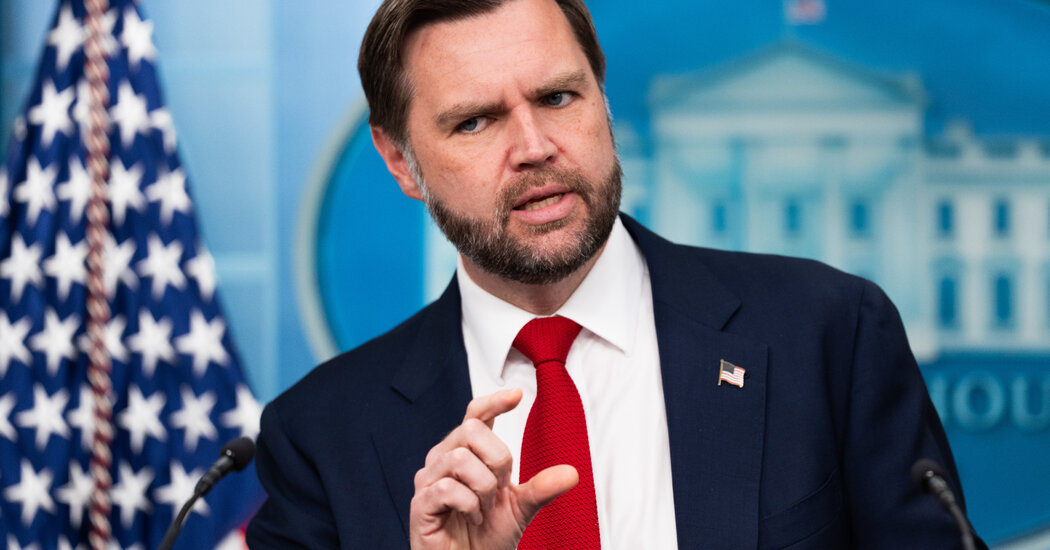
▲ US Vice President JD Vance delivers a press conference at the White House, defending the preliminary diplomatic agreement with Iran.
In a high-stakes bid to control the domestic and international narrative surrounding the fragile cessation of hostilities in the Middle East, Vice President JD Vance stood before a crowded White House briefing room on Thursday to defend the administration’s preliminary peace deal with Iran as an historic, uncompromised “win for the American people.” Amid a torrent of criticism from defense hawks, intelligence analysts, and key regional allies who argue the agreement makes unprecedented concessions to Tehran without securing denuclearization, Vance sought to project absolute diplomatic dominance, characterizing the nascent memorandum of understanding as a masterclass in modern realpolitik. With the administration Facing accusations of premature capitulation, the Vice President repeatedly downplayed the immediate benefits secured by the Iranian regime, insisting instead that the United States retains all strategic leverage as negotiators prepare for the next, highly volatile phase of talks concerning Iran’s nuclear program. Vance’s presentation, marked by a blend of populist economic appeals and aggressive rhetorical posturing, highlighted the immediate domestic relief brought by the reopening of the Strait of Hormuz—which sent global Brent crude and domestic retail gasoline prices tumbling to pre-war levels—to overshadow the deeply problematic, ambiguous language embedded in the official text of the agreement. By asserting that “words don’t matter; we’re about verification,” Vance attempted to pivot the public’s attention away from what the administration has already surrendered on paper, demanding instead that the global community judge the deal by an aspirational final treaty that has yet to be negotiated.
The Oil Sanctions Illusion and Tehran’s Economic Resurgence
▲ Global oil tankers navigate the newly reopened Strait of Hormuz, where falling energy prices have boosted market confidence.
Central to the Vice President’s defense of the preliminary accord was his highly controversial assertion that the immediate lifting of American oil sanctions on Iran does not constitute a “new benefit” for the Islamic Republic, a claim that dramatically oversimplifies and misrepresents the crushing reality of pre-war economic warfare. Prior to the outbreak of direct military conflict, the stringent sanctions architecture enforced by the United States had successfully marginalized Iran’s energy sector, forcing Tehran to resort to an illicit, highly discounts-reliant “ghost armada” of oil tankers to smuggle its crude to a limited roster of buyers, primarily independent “teapot” refineries in China willing to bypass Western financial institutions. Under that restrictive regime, Iran was severely penalized, receiving payments at steep discounts below global market rates, often in unconvertible currencies or through complex, inefficient barter systems that starved the government of liquid foreign reserves. By formally dismantling the U.S. blockade under the terms of this new memorandum of understanding, the Trump administration has essentially legitimized Iran’s energy trade, allowing the country to instantly transition from the financial shadows to the open, competitive global market where it can openly sell its oil to a vast array of international buyers at premium, undiscounted market prices and receive payments in highly liquid, stable hard currencies. While Vance was technically accurate in pointing out that Iran’s physical oil exports are unlikely to exceed pre-war production maximums in the near term due to degraded infrastructure, his refusal to acknowledge the immense financial windfall generated by transitioning from discounted black-market sales to standardized, high-value global trade represents a major blind spot in the administration’s public defense, granting Tehran an immediate economic lifeline when its domestic economy was on the verge of structural collapse.
The Nuclear Grey Zone and the Down-Blending Compromise
▲ A nuclear facility in central Iran, where the future of high-grade uranium stockpiles remains highly contested.
The administration’s defense faces its most severe scrutiny regarding the nuclear provisions of the memorandum, where the text relies on a superficial, longstanding Iranian vow not to pursue weapons of mass destruction—a diplomatic platitude that successive U.S. administrations and their European allies have long dismissed as entirely meaningless. Under the mechanics of this preliminary agreement, the highly complex question of whether Iran will permanently retain its sovereign right to enrich uranium remains dangerously unresolved, while the language concerning the ultimate disposal of its existing nuclear stockpiles is deliberately opaque. Rather than forcing Iran to surrender its highly enriched nuclear material and ship it entirely out of the country—a key triumph of the 2015 Joint Comprehensive Plan of Action (JCPOA), which saw approximately 97 percent of Iran’s stockpile deported to Russia—the Trump administration’s temporary deal merely requires Tehran to “down-blend” or dilute its roughly 11 tons of enriched nuclear material, including nearly 970 pounds of uranium enriched to 60 percent purity, which sits just a technical step away from bomb-grade capacity. Despite the obvious proliferation risks of keeping this diluted material within sovereign Iranian territory where it can be rapidly re-enriched in the future, Vice President Vance projected unwavering confidence, asserting that Iran would receive none of the long-term benefits promised in the document if it fails to allow international inspectors to verify the destruction of its highly enriched stockpiles. This high-stakes gamble relies on the assumption that the prospect of future economic integration will deter a regime that has spent decades enduring global isolation to preserve its nuclear infrastructure, a calculation that many national security experts warn significantly underestimates Tehran’s ideological commitment to achieving nuclear latency.
The Financial Paradox: Masterful Leverage or Unconditional Windfall?
▲ Protesters gather in Tehran amid economic uncertainty, as international banks prepare for the unfreezing of billions in Iranian assets.
The financial architecture outlined in the memorandum of understanding has further fueled accusations that the United States has agreed to an asymmetrical arrangement, with critics arguing the deal offers massive, frontlocked concessions to Tehran with no guaranteed return for Western security interests. Most controversial is the U.S. commitment to support the establishment of a staggering $300 billion international reconstruction fund for Iran, alongside the immediate unfreezing of tens of billions of dollars in blocked Iranian foreign exchange assets currently held in restricted escrow accounts across Asia, Europe, and the Middle East. Seeking to neutralize localized political backlash, Vance vociferously emphasized that not a single dollar of domestic American taxpayer money would be contributed to the proposed reconstruction fund, while reiterating that these enormous financial benefits would only materialize if Iran demonstrates complete, verifiable compliance with the strict terms of a finalized, comprehensive treaty. However, the Vice President’s rhetorical framing directly contradicts the literal timeline established in the signed memorandum of understanding, which explicitly mandates that the United States begin unfreezing these restricted assets and lifting designated banking sanctions “upon the implementation of this M.O.U.,” rather than waiting for the conclusion of a permanent peace treaty. By granting Iran access to vital liquidity up front, the administration has effectively surrendered its most potent economic lever, providing the Iranian leadership with the immediate financial relief required to stabilize its restive domestic population, subsidize its cash-starved regional proxies, and negotiate subsequent rounds of diplomacy from a position of relative financial strength and domestic stability.
The Ballistic Missile Omission and Retracted War Objectives
▲ An Iranian ballistic missile launcher displayed during a military parade in Tehran, highlighting the capabilities left untouched by the preliminary agreement.
Perhaps the most glaring departure from the administration’s original national security doctrine is the complete and total absence of any provisions addressing Iran’s sophisticated ballistic missile and precision-guided drone programs, which continue to pose an existential threat to regional stability and the state of Israel. In the early weeks of the direct military campaign, senior administration cabinet members, including Secretary of State Marco Rubio, repeatedly assured the American public and global allies that the physical degradation and ultimate elimination of Iran’s short- and medium-range ballistic missile capabilities was a non-negotiable war objective of the United States military. Yet, when confronted with the reality that the preliminary peace pact contains no caps, inspections, or dismantling mandates for these weapons systems, Vice President Vance execute a dramatic rhetorical shift, echoic President Trump’s assertion that it is fundamentally impossible to demand that any sovereign nation completely surrender its primary means of national self-defense. This diplomatic retreat is particularly striking when contrasted with classified U.S. intelligence assessments, which estimate that despite months of targeted airstrikes, Iran has successfully preserved approximately 70 percent of its pre-war missile stockpile, which remains strategically dispersed across hardened, underground silo networks throughout the country. Vance’s attempt to minimize this threat by suggesting that the absolute volume of remaining missiles is irrelevant compared to the destruction of stationary launching pads ignores decades of military intelligence showing that the Islamic Revolutionary Guard Corps relies heavily on highly mobile, easily concealed Transporter-Erector-Launcher (TEL) vehicles, leaving Iran’s neighbors to grapple with an intact, highly lethal offensive arsenal that can be deployed at a moment’s notice.
Fractured Alliances and the Realities of Middle Eastern Diplomacy
▲ Israeli Prime Minister Benjamin Netanyahu and his cabinet meet in Jerusalem to discuss the security implications of the new US-Iran accord.
The profound disconnect between the administration’s transactional foreign policy and the security anxieties of its closest partners has triggered an unprecedented diplomatic rift, culminating in open, bitter condemnation of the deal from senior members of Israeli Prime Minister Benjamin Netanyahu’s cabinet, who feel deeply betrayed by Washington’s sudden pivot toward accommodation. In response to this public criticism from Jerusalem, Vice President Vance delivered a pointed, remarkably blunt warning during his press conference, reminding the Israeli government in no uncertain terms that Donald J. Trump is currently the only powerful world leader sympathetic to Israel’s global isolation, and suggesting that attacking their sole remaining ally was a dangerous, strategic miscalculation for the Jewish state. While Vance attempted to validate the peace deal by pointing to the quiet endorsements of various Arab Gulf monarchies, regional analysts warn that this support is born out of survivalist pragmatism rather than genuine optimism, as these states felt compelled to back the agreement due to their extreme vulnerability to Iranian missile attacks on their critical civil infrastructure, tourism hubs, and oil facilities. Ultimately, by opting to secure a rapid, politically popular diplomatic exit that lowers domestic energy prices ahead of the upcoming election cycle, the administration has left both its democratic and autocratic allies in the region to navigate an emboldened, financially revitalized Iran, marking a paradigm shift in American foreign policy that may permanently alter the geopolitical balance of power in the Middle East.