




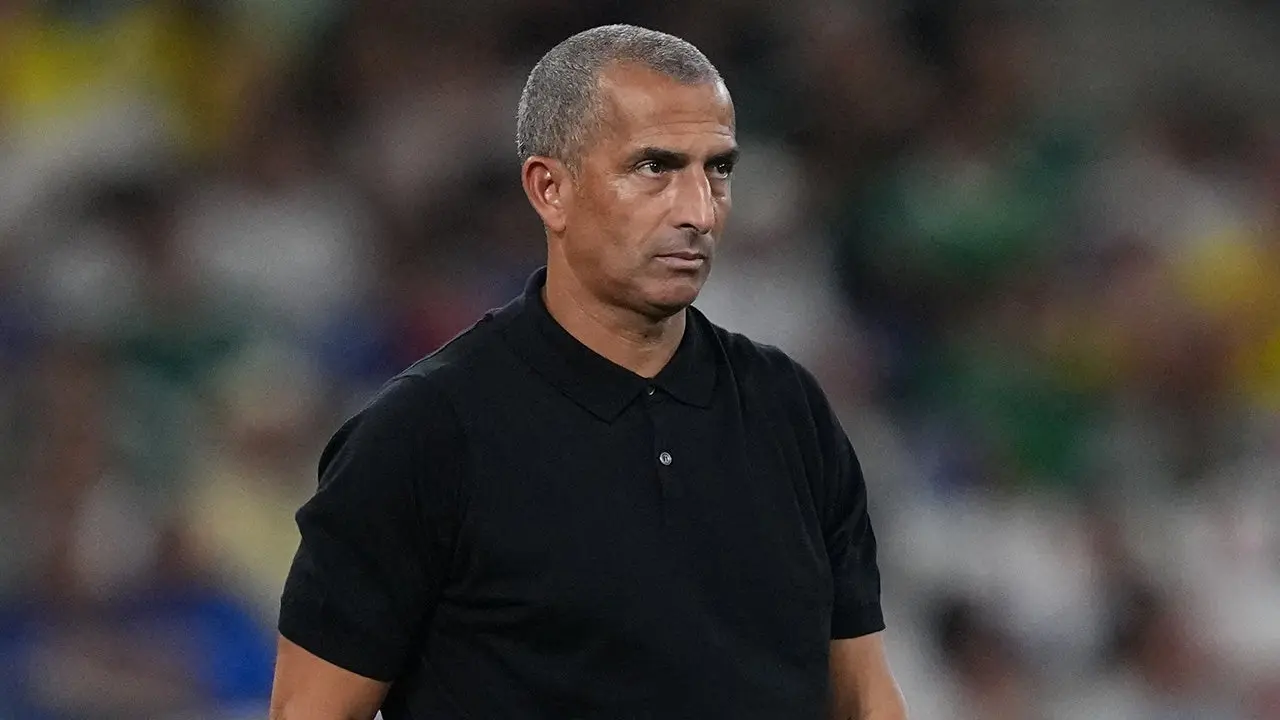
The World Cup is an emotional crucible, a high-stakes global amphitheater where years of rigorous preparation, national identity, and athletic dreams can either solidify into legendary triumph or completely evaporate in the tragic span of a single devastating ninety-minute match. For the Tunisian national football team, their opening encounter of the 2026 FIFA World Cup against a ruthless, clinical Swedish side was nothing short of an absolute sporting catastrophe. The humiliating 5-1 defeat on that Sunday did not just bruise the players’ professional egos; it shattered the structural foundations of the squad, sending profound shockwaves of disappointment through the hearts of millions of passionate supporters back home in Tunis and across the global diaspora. The pitch, which was supposed to be a canvas of tactical precision, disciplined defense, and passionate display, rapidly degenerated into a heartbreaking theater of defensive errors, missed assignments, and overwhelming vulnerability. As the final whistle blew, the heavy silence in the Tunisian dressing room was thick with the realization of an impending, unavoidable reckoning. It took less than twenty-four hours for the Tunisian soccer federation to make a decisive, ruthless move that captured the attention of sports media worldwide. On Monday morning, head coach Sabri Lamouchi was abruptly and publicly relieved of his duties, sacrificed on the altar of public outrage and administrative panic. The dizzying swiftness of his dismissal underscored the brutal, unforgiving reality of elite international soccer, where patience is a luxury no federation feels it can afford when the eyes of the entire world are watching. Lamouchi’s tactical vision, which had been implemented only since his arrival in January, was dismantled in an instant, leaving a group of emotionally drained athletes standing in the ruins of their opening match, suddenly leaderless in the middle of the greatest tournament on earth. This was not merely a transition of coaching personnel; it was an existential crisis for a team whose World Cup survival now hung by a thread.
In the immediate wake of this sporting earthquake, the Tunisian soccer federation did not seek out a quiet, conservative caretaker coach to merely steady the ship, but instead reached for a figure synonymous with international footballing miracles: Hervé Renard. The charismatic Frenchman, instantly recognizable by his signature crisp white shirts and an almost mythic ability to inspire underdog nations, was swiftly appointed to guide the Carthage Eagles through the remainder of their turbulent group stage campaign. Renard’s sudden arrival immediately injected a potent, electrifying dose of theatrical optimism into a somber training camp, as his professional resume speaks directly to the very soul of World Cup romance and unpredictable drama. This is, after all, the brilliant tactician who orchestrated one of the most stunning upsets in football history during the 2022 World Cup in Qatar, leading a highly disciplined Saudi Arabian squad to a shocking 2-1 victory over Lionel Messi’s eventual champions, Argentina—a match that showcased his genius for psychological motivation, physical bravery, and high-line tactical fearlessness. Having also commanded the Moroccan national team during their spirited 2018 campaign and recently guided the French women’s national team through the high-pressure tournament of the 2023 World Cup, Renard possesses an innate, deep-seated understanding of tournament football’s transient, high-velocity nature. The federation’s agreement with Renard is intentionally short-term, designed specifically to navigate the immediate trauma of the remaining group fixtures against elite opposition, with any analytical discussions regarding a long-term contract deferred until the dust fully settles on this intense campaign. For Renard, this represents a rescue mission of the highest order, a rare opportunity to once again step directly into the fire and prove that human spirit and absolute belief can override weeks of tactical despair. His primary task in the coming hours will not just be drawing complex diagrams on the tactics board, but looking deeply into the eyes of defeated men and convincing them their dream is alive.
The mathematical and competitive reality currently confronting Renard and his newly inherited squad is as steep and intimidating as any mountain range on the African continent. Following their devastating loss to Sweden, Tunisia sits precariously and painfully at the rock bottom of their group with zero points and a crippling minus-four goal difference, a statistic that acts as a lead weight around their collective necks as they prepare for training. The immense difficulty of their sporting predicament was further compounded by the dramatic 2-2 draw between their remaining group opponents, Japan and the Netherlands, a thrilling result that distributed a vital point to each side and left Tunisia isolated in their misfortune at the bottom of the table. Had the prestigious tournament concluded on that very afternoon, Japan’s resilient and organized performance would have secured their passage into the coveted knockout rounds, leaving the Carthage Eagles to pack their bags in quiet, agonizing disappointment. To keep their mathematical and emotional dream alive, Tunisia must now navigate highly demanding matches against these two formidable footballing giants—squads characterized by technical sophistication, relentless athletic work rates, and the immense confidence of having already put points on the board. The margin for individual or collective error has completely vanished from their campaign; any further misstep, defensive lapse, or tactical misunderstanding will result in an early, unceremonious flight back to Tunis. This mathematical bottleneck creates an intense, almost unbearable psychological pressure cooker for the players, who must somehow find a way to play with absolute, liberating freedom while carrying the heavy burden of knowing that even a hard-fought draw in their next match might seal their competitive demise. It is a legendary test of character that demands not just physical endurance under the hot sun, but extreme mental resilience to block out the compounding noise of media critique, fan anxiety, and the daunting reputations of their upcoming opponents.
Despite the genuine shock and media frenzy surrounding Lamouchi’s sudden departure, a historical retrospective reveals that this impulsive, high-stakes maneuvering is deeply woven into the volatile fabric of Tunisian footballing culture. This is far from the first time the national federation has reacted to mid-tournament adversity by pulling the emergency brake and swapping the tactical driver in front of a stunned global audience. One only has to look back to the 1998 World Cup in France to find an almost identical narrative of administrative panic and dramatic mid-competition restructuring. During that memorable tournament, the iconic Polish-French coach Henryk Kasperczak was brutally and swiftly dismissed midway through the group stage after consecutive, demoralizing defeats to England and Colombia left the team mathematically eliminated from progression before they even lined up to face Romania in their final ceremonial group fixture. This legacy of impatience highlights a recurring cultural phenomenon within Tunisian sports administration: an inability to tolerate the agonizing growing pains of international football development, often favoring the dramatic illusion of decisive action over the slow quiet burn of long-term stability. Lamouchi’s brief tenure, which had commenced with high hopes and grand promises just months earlier in January, was afforded absolutely no grace period, no patience, and no allowance for the systemic defensive shortcomings that have long plagued the squad’s transition play. This rapid, reactive turnover rate places an immense, often unfair psychological burden on the players themselves, who are forced to constantly and rapidly recalibrate their understanding of complex tactical systems, individual roles, and managerial temperaments in the most public sporting arenas on earth. It paints a vivid portrait of a federation constantly searching for a quick fix, chasing the immediate gratification of a tactical savior rather than building the long-term, sustainable infrastructure required to compete consistently with the elite footballing nations of the world.
While mid-tournament managerial dismissals are frequently criticized by sports analysts as desperate, chaotic, and inherently counterproductive gambles, international footballing history shows that such high-stakes drama can occasionally catalyze extraordinary athletic redemption. The most famous modern parallel occurred on the historical eve of the 2018 World Cup in Russia, when the Spanish football federation shocked the global sporting community by firing their head coach, Julen Lopetegui, a mere forty-eight hours before their opening marquee match against Portugal, following the sudden revelation that he had secretly agreed to join Real Madrid after the tournament. Under the temporary, emergency stewardship of Fernando Hierro, Spain managed to rally through the emotional chaos, showcasing profound human resilience to comfortably advance to the knockout stages before ultimately falling to hosts Russia in a dramatic, heart-stopping penalty shootout. These historical anomalies suggest that when a familiar, comforting system is suddenly ripped away, players are often forced to shed their rigid tactical anxieties and rely instead on pure, unadulterated human instinct and mutual survival, bonding together in an “us against the world” collective mentality. For the Tunisian squad, this sudden psychological shift could be the unpredictable wild card they desperately need to salvage their tournament; stripped of the tactical overthinking that characterized their catastrophic collapse against Sweden, they may find a raw, liberating energy in Renard’s highly pragmatic, motivational philosophy. The human dynamics of a locker room in such sudden transition are fascinatingly complex, as underutilized players who were previously marginalized under the old regime suddenly find themselves with a clean slate and renewed hope, while established stars must quickly adapt to prove their worth to an intimidating new boss. It serves as a beautiful reminder that football is not played on spreadsheets, but in the fragile hearts of young men who, when pushed into a corner with nothing left to lose, can produce moments of profound defiance and unexpected passion that captivate fans.
As the Tunisian squad takes to the training pitch under the watchful, intense gaze of Hervé Renard, the narrative of their 2026 World Cup journey shifts from a tragic comedy of errors to a compelling saga of human perseverance and raw sporting hope. The coming days will thoroughly test the absolute limits of their collective character, demanding that they transform their deep grief, public embarrassment, and locker-room humiliation into a fierce, unified tactical discipline capable of defying the immense odds stacked against them. Whether Renard’s arrival is ultimately remembered as a stroke of visionary sporting genius or merely another chaotic chapter in a long history of reactionary administrative panic remains to be written on the lush green pitches of this tournament. Yet, this highly unpredictable vulnerability is precisely why the World Cup captures the collective imagination of the global populace; it is a human drama where the script is never finalized, where a discarded, written-off team can rise from the ashes of a 5-1 thrashing to write a legendary story of miraculous redemption. The Carthage Eagles now stand on the precipice of footballing immortality or quiet, forgotten exit, their tactical notebooks filled with fresh instructions, their hearts filled with the desperate hope of an entire nation, ready to discover if a sudden change in leadership can truly spark a revolution in their play. As millions of fans tune in to watch this high-stakes human experiment unfold, we are reminded that in the beautiful game, as in life itself, the deepest setbacks often set the stage for the most spectacular comeback stories, and for Tunisia, the whistle is about to blow on their final chance to redefine their destiny on the world stage, proving that hope is never truly lost until the final whistle of the final game eventually sounds.