


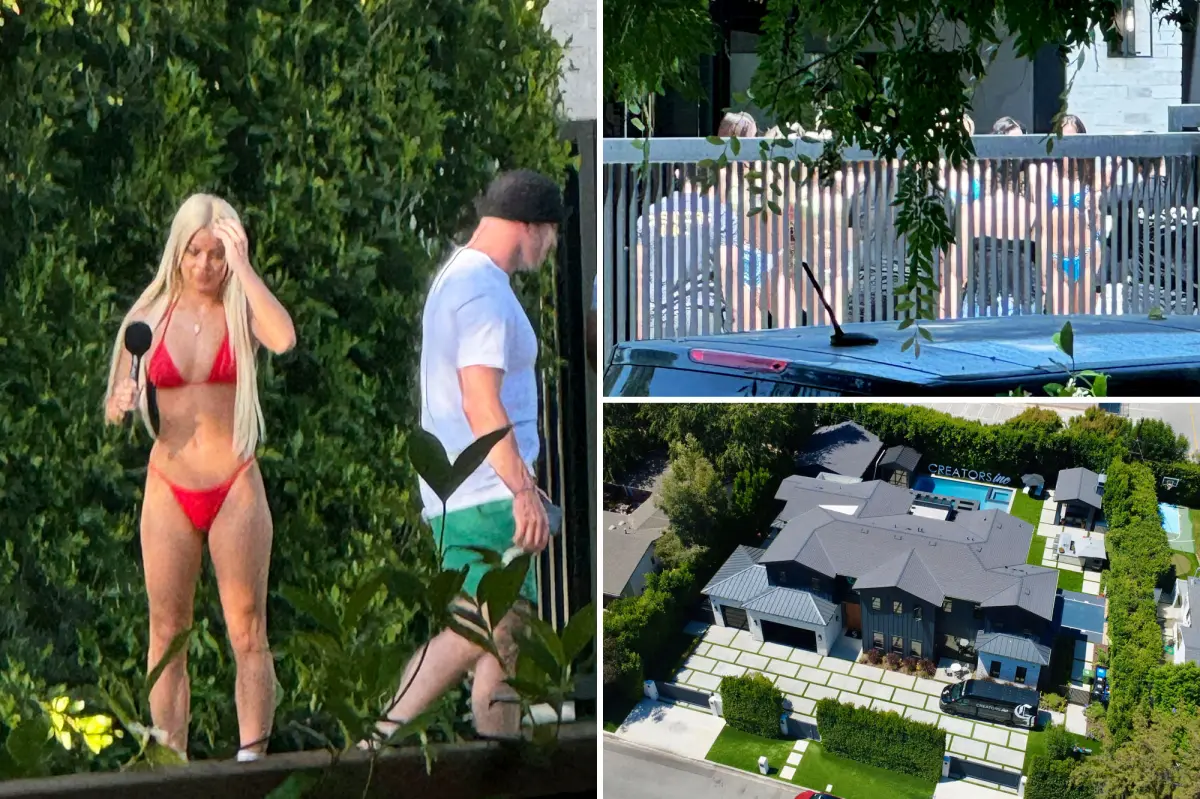
In the quiet, sun-drenched pockets of Encino, California, where manicured lawns and stately oak trees traditionally whisper stories of quiet suburban success, a deeply modern and culturally jarring friction has taken root on Weddington Street. The undisputed epicenter of this suburban tempest is an imposing, 16,553-square-foot luxury mansion valued at roughly six million dollars—a sprawling, four-bedroom estate that has recently been leased by Creators Inc., an enterprise deeply intertwined with the highly lucrative and culturally polarizing realm of OnlyFans. For decades, this particular stretch of Encino was known chiefly for its tranquil, family-centric rhythms and its close proximity to the landmark Armenian Holy Martyrs Ferrahian Church and high school, where generations of parents have raised their children away from the chaotic glare of the entertainment industry. Today, however, the area has been thrust into an ideological and spatial warzone, symbolized by the bold “CI” branding that now adorns the home and a prominent corporate billboard that sits just outside the gates, signaling to everyone who passes by that the boundaries between private domestic life and hyper-commercialized internet entertainment have been permanently erased. This sudden transformation has left local families grappling with a reality they never anticipated: living next door to a high-powered digital factory where the glamorous, boundary-pushing world of internet stardom operates right on their doorsteps, forcing a head-on collision between historical neighborhood quiet and the relentless, highly visual demands of the twenty-first-century creator economy.
For the long-term residents of Weddington Street, this shift has felt less like a progressive step into the digital age and more like a daily, intrusive spectacle that has completely fractured their sense of personal sanctuary and domestic peace. Neighbors describe a constant, chaotic parade of influencers and creators arriving at all hours of the day and night, turning their once-predictable suburban block into an open-air production studio. On any given afternoon, local families claim they are greeted by the sight of young, scantily clad women wandering about the property, lounging in the front yard, or sunbathing by the pool wearing nothing but tiny pasties to cover themselves. In one widely discussed and highly tense encounter, a neighbor captured video footage of a blonde woman wearing only a vibrant red bikini stepping outside the estate’s security gates, microphone in hand, to be filmed directly on the public pavement by a cameraman proudly wearing a Creators Inc. t-shirt. This stark visual culture shock has rippled through the neighborhood, causing parents to navigate deeply awkward, unwanted conversations with their children. One frustrated mother lamented that her teenage sons have started inviting their high school buddies over not to study or play video games, but to secure a front-row seat to the provocative shoots taking place right across the street, transforming what should be a safe, wholesome neighborhood environment into an uncomfortable, hyper-sexualized public gallery.
Yet, if you look past the sensational headlines of G-strings, bikinis, and front-lawn photo shoots, you find a much more pragmatic, frustrating, and anxiety-inducing set of grievances held by the local homeowners regarding the long-term stability of their community. Those living adjacent to the mansion are quick to point out that their address of grievance is not a puritanical obsession with the morality of adult entertainment, but rather a fundamental disregard for municipal zoning laws, safety, and basic residential peace. They argue that a major commercial enterprise is operating in the absolute middle of a strictly residential neighborhood, bringing with it a relentless stream of strangers, heavy production traffic, delivery trucks, and influencers who vape on the sidewalks and park illegally along the narrow streets. Homeowners worry immensely about the chilling effect this activity will have on their hard-earned property values, fearing that future buyers will flee the moment they realize the neighboring house is a highly active, loud, and unpredictable content-production hub rather than a private family residence. There is a deep, painful sense of alienation and betrayal among the neighbors, who feel that a wealthy corporate entity is generating millions of dollars by exploiting a family-oriented block, showing a callous disregard for the emotional well-being, financial investments, and peace of mind of the families who built their lives there long before the digital gold rush was ever conceived.
On the other side of the high security gates, however, Creators Inc. paints a radically different and intensely defensive picture of the situation, casting themselves and their clients as upwardly mobile entrepreneurs caught in the crosshairs of outdated prejudices and a relentless, intrusive campaign of harassment. In a fiercely worded statement, a spokesperson for the company adamantly denied all allegations of ongoing disruptions, zoning infractions, or unlawful behavior at their Encino headquarters, pointing out that the property has never once been cited by local code enforcement and that they have consistently maintained a cooperative relationship with the city. Instead, the company argues that the pushback is fueled by a toxic combination of anti-creator stigma and an invasive, highly inappropriate policing of women’s bodies. Creators Inc. claims that hostile neighbors have spent months actively monitoring, photographing, and filming women as they enter and leave the property, subjecting them to derogatory comments about their clothing and physical appearance. From the company’s perspective, the creator economy is a completely legitimate, multi-billion-dollar industry, and the backlash they are facing on Weddington Street is not a zoning issue at all, but rather a targeted, discriminatory effort to shut down a modern business model simply because traditionalist neighbors do not approve of how these independent, successful women choose to make their living in the digital era.
As the conflict has boiled over, the complete breakdown of dialogue between the residents and the company has devolved into a bitter, draining legal cold war, leaving the frustrated homeowners feeling abandoned and ignored by the civic institutions meant to protect them. Driven to their wits’ end, neighbors have repeatedly reached out to a laundry list of local authorities—including the Los Angeles Police Department, Councilman Nithya Raman, and former city attorney Todd Gilman—desperately seeking some form of intervention or zoning enforcement. According to residents, early Zoom meetings with city officials offered a brief glimmer of hope, with the city attorney acknowledging that operating a commercial production enterprise out of a residential home was a clear violation of municipal zoning laws. However, that hope quickly turned to ash when city representatives informed the community that the local government simply did not have the resources, staff, or budget to pursue the matter, rendering their daily nightmare a low priority for the city’s backlogged enforcement agencies. To make matters worse, one resident who was particularly vocal in rallying her neighbors claims she was singled out by Creators Inc.’s legal team and slapped with intimidating threats of litigation for defamation, highlighting the stark power imbalance between working-class families and a highly lucrative digital enterprise willing to use aggressive legal maneuvers to silence local criticism.
Ultimately, the dramatic battle of Weddington Street is a vivid, sobering microcosm of a much broader, unresolved cultural conflict defining our modern era: the collision of physical reality with the borderless, unregulated wild west of the digital economy. As platforms like OnlyFans continue to turn ordinary people into wealthy, self-made media moguls, the physical infrastructure of our cities is struggling to adapt to businesses that require nothing more than a camera, a high-speed internet connection, and a luxury backdrop to generate millions of dollars of profit. The traditional boundaries between workspace and domestic space, public decorum and commercial output, have completely evaporated, leaving local governments ill-equipped to handle the resulting gray areas of zoning and community standards. For the residents of Encino, the ongoing saga is a painful reminder that the hard-won peace of suburbia is incredibly fragile, easily disrupted by the sudden arrival of an industry that measures success in clicks, views, and subscriptions rather than neighborly goodwill. Until municipal laws evolve to address the physical footprints of virtual enterprises, families across the country will continue to exit their front doors and find themselves in the crosshairs, forced to decide whether they can peacefully co-exist with the digital age, or if they must fight tooth and nail to keep the internet from spilling over onto their neighborhood streets.