


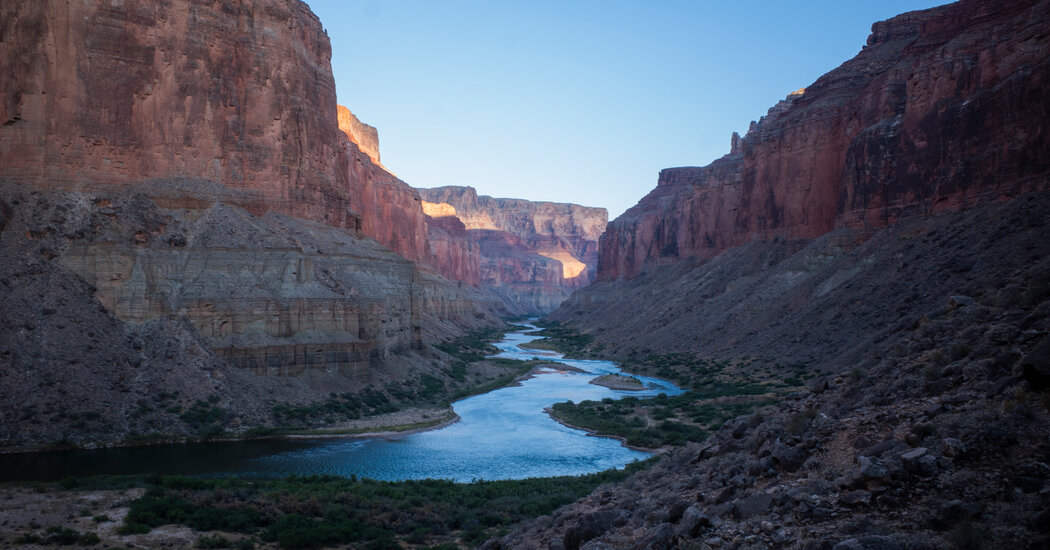
The Colorado River is the silent, life-giving artery of the American West, a majestic ribbon of water that has nourished generation after generation. Today, however, this vital lifeline is dwindling to levels unseen in modern memory, pushing the forty million people and five and a half million acres of productive cropland that depend on it toward a terrifying precipice. For over a century, the river has quenched the thirst of rapidly growing desert metropolises and sustained the family farms that fill supermarket shelves across the nation. But the archaic infrastructure and legal frameworks designed to share its bounty are buckling under the twin pressures of historic population growth and a relentless, climate-driven mega-drought. Even as cities embrace cutting-edge conservation and water-recycling technologies to use less water than they did decades ago, the river is simply evaporating faster than humanity can adapt. From the multi-generational farmers in Colorado who trace their water rights back to the 1850s to the suburban homeowners in the sprawling subdivisions of Phoenix and Las Vegas, a creeping sense of existential dread has taken root. The crisis is no longer a distant projection debated by climatologists; it is a tangible, daily worry for families who look out over cracked reservoir beds and wonder if the taps will still flow for their children.
The immense human strain of this ecological crisis is mirrored in the exhausted faces of the negotiators who have spent the last six months locked in fruitless, grueling negotiations. These public servants, tasked with dividing up a rapidly shrinking resource, have met continuously under the heavy pressure of their communities’ futures, cajoling and pleading for a breakthrough that never seems to arrive. Despite multiple high-stakes summits convened by the federal government and twice attended by state governors, the talks have repeatedly devolved into defensive posturing and mutual suspicion. Scott Cameron, the embattled acting commissioner of the Bureau of Reclamation, recently captured the dark mood of these bureaucratic stalemates. Just moments after signing a hopeful, forward-looking agreement to eventually bolster the basin’s supply with desalinated water from a plant in Carlsbad, California, Cameron had to candidly admit to a conference of water experts in Boulder, Colorado, that every compromise proposal had been flatly rejected by the states. The federal government now finds itself in the tragic position of preparing to impose unilateral, short-term water cuts that will satisfy no one. In trying to prevent the river’s massive reservoirs from dropping to catastrophic dead-pool levels, the federal caretakers have, in Cameron’s own words, succeeded only in making every single stakeholder angry and fearful.
This deep political paralysis is rooted in a profound geographical and cultural divide between the Upper and Lower Basins of the river. Downstream, in the sun-drenched valleys of the Lower Basin—encompassing California, Arizona, and Nevada—massive agricultural empires and booming urban centers rely heavily on Lake Mead, the nation’s largest reservoir. While these downstream communities have recently accepted significant, painful water reductions and are willing to cut back even further, they are demanding that their upstream neighbors also shoulder the burden of conservation. But upstream in the mountainous headwaters of New Mexico, Utah, Wyoming, and Colorado, the perspective is entirely different. For these Upper Basin communities, water availability is not a predictable release from a massive reservoir, but a yearly gamble dependent on winter snowpack; when the snow fails, they are forced into immediate, involuntary cuts. Representatives for the Upper Basin point out that under the historic 1922 Colorado River Compact, their less-populated region consumes far less water than their downstream neighbors, making them fiercely resistant to signing away their legal rights to permanent, annual cuts. This geographic tension has transformed a shared natural resource into a battleground of resentment, pitting mountain communities who feel penalized for their location against desert dwellers who view upstream reluctance as a refusal to acknowledge a collective emergency.
The tragedy of this stalemate is compounded by the ticking clock, as the existing water-use guidelines have expired, and states have missed critical deadlines to establish a replacement framework. This inaction has forced the federal government’s hand, leaving residents to face a chaotic future without clear rules for water deliveries. The physical consequences of this delay were laid bare when a meager winter followed by extreme spring heat left the winter snowpack so depleted that Lake Powell, the nation’s second-largest reservoir, nearly fell below the critical level required to generate electricity for millions of homes, forcing federal emergency interventions. To prevent total system collapse, Interior Secretary Doug Burgum is expected to unveil a sweeping, unilateral federal plan in July to dictating river management for the next decade. However, the draft options released by the Bureau of Reclamation have sparked deep anxiety, particularly in Arizona, which holds junior water rights and faces devastating, disproportionate cuts. To make matters more volatile, the federal plan may include provisions to reopen and renegotiate the guidelines every two years. This proposal has been met with horror by state negotiators like Colorado’s Becky Mitchell and Nevada’s John Entsminger, who warn that a biennial cycle of renegotiation will destroy the long-term water certainty that families, farmers, and city planners desperately need to build their futures.
As trust between the states continues to erode, the battlefield is rapidly shifting from negotiation tables to the courtroom, threatening a catastrophic legal war that could tie up the river’s management in litigation for decades. Across the West, state houses are quietly assembling legal war chests and preparing to sue one another, sacrificing precious public funds that could otherwise be used to build drought-resilient infrastructure. In Arizona, where television commercials funded by water coalitions openly warn citizens that their water security is being targeted by hostile neighbors, lawmakers have aggressively tripled their river litigation fund to six million dollars under Governor Katie Hobbs. Meanwhile, Colorado and other Upper Basin states are arming their own legal teams, ready to argue that the federal government cannot lawfully draw down upstream reservoirs to bail out the over-allocated Lower Basin. This aggressive pivot toward litigation has frustrated federal lawmakers, prompting Utah Senator Mike Lee to threaten to block vital federal drought relief funds—funded by the remains of a massive four-hundred-and-fifty-four-million-dollar federal allocation—from any state that launches a lawsuit. The human cost of this legal posturing is profound, as millions of taxpayer dollars are diverted to high-priced lawyers to argue over the semantics of historical documents, rather than being invested in real, on-the-ground water conservation projects.
Ultimately, the crisis of the Colorado River is a moral test of our shared humanity and our ability to cooperate in the face of a changing planet. The legendary 1922 compact that governs the river is a mere seventeen hundred words long, drafted in a bygone era by men who could not have possibly foreseen the rise of modern megacities, massive agricultural demands, or a climate that is permanently drying the American West. As John Entsminger of Nevada wisely noted, the states will likely never agree on the exact legal interpretations of their historical water allocations, and the only alternative to a chaotic, unpredictable Supreme Court battle is a united, seven-state agreement. The river does not care about political boundaries, historical land claims, or legal briefs; it is a physical entity running dry, carrying with it the collective destiny of forty million human beings. If the leaders of the West allow local self-interest and legal gridlock to dictate the future, they will inherit a parched and fractured landscape. The path forward requires a shift in perspective—from viewing the river as a prize to be fought over, to treating it as a shared trust that must be collectively preserved. Only by embracing a spirit of mutual sacrifice and shared humanity can the people of the West rewrite their relationship with the Colorado River, ensuring that this magnificent stream continues to flow for the generations yet to come.