


The Blue Wave Rising: How Curaçao Rewrote the Rules of World Cup History
A Caribbean David Prepares for the Global Stage
In the nearly century-long chronicle of the FIFA World Cup, the tournament has remained an incredibly exclusive pantheon, with only eighty nations ever earning the right to compete on sport’s most prestigious stage. This summer, that elite club welcome four debutants, but none capture the imagination quite like Curaçao, a sun-drenched Caribbean island of just 158,000 residents situated forty miles off the coast of Venezuela. Historically celebrated as a prolific incubator for Major League Baseball talent rather than a soccer powerhouse, this tiny autonomous territory is poised to make history on Sunday when its national football team takes the field for its inaugural World Cup match, officially usurping Iceland—which captured world attention with a population of 350,000 during the 2018 tournament—as the smallest nation ever to qualify for the event. The historic feat is being heralded by locals not merely as an athletic achievement, but as a symbolic triumph for micro-states worldwide. As Brenton Balentien, a thirty-five-year-old bartender and lifelong supporter of the national team, warmly observed, Curaçao’s qualification sends a powerful message of hope to marginalized footballing nations across the globe, proving that with strategic vision, structural ingenuity, and unyielding national pride, geopolitical and demographic boundaries can be shattered on the pitch.
   [ Netherlands ] <===============================> [ Curaçao ]
   (150,000 Diaspora)    Post-Colonial Migration      (158,000 Population)
           │                                                 │
           ▼                                                 ▼
Dutch Football Academies Tactical Strategy Shift
(Elite Training & Experience) (Leveraging Ancestry Rules)
│ │
└───────────────────────► [ World Cup Squad ] ◄───┘
(The “Blue Wave”)
The Colonial Tapestry and the Dutch Connection
The architects of this sporting miracle have constructed their success upon a unique, highly complex geopolitical foundation that mirrors the intricate history of the island itself. When the Curaçao national football team lines up against powerhouse Germany in Houston, Texas, international onlookers will observe a striking sociological reality: winger Tahith Chong is the sole member of the starting roster who was actually born on the island, while the remainder of the squad was born, raised, and athleticized in the Netherlands. This demographic curiosity is the direct result of the 2010 dissolution of the Netherlands Antilles, an administrative restructuring that established Curaçao as an autonomous constituent country within the Kingdom of the Netherlands, complete with its own prime minister, parliament, and domestic legislation, yet inextricably bound to European institutions. The Dutch monarch, King Willem-Alexander, remains the official head of state, the Supreme Court in The Hague serves as the island’s ultimate judicial authority, and all Curaçaoans hold Dutch passports, granting them unrestricted mobility. This post-colonial legal framework has fostered a massive, fluid migratory pipeline, fueled by an bilingual educational system that equips local children with fluency in Papiamento, Dutch, English, and Spanish. As a consequence of this ongoing academic and economic migration, a “mirror population” of roughly 150,000 people of Curaçaoan descent now resides in the Netherlands, effectively splitting the national identity across two hemispheres.
Diaspora Duty: Re-engineering a National Football Team
                             ┌─────────────────────────┐
                             │   FIFA Eligibility      │
                             │   (Grandparent Rule)    │
                             └────────────┬────────────┘
                                          │
                ┌─────────────────────────┴─────────────────────────┐
                ▼                                                   ▼
┌───────────────────────────────────────┐ ┌───────────────────────────────────────┐
│ European Football Academies │ │ Curaçaoan National Pride │
│ • Tactical and physical development │ │ • Culturally rooted in the island │
│ • Experience in top-tier leagues │ │ • Reclaimed heritage and legacy │
└───────────────────────────────────────┘ └───────────────────────────────────────┘
For decades, the domestic football landscape of Curaçao languished in obscurity, hampered by the absence of a professional league and a severe lack of youth development infrastructure capable of nurturing elite, world-class athletes. Recognizing that local amateur talent faced insurmountable odds on the international stage, the Curaçaoan Football Federation executed a revolutionary paradigm shift over the last decade, systematically redirecting its scouting and recruitment efforts toward the highly developed academies of the Netherlands. Under the forward-thinking leadership of federation president Gilbert Martina, a former healthcare executive who spent nearly two decades in Europe before returning home, the federation capitalized on FIFA eligibility guidelines, which permit players to represent a national association if at least one parent or grandparent was born within the territory. This strategic pivot required a profound cultural transformation; historically, top-tier professional players of Curaçaoan descent prioritized the slim hope of donning the orange jersey of the Dutch national team. However, a grassroots persuasion campaign spearheaded by veteran international captain Leandro Bacuna and his brother Juninho transformed the team’s reputation, convincing elite Dutch-born professionals to pledge their allegiance to their ancestral island. Martina notes that this deliberate integration has been overwhelmingly embraced by the domestic public, who view these European-based athletes not as foreign mercenaries, but as sons of the soil returning home to fulfill a collective ancestral destiny.
Brain Drain, Ball Games, and the Geopolitical Reality of Migration
              ┌────────────────────────────────────────┐
              │      Sithree van Heydoorn              │
              │      (Minister of Education & Sports)  │
              └───────────────────┬────────────────────┘
                                  │
        ┌─────────────────────────┴─────────────────────────┐
        ▼                                                   ▼
┌───────────────────────────────────────┐ ┌───────────────────────────────────────┐
│ Athletic Strategy │ │ Educational Reform │
│ • Traveled to Netherlands │ │ • Alliances with regional colleges │
│ • Recruited diaspora talent (Chong) │ │ • Combating domestic “brain drain” │
│ • Cultivated cultural connection │ │ • Incentivized regional return │
└───────────────────────────────────────┘ └───────────────────────────────────────┘
The political implications of this sports strategy are intimately understood by Sithree van Heydoorn, Curaçao’s Minister of Education, Science, Culture, and Sports, who personally traveled to the Netherlands to recruit dual-national players like Tahith Chong by appealing directly to their cultural roots and family legacies. Yet, even as he celebrates their historic qualification, van Heydoorn acknowledges the bittersweet societal undercurrents of a sports model built upon mass emigration, admitting that the constant departure of the island’s most promising young minds remains a pressing national concern. With his own extended family having resided in the Netherlands for four decades, the minister is actively working to mitigate this specialized domestic “brain drain” by establishing academic alliances with higher-education institutions in Florida and Colombia, offering regional alternatives that make it easier for young scholars to eventually return home. For now, however, the unprecedented success of the national team has provided an invaluable, unifying catalyst for a society emerging from a decade of severe economic tribulations. Following the devastating collapse of the island’s central oil refinery in 2019, which was abruptly shuttered by Venezuela’s state-owned oil firm and threw thousands of locals out of work, followed by the catastrophic impact of the pandemic on global travel, the World Cup run has served as a powerful engine of geopolitical visibility, finally putting Curaçao on the map for millions of people who previously could not locate the territory on a globe.
Tourism, Oil, and the Economic Catalyst of the ‘Blue Wave’
Economic Hardships (2019 Refinery Closure + Pandemic)
│
▼
Strategic Opportunity: World Cup Debut in the United States
│
▼
┌─────────────────────────────────────────────────────────────────┐
│ Targeted Tourism Rebranding │
│ • Capitalizing on American travel markets │
│ • Elevating global profile beyond traditional Europe │
│ • Establishing “Blue Wave” brand in major metropolitan hubs │
└─────────────────────────────────────────────────────────────────┘
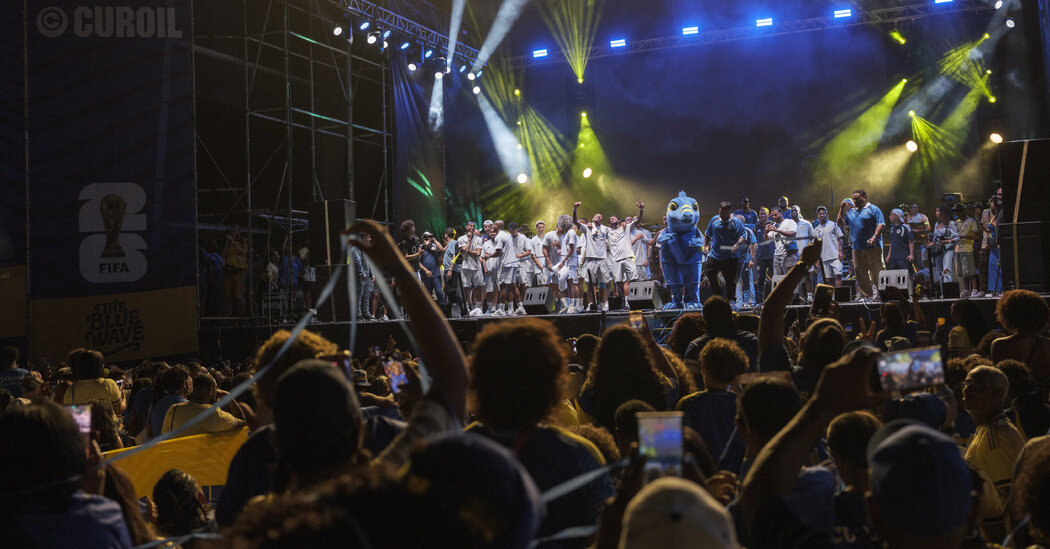
This newfound international recognition is being strategically leveraged by the island’s business elite, who recognize the World Cup as an extraordinary, multi-million-dollar marketing opportunity to revitalize a fragile economy that has become increasingly reliant on international tourism. Atilay Uslu, a prominent team sponsor and the visionary founder of the major Dutch travel agency Corendon, points out that playing major tournament matches in highly populated American metropolitan hubs offers an unprecedented opportunity to capture the lucrative North American travel market, which has historically favored neighboring Aruba. By establishing a formidable athletic brand on television screens across the Western Hemisphere, the island aims to fundamentally alter regional travel dynamics, turning their sport-induced visibility into direct foreign investment, hotel bookings, and airline route expansions. Back home on the island, this high-stakes economic ambition translates into a palpable, infectious national fever, with the vibrant blue and yellow of the national flag draping almost every public square, colonial facade, and vehicle in the historic capital of Willemstad. Prominent public banners proudly declare the island’s status as the smallest nation ever to reach the global tournament, cementing the national team’s nickname, the “Blue Wave,” as a symbol of both natural beauty and unstoppable, collective momentum.
Unity in the Diaspora: What Defines a Nation?
The profound, unifying power of this cultural phenomenon was on full display during a recent sold-out send-off exhibition match against Aruba in Willemstad’s 11,000-seat national stadium, where the air was thick with the rich aromas of local rum and Indonesian satay—a culinary testament to the complex, multi-layered history of the Dutch colonial empire. For spectators like thirty-three-year-old Marian Nahr, who immigrated to The Hague at age twenty-one for university and returned home specifically to witness this historic moment, the fact that most of the players were born in Europe does not diminish the authenticity of their achievements, but rather highlights a shared, borderless identity rooted in mutual warmth, respect, and cultural inheritance. This sentiment of inclusive, modern nationality is echoed by residents like fifty-eight-year-old Jealaine Alexander Wawoe, who proudly notes that the players’ fluency in Papiamento and deep family connections to the island solidify their place within the cultural fabric of Curacao’s Afro-Caribbean community, whose ancestors were brought to the island during the transatlantic slave trade. By successfully embracing their vast, globalized diaspora, Curaçao is not merely exploiting a footballing loophole, but is actively participating in a modern athletic trend pioneered by world champions like France and the Netherlands, utilizing their complex post-colonial history to forge a vibrant, competitive, and unified future. As the global tournament begins, the historic run of the Blue Wave serves as a triumphant reminder that a nation’s strength is measured not by the physical limitations of its borders, but by the size of its collective heart, the resiliency of its people, and the enduring power of its cultural identity.
   [ Defining the Modern Curaçaoan Identity ]
                     │
    ┌────────────────┴────────────────┐
    ▼                                 ▼
┌───────────────┐ ┌───────────────┐
│ Traditional │ │ Modern │
│ • Birthplace │ │ • Heritage │
│ • Geography │ │ • Culture │
│ • Boundaries │ │ • Togetherness│
└───────────────┘ └───────────────┘