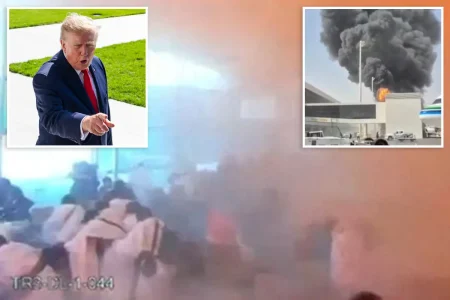


The world is currently witnessing a bizarre and deeply human study in contrasts, where the superficial spectacles of elite power stand in stark opposition to the raw, visceral anxiety of the global public. On the manicured grass of the White House South Lawn, President Donald Trump is ushering in his landmark 80th birthday with an almost surreal display of modern gladiatorism, hosting high-profile Ultimate Fighting Championship (UFC) fighters for a series of sanctioned bouts inside a specially constructed octagon. The air in Washington, D.C. is thick with the sounds of cheering crowds, the throb of music, and the self-congratulatory atmosphere of an administration celebrating a political survivor. Yet, thousands of miles across the Atlantic, a far more ominous and unpredictable collision is brewing, casting a long shadow over the celebrations in the American capital. In Geneva, Switzerland’s second-largest city and a historic bastion of international diplomacy, the tranquil weekend silence is pregnant with profound apprehension. An estimated 50,000 demonstrators are organizing to take to the cobblestone streets, transforming this picturesque lakeside enclave into a sprawling battleground of political defiance. For the ordinary citizens of Geneva, the impending arrival of the Group of Seven (G7) summit is not an honor, but a looming crisis, as a massive, deeply passionate coalition prepares to voice their fury against the chief architects of modern global policy. This stark contrast highlights a profound and troubling disconnect in our modern era: while the American president revels in the controlled, theatrical violence of the athletic octagon on a warm Sunday evening, the residents of Switzerland are bracing for real-world, highly volatile clashes that threaten to shatter the delicate peace of their community. The citizens of Geneva find themselves caught in the middle, watching their home transform into a fortress while the leaders who hold their collective futures in their hands indulge in spectacles of power far removed from the anxieties of daily life.
To walk through the historic streets of Geneva on this particular Sunday is to experience a city gripped by a quiet, claustrophobic terror, resembling a high-security containment zone rather than a peaceful European cultural capital. The vibrant metropolitan hub, usually brimming with international tourists, local families, and shoppers enjoying outdoor cafés, has essentially shut down completely, holding its collective breath in anticipation of a chaotic storm. Local business owners, filled with acute financial and personal dread, spent their weekend hammering thick sheets of plywood over large, expensive glass storefronts, hoping desperately to shield their livelihoods from potential destruction. Entire city blocks have been cordoned off by towering, metallic anti-protest wire fencing that snakes through the scenic urban landscape like a jagged silver scar, while armored police vans occupy strategic street corners, their massive, diesel-guzzling engines rumbling as a constant, low-frequency reminder of state power. Officers clad in heavy, jet-black tactical riot gear stand in grim formations, their faces completely obscured by dark visors and their hands gripping heavy polycarbonate shields, representing a formidable wall of municipal security preparing for a worst-case scenario. This radical, sudden transformation of the city is not merely structural; it is deeply psychological, altering how the inhabitants interact with their own historic environment. For the average Swiss resident, the rhythmic hum of idling police engines and the sight of combat boots on historic cobblestones create an atmosphere of intense isolation and vulnerability. Geneva has been temporarily stripped of its cosmopolitan warmth and celebrated openness, reduced instead to a highly fortified, sterile garrison designed exclusively to keep the arriving political aristocracy safe from the very population they claim to govern, leaving the local populace to navigate a cold labyrinth of steel, concrete, and suspicion. This severe lockdown is a physical manifestation of the deep-seated chasm that now exists between the political elite and the citizens who must bear the immediate, disruptive consequences of their summit meetings.
The logistical operation required to transport these world leaders safely into the region is nothing short of a full-scale military campaign, illustrating the massive barrier constructed between the rulers and the ruled. President Trump and his international counterparts are scheduled to arrive on Monday, touching down at Geneva’s highly secured international airport before embarking on a carefully coordinated journey to the actual summit location in nearby Evian, France. This transition between two sovereign nations has prompted French and Swiss authorities to take the unprecedented step of shutting down 27 separate border crossings on Sunday. This massive border closure has effectively severed the daily pathways used by thousands of local commuters, turning a normally seamless European borderland into a system of hard barriers, razor wire, and severe security checkpoints that stifle local trade and disrupt daily life. Above the dark, pristine waters of Lake Geneva, military helicopters maintain a constant, deafening patrol, circling endlessly around the famous Jet d’Eau, one of the tallest fountains in the world, which now stands as a surreal backdrop to a display of raw military dominance. Below this air coverage, heavily armed police speedboats slice through the water, keeping a watchful, paranoid eye on any unauthorized maritime movement. This heavy militarization serves a singular, stark purpose: to isolate the exquisite spa-town of Evian, a luxurious, tranquil haven where the delegates will stay, entirely away from the civilian world. By erecting this massive physical, national, and electronic barrier, the authorities have ensured that the leaders of the G7 can deliberate on global trade, war, and environmental policy in absolute luxury, entirely cocooned from the messy, visual, and auditory realities of the massive protests occurring just miles away in the streets of Geneva. The stark visual of military helicopters casting shadows over peaceful resort waters serves as a poignant reminder that modern international diplomacy is no longer a public affair, but a fortified event requiring the suspension of normal civic life and the imposition of martial-like security.
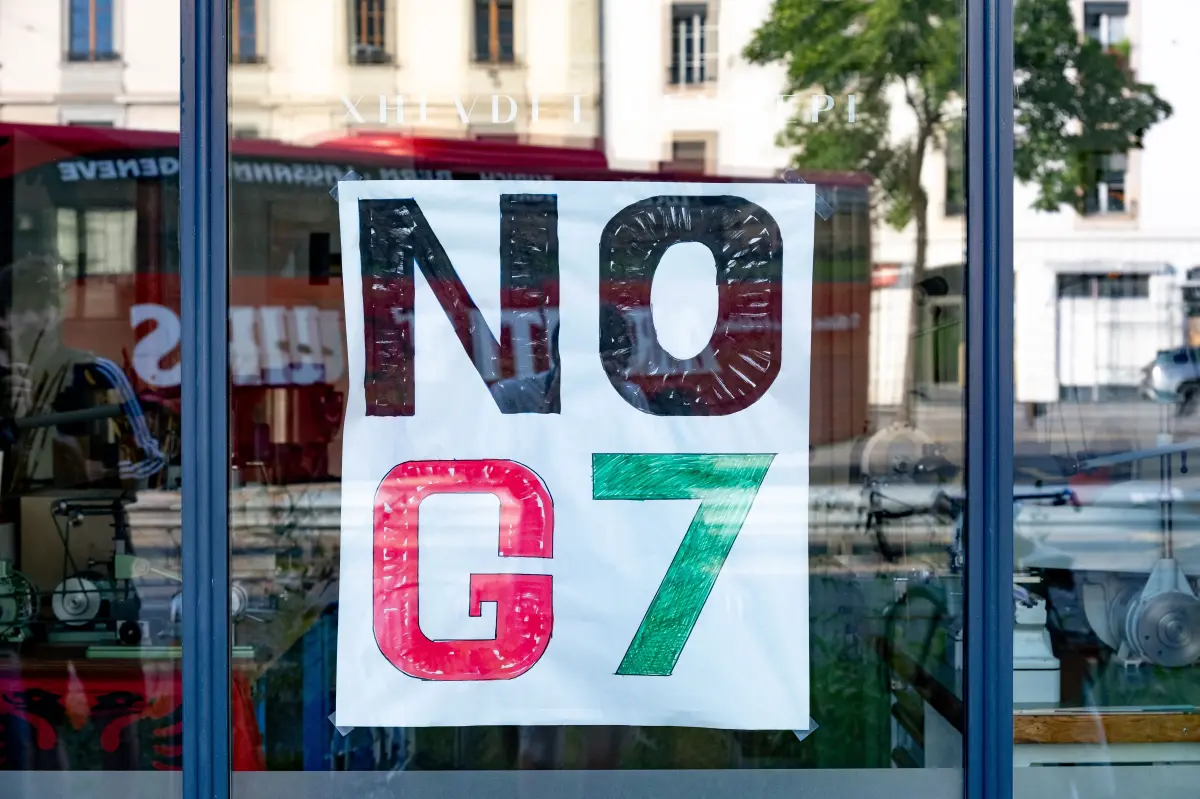
The driving force behind the impending civilian storm is a diverse, sprawling, and passionate movement known as the “No-G7” coalition, which represents a complex human mosaic of modern activism. This coalition is not a single, cohesive political entity, but rather a complex solidarity network composed of more than 60 distinct grassroots associations, industrial labor unions, environmentalist groups, and left-wing organizations from across Europe and the globe. United by a shared, fierce denunciation of what they describe as rampant fascism, corporate greed, and imperialist aggression, these activists have spent months organizing, obtaining the necessary legal permits for their massive demonstrations, and preparing to make their voices heard in a system that they feel systematically ignores them. Throughout the streets of Geneva, hand-painted banners and pasted flyers have begun to cover the newly installed wooden storefront boards, offering a creative, colorful, and defiant contrast to the sterile gray of the security fences. One prominently displayed sign captured the vibrant, youth-driven spirit of the movement, cheeky and bold, reading: “The only good system is a sound system.” However, beneath the creative, carnivalesque energy of the protests lies a heavy, palpable anxiety among both the organizers and city officials regarding the potential for catastrophic violence. Many in the city are deeply haunted by the lingering specter of the 2003 G8 summit, a historical event in the region when protests dissolved into chaotic, destructive street warfare. During those dark days, radical Black Bloc elements and rioters smashed windows, looted shops, and engaged in fierce battles with riot police, leaving behind millions of dollars in property damage and a lasting legacy of deep-seated civic trauma. Today, both peaceful activists and weary shopkeepers are acutely aware of this history, desperately hoping that the upcoming march will remain a dignified expression of democratic dissent rather than a terrifying, chaotic repeat of that historic devastation.
The emotional core of this massive public mobilization is perhaps best understood through the words, worries, and hopes of the individuals who have left their comfortable daily routines behind to stand on the front lines of this protest. Francoise Nyffeler, a passionate, articulate spokesperson for the “NoG7” coalition, gave voice to the profound existential dread that unites these disparate groups, explaining to reporters that regular people are deeply terrified of the aggressive, confrontational, and unilateral policies championed by Donald Trump and the other elite G7 leaders. Francoise pointed out that these leaders are consistently “fighting, making war all over the place,” emphasizing that the average citizen of the world feels completely powerless and vulnerable in the face of such relentless global aggression. For Nyffeler and the thousands she represents, this mobilization is not merely an academic political disagreement, but an urgent, desperate, and deeply human cry to save a planet they believe is in immediate, mortal danger due to carbon emissions, environmental neglect, and military industrialization. This sense of deep urgency has already manifested in creative, peaceful ways; just prior to the main march, a colorful, small flotilla of approximately 20 civilian boats floated peacefully off the pristine shores of Evian on Lake Geneva, displaying banners criticizing the G7 and voicing solidarity with the Palestinian struggle. Yet, the peaceful intent of these creative demonstrations exists alongside a heavy, threatening security presence, as both French and Swiss military forces have been actively deployed to bolster local police departments. This military intervention highlights the immense, escalating security challenges of the weekend, where the sheer determination of the activist groups meets the uncompromising, heavily armed resolve of state defense forces, turning a beautiful natural landscape into an incredibly tense, highly monitored arena of ideological warfare. Indeed, the presence of military personnel patrolling the very shores where tourists once swam underscores how quickly a humanitarian crisis of trust can escalate into a military standoff.
As the G7 summit officially begins on Monday, the stakes could not possibly be higher for a global order that feels increasingly fragile, divided, and disconnected from the needs of ordinary humanity. The Group of Seven—comprising the robust, historically dominant economies of the United States, Britain, Canada, France, Germany, Italy, and Japan—finds itself meeting at a moment of profound international crisis. French President Emmanuel Macron, attempting to project a broader, more inclusive model of global governance, has expanded the guest list to include key leaders from rising powers like India as well as several Middle Eastern nations. However, this diplomatic framing cannot mask the dark reality that this three-day gathering is the first time these world leaders have come together since President Trump unilaterally launched the devastating war with Iran. The geopolitical trauma of this conflict hangs heavily over the entire region, turning peaceful Evian into a war-room where the future of international stability will be negotiated. Against this backdrop of actual global warfare, the reasons behind the summit’s delayed start feel almost agonizingly absurd to the protesters marching in the streets: the entire high-stakes event was postponed for twenty-four hours simply so Trump could celebrate his 80th birthday at the White House, watching professional cage fighters bloodily batter one another in a custom-built ring on the South Lawn. This vivid image of an Octagon on the White House lawn, juxtaposed against a looming war in the Middle East and a militarized Geneva on the brink of civil unrest, encapsulates the deep, painful irony of our times. Ultimately, as the leaders retreat into their luxury spas to decide the fate of nations, the 50,000 citizens in the streets of Geneva serve as a powerful, humanizing reminder that the true cost of these leaders’ decisions—be it war, economic hardship, or environmental collapse—is always paid by the ordinary people of the world.