



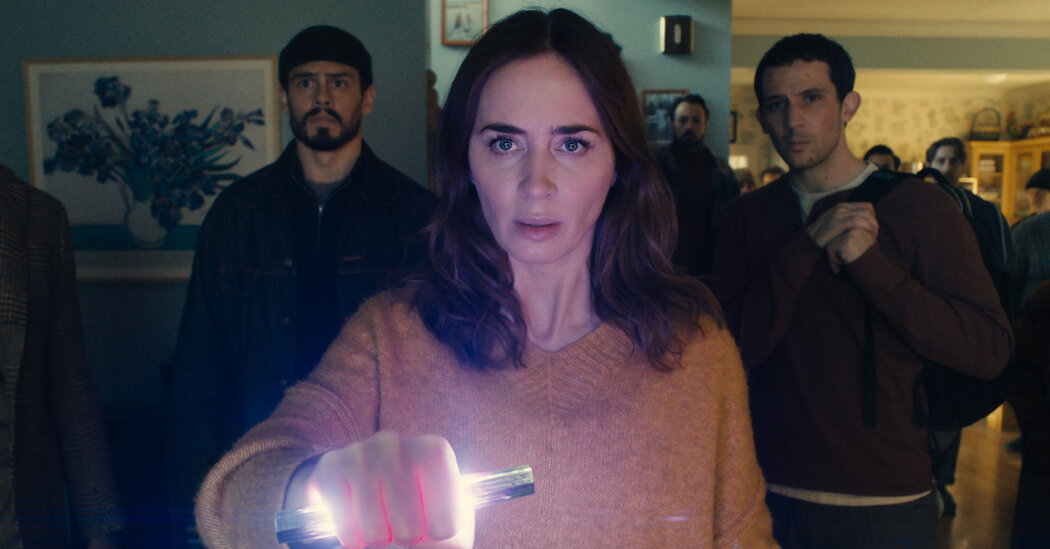
From the very moment the house lights dim and the opening frames of Steven Spielberg’s latest masterwork, Disclosure Day, begin to flicker upon the screen, the audience is instantly swept up in an intoxicating whirlwind of pure cinematic wonder. It is a rare and joyful sensation that many of us feared had been permanently lost to the era of mechanized, algorithmically engineered blockbusters; yet Spielberg, with his unparalleled gift for visual storytelling, effortlessly restores that vintage magic to the silver screen. This rollicking science-fiction adventure serves as a triumphant homecoming for a director who has spent more than half a century shaping our collective dreams, populated by terrifying genetic dinosaurs, friendly extraterrestrials, and plugged-in psychics. Watching this film, I found myself so utterly captured by its kinetic rhythm and infectious enthusiasm that I hastily scribbled a note in my sketchbook: I am having so much fun right now. It was a simple, perhaps even childish observation, but it was the most genuine reaction possible to a film that works so hard to earn its audience’s trust and excitement. The sheer visceral pleasure of watching a true master operate at the absolute peak of his creative powers leaves a lingering contact high that stays with you long after the final credits fade. Disclosure Day is not merely another entry in an illustrious filmography; it is an active, vibrant dialogue between a master filmmaker and an audience hungry for authentic spectacle, proving that after all these years, Spielberg’s cinematic engine still runs on pure, unadulterated passion and curiosity. Indeed, the movie operates like a finely tuned instrument of joy, drawing upon our deepest reservoirs of nostalgia while pushing boldly into contemporary territory. It reminds us of why we fell in love with movies in the first place, capturing a sense of wide-eyed astonishment that is both remarkably fresh and incredibly familiar, standing as a beautiful testament to the everlasting power of the theatrical space.
To fully appreciate the narrative scale and emotional architecture of Disclosure Day, one must view it not as an isolated achievement, but as a rich, deeply personal companion piece to Close Encounters of the Third Kind. That 1977 masterpiece, arriving hot on the heels of the terror-inducing success of Jaws, solidified Spielberg’s status as the defining voice of the New Hollywood movement, forever changing the way we look at the stars with hope rather than fear. In the decades that followed, the director consciously expanded his horizons, tackling weighty historical dramas and somber, sociopolitical subjects that were often greeted by critics as evidence of his creative maturity. Yet, no matter how far he ventured into the tragic chapters of human history, the elastic and boundless genre of science fiction always pulled him back, serving as a vital sanctuary where he could explore deep-seated themes without losing his signature playfulness. In Disclosure Day, we see the perfect synthesis of these two creative modes: the youthful, star-gazing wonder of his early career combined with the weathered, reflective wisdom of an older artist who has lived through history. Science fiction remains Spielberg’s ultimate canvas for thematic and stylistic self-exploration, allowing him to examine familiar tropes—distrust of authority, broken families, and the human drive toward the unknown—through a technically sophisticated lens. By returning to this cosmic genre, he demonstrates how the fantastic can be used to ground our most intimate, human realities, proving that looking out into the vastness of the universe is ultimately just another way of looking into the depths of our own souls. Where the protagonist of Close Encounters was driven by a somewhat selfish obsession that tore his family apart, the characters in Disclosure Day are united by a deeper, more collective urgency. This shift reflects a filmmaker who has grown to value community, mutual protection, and shared truth over solitary pursuit, signaling a beautifully matured worldview that values the bonds we forge on Earth just as much as the mysteries we chase across the cosmos.
At its narrative core, Disclosure Day is a masterclass in strategic maximalism, offering a story that is densely packed with complex ideas, subplots, and thematic gravity, yet remains spectacularly coherent and light on its feet. Much of this narrative success can be attributed to the brilliant screenplay by David Koepp, a seasoned genre veteran and long-time Spielberg collaborator who has also spent years providing directors like Steven Soderbergh with sharp, dialogue-driven foundations. Spielberg conceived the original story for this film, shaping it into a relentless, feature-length chase that follows a group of highly charismatic, enigmatically connected individuals as they race toward a shared destiny while evading the clutches of a powerful, shadowy apparatus. As this thrilling pursuit unfolds across a dazzling array of locations, Koepp’s script masterfully modulates the film’s tone, steering the audience through hair-raising action, laugh-out-loud comedy, and moments of sublime, quiet contemplation. The roar of squealing tires and the tension of narrow escapes are balanced by quieter, intellectually rigorous interludes that delve into the larger concepts of personal belief, public reason, self-governance, individual trauma, and our collective responsibility to the common good. Rather than weighing the film down, these philosophical detours elevate the stakes, ensuring that every physical leap and narrow getaway carries profound emotional and intellectual weight for both the characters and the audience. Koepp’s gift lies in his ability to ground high-concept ideas in the mundane, ensuring that even when the plot threatens to spin out into cosmic abstraction, a witty line of dialogue or a grounded human reaction brings us right back to earth. This structural intelligence allows Spielberg to operate at his absolute most expressive, choreographing action that feels not like empty spectacle, but like a physical manifestation of the characters’ internal struggles. The result is a film that functions simultaneously as a heart-pounding popcorn thriller and a deeply thoughtful reflection on modern paranoia, successfully proving that intellectual depth and popcorn entertainment do not have to be mutually exclusive.
This delicate balance of high-stakes tension and human-scale intimacy is brilliantly established in the film’s opening frames, which plunge the audience mid-chase into a rain-slicked, neon-drenched urban labyrinth at night. We are immediately introduced to our protagonist, Daniel Kellner, played with a brilliant, jittery energy by Josh O’Connor, who perfectly channels the classic, anxious Spielbergian Everyman—vulnerable, utterly terrified, but possessing a hidden reservoir of sharp instincts. Clinging tightly to a mysterious, glowing artifact that seems to hold the key to the film’s central mystery, Daniel is determinedly protecting his companion, Jane Blankenship, portrayed by Eve Hewson with an instantly endearing mix of fierce intelligence, resourcefulness, and grit. Directly on their heels is a menacing, highly coordinated squad of corporate and governmental agents led by the formidable Noah Scanlon, a chillingly sophisticated antagonist brought to life by Colin Firth with a razor-sharp, raptor-like intensity and a dangerously smooth, plummy accent. The ensuing getaway, which culminates in a series of breathtakingly orchestrated maneuvers in an escape SUV, showcases Spielberg’s unparalleled mastery of kinetic direction. The scene is a joyful throwback to the physical mechanics of early cinema, where geography is crystal clear, stakes are physical, and the humor of a preposterous escape perfectly balances the genuine terror of capture, reminding us of the tactile joy of practical-feeling action. O’Connor and Hewson display an immediate, crackling chemistry that feels incredibly natural, instantly making the audience invest in their survival as they bicker and coordinate under extreme pressure. Meanwhile, Firth’s performance as Scanlon provides the perfect icy counterweight to their warm, frantic humanity, making every second of the hunt feel genuinely perilous. By grounding this spectacular sequence in the physical reality of the city streets and the tangible panic of its characters, Spielberg ensures that we are not just watching a chase, but actively feeling it in our chests, rooting for these underdogs with every twist and turn of the road.
What truly humanizes Disclosure Day and elevates it beyond a mere exercise in genre thrills is its profound, unwavering empathy for the human condition under extreme stress. In an era where mainstream cinema is dominated by indestructible superheroes and emotionally hollow spectacles, Spielberg offers us characters who are visibly bruised, frightened, and carrying their own heavy luggage of personal grief and existential uncertainty. Daniel and Jane are not highly trained super-agents; they are ordinary people thrust into an extraordinary situation, and their growing bond becomes the emotional anchor of the entire narrative journey. Spielberg uses their plight to explore the essential nature of human connection and trust in a world characterized by systemic paranoia, institutional corruption, and technological isolation. The mysterious object they guard behaves not as a weapon, but as a metaphor for the fragile spark of curiosity, hope, and truth that humanity must protect from those who wish to commodify or suppress it. As the characters grapple with questions of faith and self-governance, the film subtly addresses our contemporary anxieties about truth, authority, and who gets to decide the future of our collective destiny. By anchoring these grand, cosmic themes to the vulnerable, deeply felt emotional realities of his protagonists, Spielberg ensures that the ultimate stakes of the story are not merely global, but deeply and profoundly personal. The film speaks directly to our modern yearning for clarity and honest leadership, emphasizing that true power lies not in institutional dominance or weaponized secrets, but in the simple, revolutionary act of human solidarity. Watching Daniel and Jane learn to lean on one another, overcoming their individual traumas to work toward a common good, provides a comforting blueprint for survival in a chaotic world. It is this emotional resonance that makes the film linger in the mind, transforming a grand science-fiction spectacle into a warm, deeply comforting embrace of human resilience and shared vulnerability in the face of the unknown.
Ultimately, Disclosure Day stands as a monumental achievement and a vibrant, vital testament to the enduring power of theatrical cinema in a rapidly changing cultural landscape. It is a film that demands to be experienced on the grandest scale imaginable, where its sweeping visual compositions, thunderous and evocative sound design, and masterfully orchestrated set pieces can wash over the audience in waves of collective emotion. In returning to the genre that defined his career, Steven Spielberg does not merely reproduce the victories of his past; instead, he completely revitalizes them, infusing a familiar and beloved cinematic vocabulary with a lifetime of earned wisdom, technical evolution, and heartfelt humanism. As we finally walk out of the theater and back into the cold light of the real world, we carry with us a renewed sense of wonder, a rekindled desire to look up at the skies with hope, and that same elusive, joyful contact high that only the very best films can truly deliver. Disclosure Day serves as a beautiful, glowing reminder of why we fell in love with the movies in the first place, proving secure in the knowledge that as long as we have master storytellers who dare to believe in the light, the magic of cinema will continue to illuminate our darkest nights. In a world that often feels increasingly fragmented and cynical, a cinematic event like this works as a healing balm, reuniting families, dreamers, and skeptics alike under the tent of shared imagination. Spielberg’s lens acts as a bridge across generations, proving that the magic of storytelling is an essential, eternal part of our humanity. The film exists not just as a fleeting entertainment, but as a lasting monument to the joy of discovery, a brilliant declaration that the greatest mysteries of the universe will always be best understood when we face them together, hand in hand, with minds wide open to the infinite possibilities of tomorrow.