


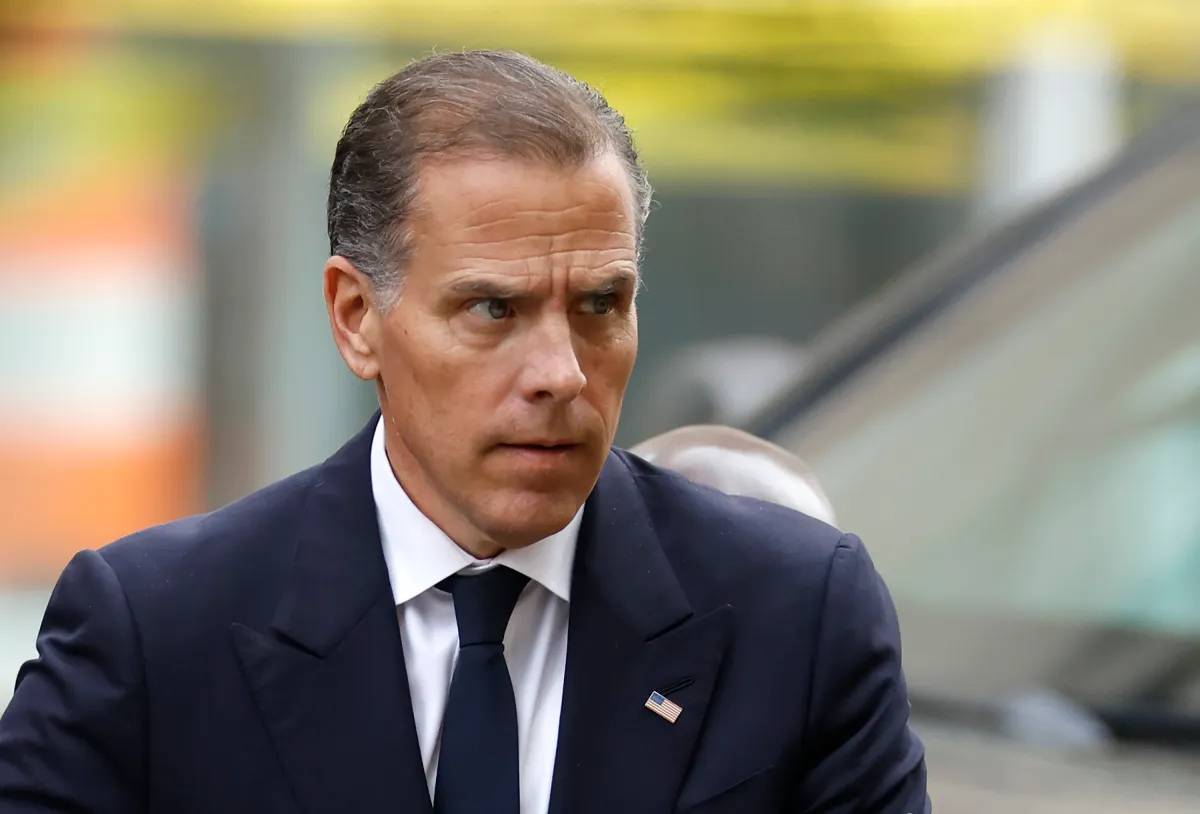
In an era defined by highly polarized shouting matches, relentless partisan division, and increasingly scripted political messaging, a moment of unexpected, self-deprecating levity recently cut through the dry noise of mainstream media, courtesy of an unlikely and fascinating comedic duo: Hunter Biden and California Governor Gavin Newsom. The delightful exchange unfolded during a recent episode of Newsom’s podcast, This Is Gavin Newsom, where the typical atmosphere of polished policy discussions, strategic gubernatorial positioning, and serious state matters shifted into a remarkably candid, lighthearted conversation about the future of American leadership. With his characteristic charismatic flair, beaming smile, and quick wit, Governor Newsom decided to tongue-in-cheek introduce his notable guest not merely as a longtime family friend or a creative artist trying to rebuild his life, but as a formidable “presidential candidate for the 2028 election.” It was a remarkably bold and highly provocative framing, particularly given Hunter’s current position as one of the most intensely polarizing, investigated, and heavily scrutinized figures in modern American civic life—a man whose deeply personal battles with substance abuse, chaotic relationships, and subsequent high-profile legal struggles have been thoroughly weaponized in the public square by political adversaries. Yet, rather than shying away from the metaphorical spotlight, becoming visibly defensive, or delivering a carefully rehearsed statement designed to appease anxious public relations crisis managers, Hunter leaned entirely into the therapeutic absurdity of the premise. This playful interaction offers a rare, profoundly humanizing glimpse into how public figures under constant political and social siege manage the immense psychological weight of their public perceptions. By utilizing humor as both an emotional shield and a conversational bridge, Hunter and Newsom managed to temporarily strip away the heavy, sometimes suffocating armor of their respective political realities, transforming what could have been a highly charged, tense discussion about legacy and scandal into a moment of genuine, relatable human camaraderie.
The absolute peak of this high-stakes banter occurred when Hunter Biden, demonstrating a sharp sense of self-awareness and a refreshing refusal to take the dizzying, often cutthroat world of Washington politics too seriously, floated a highly amusing counter-proposal to Governor Newsom’s mock presidential endorsement. “Here’s the deal,” Hunter chuckled, playfully mimicking the familiar colloquialisms, cadence, and folksy delivery of his father, President Joe Biden, to the delight of the podcast hosts. “I’ll run, but only as your vice presidential running mate because the truth of the matter is that the vice president’s residence is actually a whole lot cooler, and to be honest, it is a lot easier job, too.” On its surface, this witty remark functions as a classic piece of political satire, poking lighthearted fun at the long-standing national joke that the vice presidency is a role defined far more by ceremonial duties, foreign state funerals, and historic real estate than by the crushing, sleepless executive responsibilities of the Oval Office. However, beneath the layer of easy laughter and friendly banter lies a much deeper, more poignant truth about the fundamental human desire for peace, safety, and relative anonymity. For a man like Hunter Biden, who has spent the better part of the last decade standing in the absolute eye of a relentless international geopolitical storm, the idea of a position that offers institutional comfort without the terrifying, life-or-death decision-making spotlight of the presidency is undeniably appealing, even when framed purely as a joke. The historic vice presidential residence at One Observatory Circle, nestled away on the quiet, lush grounds of the U.S. Naval Observatory, represents a peaceful sanctuary compared to the chaotic fishbowl of the White House. By expressing a preference for this cooler, quieter existence, Hunter painted a vivid, humor-infused picture of his own psychological landscape—one where the pursuit of supreme power is actively rejected in favor of peace and personal recovery.
This lighthearted and highly publicized exchange did not emerge from a cultural vacuum; rather, it was a direct, clever reaction to the bizarre way Hunter’s name and personal life continue to be invoked at the highest echelons of national political strategy. During the podcast, Governor Newsom specifically brought up the fact that former President Donald Trump had recently commented on Hunter’s hypothetical political viability while speaking to reporters in the historic Oval Office. When pressed by journalists on whether he believed the younger Biden could perform well or mount a successful campaign in a democratic presidential race, Trump had remarked with his characteristic candor and dramatic framing, “You would think that the past has something to do with winning an election. And I would say his past is not the greatest.” The surreal reality that a sitting or former president would choose to comment on the romanticized, hypothetical political candidacy of a private citizen who has never once held public office, nor ever expressed any serious interest in doing so, speaks volumes about the theatrical and entertainment-driven nature of contemporary American politics. For Trump and his strategic team, Hunter Biden remains a potent and highly effective symbolic proxy—a convenient focal point for broader arguments about family dynasties, elite privilege, institutional double standards, and moral accountability. Yet, by addressing these high-level political attacks on a casual podcast, Hunter and Newsom effectively neutralized the venom of the criticism. Instead of reacting with defensive anger, frustration, or sterile press releases that would only serve to fuel the 24-hour news cycle, they chose to treat the entire situation as a comedy of errors. This deliberate subversion of Trump’s critique serves to humanize Hunter by showing that he is no longer willing to let his past pains be used against him.
Governor Gavin Newsom’s active role in facilitating this conversation also deserves careful consideration, as it highlights the complex and often delicate intersection of personal loyalty, media savvy, and political ambition that characterizes modern leadership in the digital era. Newsom is widely regarded as one of the Democratic Party’s most polished, articulate, and fiercely ambitious figures, a leader whose strategic gaze is frequently projected toward the long-term future of the presidency itself. Hosting a popular podcast like This Is Gavin Newsom allows him to cleverly bypass traditional journalistic gatekeepers, constructing a more direct, intimate, and authentic connection with the electorate by presenting himself not just as a policy maker, but as an approachable, culturally aware commentator. By inviting Hunter Biden onto his highly visible platform and engaging in this relaxed, familial banter, Newsom demonstrated a rare brand of political courage and deep personal loyalty that is increasingly uncommon in Washington. In a consultant-driven political climate where most risk-averse strategists would strongly advise rising national stars to completely distance themselves from controversial, lightning-rod figures to avoid any potential political collateral damage, Newsom chose integration and public support over isolation. He actively embraced Hunter, recognizing that in the modern media landscape, genuine authenticity and loyalty often resonate far more deeply with voters than clinical risk-reduction and sterile PR maneuvers. This dynamic humanizes Governor Newsom as well, presenting him to public audiences as a leader who values long-term personal relationships over calculated cosmetic optics. It suggests a leadership style that is comfortable enough in its own skin to stand shoulder-to-shoulder with friends during difficult times, using warmth, humor, and mutual understanding to navigate the hyper-scrutinized reality of national politics.
To truly appreciate the deep emotional resonance of this moment, one must move past the political commentary and look closely at the human being behind the endless headlines: Hunter Biden. For years, the general public has viewed him through a heavily distorted, hyper-partisan lens, seeing him either as a catastrophic political liability to be hidden away in the shadows or as a convenient caricature of moral failure to be relentlessly paraded on cable news networks. We rarely, if ever, get to see Hunter as a loving son, a loyal friend, a recovering addict, or an introspective artist striving to rebuild his shattered life from the ashes of public ruin. The unimaginable experience of having one’s deepest personal shame, tragic family history, and brutal struggle with substance abuse laid entirely bare for the entire world to mock and judge is a psychological ordeal that very few individuals could survive, let alone emerge from with their sanity and sense of humor intact. On the podcast, however, Hunter did not project the image of a broken, resentful man or a bitter recluse hiding from the world. Instead, his quick-witted banter and warm, conversational delivery revealed a resilient, battle-tested spirit that has found a way to cultivate inner peace amidst an ongoing public hurricane. Recovery from serious addiction requires a radical acceptance of one’s past, and Hunter’s ability to laugh at his own “not the greatest” history demonstrates a profound emotional maturity and personal growth. By laughing at his own expense and joking about the relative ease of the vice presidency, he successfully demystifies himself, offering a reassuring hand to anyone who has ever hit absolute rock bottom and wondered if they would ever be allowed to smile again.
Ultimately, this playful podcast segment is far more than a fleeting, viral news story; it is a fascinating cultural artifact that holds up a mirror to the contemporary American political landscape, where tragedy, ambition, satire, and relentless media speculation exist in a state of constant, dizzying collision. It raises critical, uncomfortable questions about how we view political dynasties, public figures, and the innocent families of those who choose to serve, reminding us of the immense human toll extracted by our modern, relentless 24-hour news cycle. In a world that often unthinkingly demands political figures and their loved ones to be either flawless saints or irredeemable villains, the warm charm and raw chemistry on display between Hunter Biden and Gavin Newsom offers a refreshing, middle-ground alternative: a portrait of flawed, resilient individuals navigating their extraordinary circumstances with grace, humor, and a healthy dose of perspective. As speculative chatter and early strategy sessions about the 2028 presidential campaign continue to mount and capture the public’s imagination, this brief moment of shared laughter serves as a gentle, grounding reminder that the pursuit of raw power is ultimately secondary to the pursuit of genuine human connection, empathy, and mutual respect. Whether or not Governor Newsom eventually makes a serious run for the White House, or if Hunter continues to find solace in his art and recovery far from the chaotic halls of Washington, their shared joke will remain a memorable testament to the enduring power of levity. It reminds us that even when the political storm is at its absolute fiercest, the simple act of sharing a laugh with a close friend remains one of the most powerful, defiant, and deeply human things any of us can possibly do.