

The air inside Madison Square Garden has always possessed a distinct, almost electric crackle when spring turns to summer and the basketball season reaches its absolute zenith, but the atmosphere preceding Game 3 of this year’s NBA Finals felt like something entirely transcendent, bordering on a spiritual awakening for the city of New York. For the first time in a generation, the New York Knicks found themselves standing on the precipice of basketball immortality, holding a commanding 2-0 lead over the San Antonio Spurs and looking to push that advantage to a near-insurmountable 3-0 margin. Confronting them was a desperate, hungry San Antonio squad led by the transcendent French prodigy Victor Wembanyama, a young giant eager to keep his team from the ultimate embarrassment of a final series sweep on the world’s biggest stage. Yet, the narrative of this magical postseason did not belong to the visiting Texans; it belonged entirely to the blue and orange, and specifically to the dazzling, hard-nosed brilliance of Jalen Brunson, who has captured the heart of the city in a way few athletes ever have. Under Brunson’s fearless, cerebral leadership, the Knicks had transformed from perennial underdogs into an unstoppable, cohesive juggernaut, riding an astonishing thirteen-game winning streak into this pivotal match. Their journey to the grandest stage of them all had been nothing short of a demolition derby, as they ruthlessly swept aside both the Philadelphia 76ers and the Cleveland Cavaliers in consecutive, dominant four-game series. The collective heartbeat of New York City had aligned with every crossover, every clutch pull-up jumper, and every defensive stand orchestrated by Brunson, breathing vibrant new life into a fan base that had spent nearly half a century praying for a savior capable of restoring the franchise to its former, golden glory. This was more than just a game; it was the culmination of decades of yearning, a collective sigh of relief, and a celebration of a brand of basketball that New York could finally call its own.
To truly understand the immense magnitude of this moment is to understand that the Knicks are not just a sports team in New York; they are a cultural religion, a shared lineage passed down through families, and a defining element of the city’s blue-collar identity. This deep, emotional inheritance was on full display along the Madison Square Garden sidelines, where the dividing line between Hollywood royalty, musical icons, and legendary former sports stars completely dissolved in the heat of anticipation. Celebrities like Spike Lee, resplendent in his signature orange and blue attire and screaming at the top of his lungs, sat alongside the likes of Ben Stiller and Tracy Morgan, their faces etched with the same nervous anxiety and unbridled hope as the fans sitting high up in the rafters. But perhaps the most profound, emotionally resonant presence in the arena belonged to the living monuments of the franchise’s history—icons like Walt “Clyde” Frazier, John Starks, and the majestic Patrick Ewing. For Ewing, the towering, stoic center who served as the relentless heart and soul of the franchise throughout the rugged, physical era of the 1990s, walking back onto the hardwood floor at the Garden was a deeply emotional homecoming. As he prepared to join the pregame broadcast, Ewing looked out over a court he once dominated with sweat, tears, and absolute determination, expressing a profound sense of awe at the current team’s historic run. It was a bittersweet moment of reflection for a man who had given his blood, knees, and career to the city, climbing the mountain of the Eastern Conference playoffs year after year, only to fall agonizingly short of the ultimate prize that this new, young roster was now so close to grasping. His presence served as a bridge between generations, a reminder of the battles fought in the past and the hopes of the present.
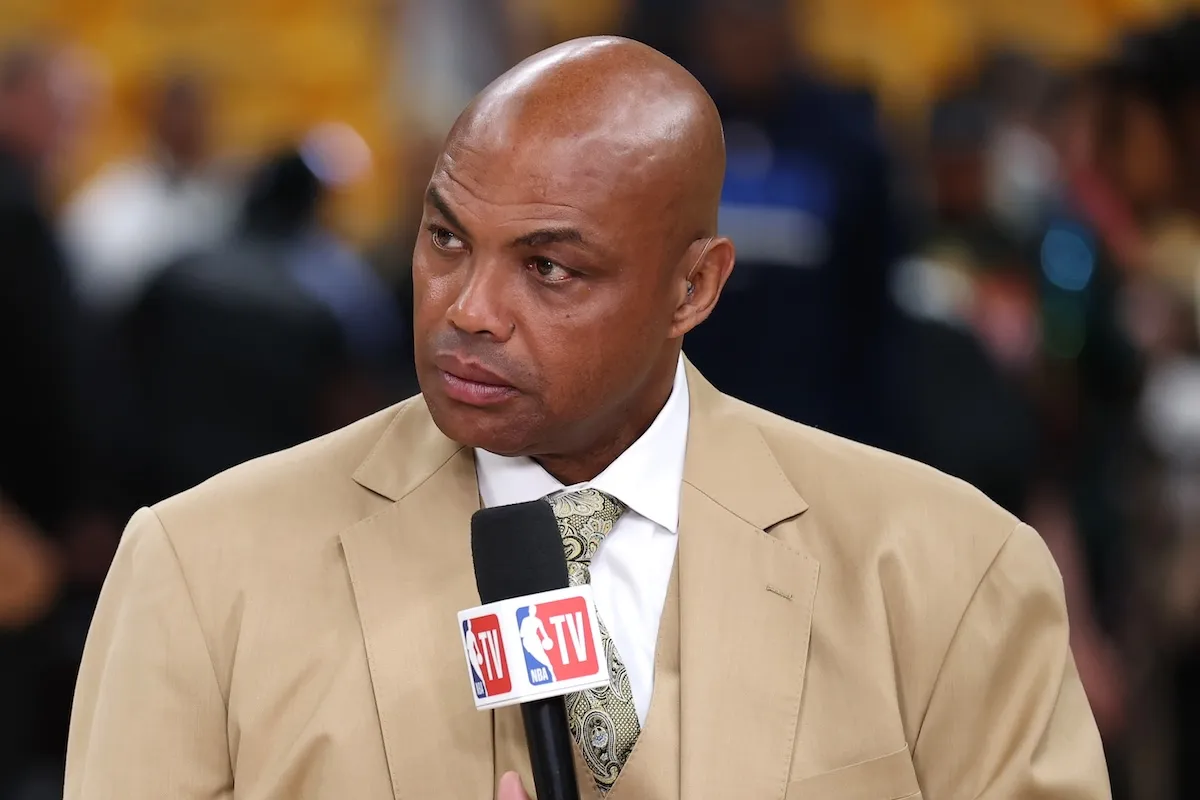
The emotional gravity of Ewing’s return took a beautifully human, deeply nostalgic, and highly entertaining turn when he joined the legendary “Inside the NBA” pregame set, broadcasting live from the chaotic, buzzing floor of the Garden. Surrounded by his old contemporaries—the dominant Shaquille O’Neal, the analytical Kenny Smith, and the irrepressible, outspoken Charles Barkley—Ewing was instantly enveloped in the warmth of old battles, shared locker room memories, and enduring brotherhood. It did not take long for the standard analysis of the upcoming game to transform into a delightful, laugh-out-loud trip down memory lane, highlighted by Barkley’s trademark bluntness and perfect comedic timing. With a mischievous, knowing grin that betrayed decades of mutual respect, Barkley looked directly at the Knicks legend and declared, “I just wanna say this, I hate you. I only got swept one time in my life, and you swept me.” The set erupted in laughter, and the crowd nearby cheered, but beneath the humor lay the raw, competitive nerve of two of the greatest powerhouses to ever play the game, reminding everyone of the intense rivalries that defined their careers. Barkley jokingly conceded that he would “never forgive” Ewing for that brutal 1989 postseason sweep, back when the first round of the NBA playoffs was a high-stakes, best-of-five sprint that left absolutely no room for error. It was a brilliant television moment that perfectly humanized these larger-than-life figures, illustrating how the fierce, sometimes violent rivalries of their youth had seasoned over decades into a rich, humorous camaraderie that only those who have bled together on the court can truly comprehend.
To appreciate the context of Barkley’s mock resentment and the deep-seated rivalry between these two franchises, one has to travel back in time to the physical, uncompromising spring of 1989, an era when basketball playing in the Eastern Conference was defined by defensive battles, intense mental warfare, and unyielding physical dominance. That first-round matchup between Ewing’s rising, gritty Knicks and Barkley’s proud Philadelphia 76ers was a collision of absolute titans, a series where every single rebound was a war of attrition and every drive to the basket came with a heavy physical price. Led by Ewing’s imposing defensive presence in the paint, the Knicks executed a clean, ruthless 3-0 sweep of Philadelphia on their home court, a devastating defeat that stung Barkley’s competitive pride and remained a permanent, singular blemish on his otherwise stellar postseason resume as the only sweep of his career. Though New York’s deep postseason run that year would ultimately be cut short in the next round by Michael Jordan’s legendary Chicago Bulls, that brief, violent clash with the Sixers cemented a rivalry that still echoes through the corridors of both cities’ arenas to this day. The physical toll and mutual struggles of those games created an unspoken, unbreakable bond between the combatants; they were elite warriors who tested each other’s limits in an era where referees allowed the game to be played with a ferocious intensity. While the modern NBA is often criticized by older fans for its friendly, fraternity-like atmosphere and lack of genuine animosity, the spirited banter between Barkley and Ewing reminded the world of a time when every possession was a battle, and the scars earned on the court became badges of honor carried proudly for the rest of their lives.
Yet, for all their individual dominance, transcendent skill, and collective fame, both Patrick Ewing and Charles Barkley share a poignant, underlying tragedy that binds them together in the annals of NBA lore: the elusive, painful search for an NBA championship ring. Ewing famously dragged the Knicks to the NBA Finals in 1994, engaging in a legendary, bruising seven-game battle against Hakeem Olajuwon and the Houston Rockets, only to fall just a few plays short of bringing a title back to New York. Barkley experienced his own iconic, heartbreaking near-miss just one year prior, in 1993, when he won the league MVP award and carried the Phoenix Suns to the Finals, only to be vanquished by the unstoppable force of Michael Jordan and the Chicago Bulls in a six-game thriller. These near-misses have defined much of the legacy talk surrounding both men in their post-playing careers, often unfairly overshadowing their incredible individual achievements and dominant statistical careers. To see them standing together on the Madison Square Garden court—two giants of the sport who conquered every individual milestone, won Olympic medals, and earned first-ballot Hall of Fame honors, yet never got to hoist the Larry O’Brien trophy—offered a stark, emotional reminder of the cruelty and beautiful unpredictability of professional sports. It humanized the ultimate struggle of the athlete, emphasizing that greatness is not solely defined by the shiny jewelry on one’s fingers, but by the relentless pursuit of excellence, the courage to face failure on the largest stage, and the enduring respect of one’s peers.
Ultimately, any lingering animosity, competitive bitterness, or unresolved heartache from those bygone eras had long since been washed away, most notably during the legendary, golden summer of 1992. It was during that magical time that Ewing, Barkley, and Jordan laid down their weapons of franchise warfare to unite under one banner as members of the historic United States “Dream Team” at the Barcelona Olympics, a squad widely considered to be the greatest collection of basketball talent ever assembled. That summer, the fierce rivals became teammates and close friends, dominating the global scene, sharing stories in hotels, and forging a lifelong brotherhood that transcended NBA arenas, regional loyalties, and individual statistics. Today, as Patrick Ewing stands in the twilight of his career, watching Jalen Brunson and this modern Knicks team chase the ultimate dream that slipped through his own fingers, he does so not with jealousy or regret, but with the immense pride of a founding father watching his children succeed. The torch of leadership has been passed to a new generation of fearless players, but the spirit of the Garden remains fundamentally unchanged—a relentless dedication to hard work, physical defense, and the pursuit of basketball glory. As Game 3 tipped off and the crowd let out a deafening roar, the laughter of old legends faded into the background, replaced by the immediate reality of a team on the verge of greatness, proving that while players eventually grow old, rivalries soften into jokes, and dynasties rise and fall, the love of the game and the hope of a championship burn eternal.