


For thousands of years, human commerce thrived on a foundation of tangible, physical trust. In ancient marketplaces, a trader verified the quality and origin of goods with a simple handshake, a keen eye, and personal relationships. Today’s hyper-globalized economy has shattered that human-scale intimacy, replacing it with massive, complex, and highly fragmented supply chains where millions of products travel across vast oceans, passing through countless anonymous hands before reaching their destination. In this sprawling web, verifying authenticity has become a monumental, near-impossible challenge, leaving the door wide open for sophisticated counterfeiting, rampant fraud, and logistical chaos that costs businesses billions of dollars annually. Seeking to fundamentally rewrite how we establish trust in the physical world is Bellevue, Washington-based tech pioneer Alitheon. The innovative company is offering an elegant, software-driven bridge between physical objects and digital traceability called “FeaturePrint.” This breakthrough technology bypasses the need for traditional, fallible tracking methods like physical tags, adhesive labels, barcodes, or intrusive chemical additives. Instead, it leverages the inherent, unalterable physical characteristics of the items themselves, treating them as unique individuals in a digitized world. By doing so, Alitheon is not merely optimizing logistics; they are establishing a secure “trust layer” for the global economy, reminding us that even in an era dominated by digital abstraction, the physical integrity of the things we create, trade, and rely upon remains paramount to human safety and prosperity.
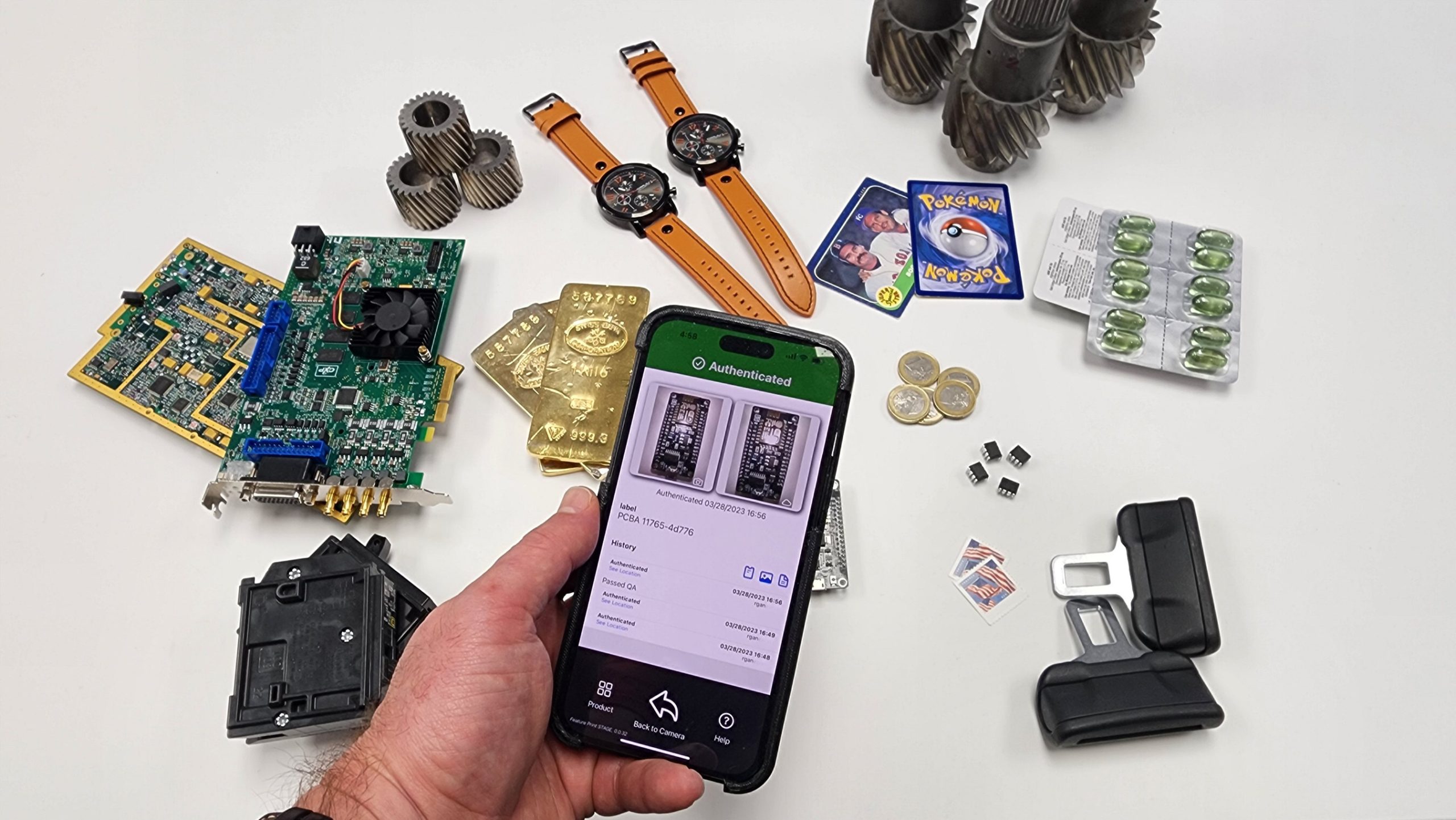
To understand how FeaturePrint achieves this seemingly impossible feat, one must look at the physical world through the precision lens of optical artificial intelligence. Every object manufactured by human hands—whether a pristine premium leather luxury handbag, a heavy-duty industrial gear, or a tiny life-saving pharmaceutical blister pack—possesses a unique microscopic surface landscape. Even when produced on the exact same robotic assembly line under identical conditions, no two items are physically identical at a molecular level; minute microscopic scratches, tiny surface variations, and natural grain patterns act as a natural, unforgeable signature. Alitheon’s ingenious software acts as “biometrics for things,” utilizing standard, off-the-shelf cameras to map these minute, natural surface abnormalities and translate them into a singular digital mathematical identifier, or a FeaturePrint. By eliminating the reliance on external labels, Alitheon solves a fundamental vulnerability inherent in traditional tracking systems: physical wear and tear. Barcodes get smudged, RFID tags get hacked or damaged, and stickers simply peel off in transit, creating an immediate, dangerous break in the chain of custody. By looking directly at the “soul” of the object—its natural surface characteristics—FeaturePrint ensures that an item cannot be separated from its digital identity, creating a system of authentic identification that is virtually impossible to duplicate, alter, or spoof.
The critical vulnerabilities of our current tracking paradigms are far more than minor logistical inconveniences; they pose severe operational, financial, and national security risks. In a revealing anecdote shared by Alitheon’s CEO, Roei Ganzarski, during a GeekWire feature, the absurdity of our reliance on fragile, human-made labels was laid bare. Ganzarski recalled a startling audit revealing that Lockheed Martin had ostensibly “lost” a staggering one million parts within the high-stakes F-35 fighter jet program. As Ganzarski wisely pointed out, a company does not simply “lose” highly secure, multi-million-dollar aerospace components in a physical sense; rather, those parts become completely unidentifiable. The moment a critical barcode falls off or a printed serial number gets erased in transit or storage, an invaluable asset is rendered useless, transforming a masterpiece of engineering into a mysterious, untraceable lump of metal. This loss of trackability translates directly to idle equipment, wasted human labor, ballooning military budgets, and potential safety vulnerabilities in critical infrastructure. By implementing FeaturePrint, organizations in high-consequence industries can instantly identify any component with a quick, simple camera scan, ensuring that a simple adhesive failure never again compromises the integrity of critical defense systems, aviation safety, or heavy industrial machinery.
The sheer versatility of this optical AI technology has allowed Alitheon, originally founded in 2015, to build an incredibly impressive, diverse portfolio of more than 55 patents and capture the interest of some of the world’s most security-conscious industries. The applications span an incredibly broad spectrum of human endeavor, from safeguarding physical wealth to protecting defense infrastructure and consumer health. For instance, Swiss precious metals refiner Argor-Heraeus utilizes FeaturePrint to guarantee the absolute authenticity of its gold bullion, ensuring that counterfeit metals cannot infiltrate the global financial ecosystem. Meanwhile, the company has secured $1.5 million in prestigious federal contracts, including high-stakes security work with the Pentagon’s Nuclear Weapons Center, where the precision and un-spoofable nature of authentication is a matter of global safety. Simultaneously, the technology protects everyday consumers from predatory counterfeiters in the luxury goods sector, where a fake designer bag or counterfeit watch not only damages brand equity but often funds illicit transnational criminal networks. By providing a foolproof method for authenticating luxury items and high-value collectibles, Alitheon is restoring the peace of mind that modern consumers lost when counterfeiting became a sophisticated, multi-billion-dollar global industry.
This profound impact on global trade and security has not gone unnoticed by the investment community, fueling a rapid expansion that is set to accelerate even further. Alitheon recently announced a successful $8 million Series A1 funding round, bringing their total capital raised to just over $40 million to date. This latest round was led by Emerald Technology Ventures, a firm renowned for backing sustainable, industrial-tech breakthroughs, with strategic participation from eBay Ventures. The backing from eBay’s venture arm is highly significant, highlighting a growing corporate demand to tackle the rampant counterfeit crisis on global e-commerce marketplaces and verify high-value goods for everyday buyers and sellers. Despite the massive, global scale of their operations, Alitheon remains a highly focused, agile team of just 24 dedicated engineers, scientists, and industry experts operating out of Bellevue, Washington. Their relentless pursuit of innovation has earned them widespread critical acclaim; notably, Time magazine honored FeaturePrint as one of the 200 Best Inventions of 2023, recognizing it as a transformative technology poised to reshape consumer trust, enterprise security, and logistics for generations to come.
Looking to the future, Alitheon’s vision goes far beyond merely optimizing supply chain metrics; it is about cultivating a world where transparency is absolute and trust is woven into the very fabric of physical reality. As we step deeper into an era dominated by sophisticated artificial intelligence, deepfakes, and hyper-realistic counterfeits, the line between genuine and fabricated is growing perilously thin. In this landscape, Alitheon’s technology acts as a vital anchor, reassuring us that truth is still discoverable through the meticulous observation of physical reality. By empowering businesses and consumers with the ability to instantly verify the authenticity of anything from a life-saving medical package to an engine component spinning on a commercial aircraft, Alitheon is injecting humanity, security, and certainty back into a chaotic global market. Their technology leaves us with a reassuring promise: that in a world where almost anything can be copied, faked, or lost in transit, the unique physical identity of our creations remains permanently, beautifully, and safely readable.