


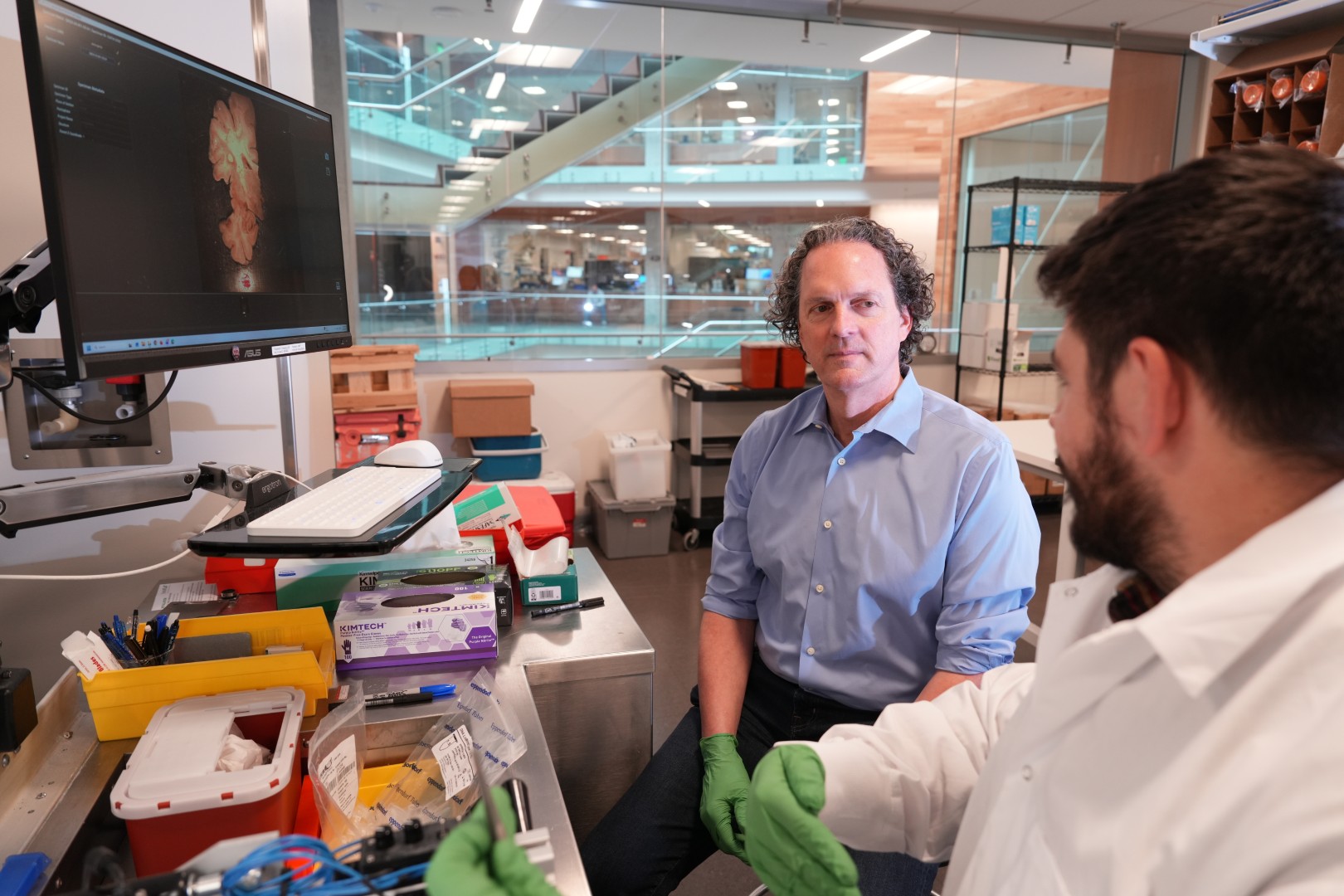
To understand the human brain is to stand before the most intricate, beautiful, and devastating frontier of medicine. For decades, those suffering from neurodegenerative diseases like Alzheimer’s, Parkinson’s, Huntington’s, and ALS have watched their loved ones slowly fade away, locked in a desperate search for treatments that could halt the quiet, steady erosion of mind and muscle. Now, the Allen Institute—founded in 2003 by the visionary late Microsoft co-founder Paul Allen—is embarking on a profound pivot from mapping this vast cellular wilderness to active warfare against the diseases that lay it to waste. Through the launch of the newly minted Brain Health Accelerator, armed with an initial $200 million in funding, the Seattle-based institute is shifting its focus to developing target-specific gene therapies. This transition, led by executive vice president Ed Lein alongside young scientists like Aaron Garcia, marks a historical threshold: for the first time in its twenty-one-year history, the institute is turning its monumental library of raw brain data into direct, life-saving therapeutics designed to heal broken neural circuits.
The staggering financial engine fueling this ambitious endeavor is a testament to the enduring, post-mortem philanthropy of Paul Allen, who passed away in 2018. The $200 million seed capital flows directly from the Fund for Science and Technology, established from Allen’s estate with a massive $3.1 billion endowment dedicated to bioscience, artificial intelligence, and environmental conservation. Behind this grand scientific pursuit lies a deeply personal effort steered by Paul’s sister, Jody Allen, who chairs the foundation and has been systematically liquidating his estate’s high-profile assets—including iconic sports franchises like the NFL’s Seattle Seahawks and the NBA’s Portland Trail Blazers—to channel those proceeds directly into human health and innovation. This unwavering commitment is structured to span at least fourteen years, creating a stable, long-term runway that is expected to attract a diverse constellation of global partners. Rather than working in isolation, the accelerator is designed to foster a synergistic, public-private ecosystem where philanthropic agility matches the immense scaling power of federal funding from the National Institutes of Health (NIH), turning shared data into a public resource for all of humanity.
This revolutionary leap from mapping the brain to curing it rests entirely upon the foundational work the Allen Institute has spent the last two decades constructing. In the past, neuroscience treated the brain with a blunt instrument, targeting broad proteins and suffering from extensive off-target side effects; now, breakthroughs in single-cell genomics have allowed researchers to catalog the brain at an unprecedented, miraculous resolution. Ed Lein describes this massive scientific database as “the equivalent of the human genome meets Google Earth,” a living, high-definition cartography that defines thousands of distinct brain cells by their unique genetic signatures. For the first time in human history, scientists do not just see the devastation of a disease; they see the exact cellular zip codes where the damage occurs. By harnessing the tiny genetic “switches” that activate genes in only specific cell types, researchers are now designing molecular keys to unlock therapeutic solutions solely within the damaged cells, completely leaving healthy surrounding tissues untouched.
With a bold, ticking clock hanging over the project, the Brain Health Accelerator’s ultimate goal is to advance a target candidate to human clinical trials within the next five years. While the institute is cautious not to overpromise, Ed Lein acknowledges that Amyotrophic Lateral Sclerosis (ALS), a notoriously swift and fatal motor neuron disease, stands out as a highly promising initial candidate. ALS presents a unique, agonizing paradox: it quickly paralyzes the body’s motor functions while leaving the patient’s intellect entirely intact, and because it progresses so rapidly, find-a-cure initiatives carry an unmatched clinical urgency. Scientists already know precisely which motor neurons in the spinal cord and cortex are targeted by ALS, and they understand several of the genetic abnormalities driving this cellular collapse. This biological clarity, combined with the brave willingness of terminal patients to participate in experimental protocols, makes ALS the ideal initial testing ground for a therapy designed to intervene directly at the genetic level, shifting the institute’s role from passive scribes of biology to active creators of medicine.
To process the unfathomable oceans of genomic data required to build these precision gene therapies, the accelerator is leaning heavily into the frontiers of artificial intelligence. Traditional human analysis simply cannot spot the incredibly complex patterns hidden within the trillions of data points generated by single-cell sequencing, making the project prime territory for advanced foundation models. The Allen Institute has strategically partnered with tech giant Amazon Web Services and is initiating deep collaborations with the Allen Institute for AI (Ai2), a sister organization founded by Paul Allen to push the boundaries of machine learning. Furthermore, this is not a localized crusade; it is a global, borderless alliance uniting over two dozen elite universities, research facilities, and medical hubs, including Stanford, MIT, the University of Washington, and the Fred Hutchinson Cancer Center. By aligning with international powerhouses like the Sanger Institute in the United Kingdom, Riken in Japan, and patient-centric advocacy organizations like EverythingALS, the initiative represents a massive, unified front of human ingenuity rallying against neurological decay.
For those who have walked the halls of the Allen Institute for decades, this new chapter carries an immense, bittersweet emotional weight. Ed Lein, who joined the institute as its very first neuroscientist back in 2004, reflects on this moment with a mixture of profound pride and quiet grief, wishing that Paul Allen were still alive to see his grand, curiosity-fueled blueprints finally transition into the realm of human healing. Paul Allen was a man driven by a restless, infinite wonder about how the universe and the human mind functioned, always harboring the quiet, audacious hope that his investments would one day directly alleviate human suffering. As the accelerator of nearly sixty scientists prepares to scale up to an army of two hundred, the legacy of a deceased tech pioneer is being transformed from static binary code and sports matches into a living, breathing promise of survival. The maps have been drawn, the coordinates have been logged, and now, the quest to cure the human mind has officially begun.