


As the winter chill fades and the promise of summer warmth begins to coax families out onto their front porches and into municipal parks, tension historically grips communities across the United States. For decades, sociology and law enforcement statistics have pointed to an unsettling, recurring reality: as temperatures climb, so too do rates of violent crime and property damage. This shift brings anxiety for parents watching their children ride bicycles on suburban sidewalks, small business owners locking up their shops at dusk, and neighbors working tirelessly to foster a peaceful, supportive environment. Recognizing this vulnerability, the Federal Bureau of Investigation, in close coordination with hundreds of state, county, and local law enforcement partners, embarked on a quiet, relentless mission to intercept this threat before it could take root in the summer heat. Dubbed “Operation Spring Cleaning,” this massive, three month nationwide surge was designed with a singular, deeply human objective: to reclaim vulnerable public spaces for families and ensure that the coming sunny months are defined by community joy rather than senseless tragedy. It represents a proactive protective shield, a monumental effort to sweep away the actors of violence, illegal drug trafficking networks, and armed fugitives who exploit the changing seasons to spread fear across municipal and state lines. By focusing specifically on the individuals driving the highest rates of local crime, officers aimed to disrupt the cycle of violence before it could escalate, offering a profound sigh of relief to millions of citizens who simply wish to live their lives in safety, dignity, and peace. This collective endeavor reminds us that behind every bureaucratic metric of crime reduction is a real neighborhood where a child can now walk to the local corner store without looking over their shoulder, where a family can sleep peacefully through the night, and where the communal fabric of hope can begin to heal.
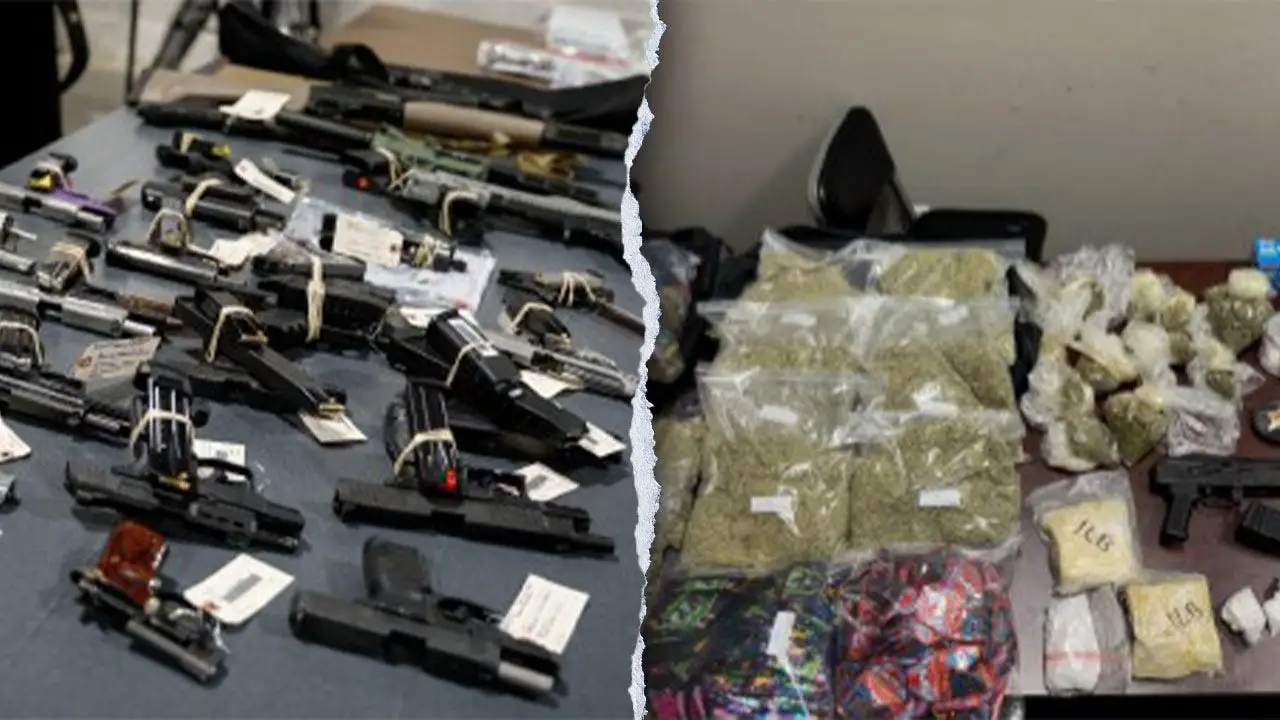
To understand the sheer magnitude of this undertaking is to appreciate the extraordinary dedication and personal risk accepted by the law enforcement officers who executed it daily. Over the ninety day operation, agents and officers participated in an astonishing 1,474 joint operations and executed 586 search warrants across the nation, resulting in 1,139 arrests, 984 firearm seizures, and 615 federal criminal indictments. Yet, to those who wore the badge, these were never just cold numbers on a spreadsheet; each represents a tangible crisis averted. Seizing nearly one thousand firearms translates to hundreds of potential shootings that will never happen, arguments that will not escalate into fatal violence, and innocent bystanders who will not be caught in crossfire. Every single one of the 1,139 arrests represents an individual who was actively contributing to the instability of a local neighborhood, now removed from the streets through a careful, evidence based legal process. Behind these successful raids were thousands of hours of meticulous detective work, sleepless nights, and moments of extreme danger, where agents walked up to the doorways of heavily armed suspects not knowing what awaited them on the other side. This operation demonstrates the power of seamless collaboration, as local police departments, who understand the unique pain points of their specific neighborhoods, integrated seamlessly with the resource rich, analytical power of the federal government. By targeting the most prolific offenders, including vicious gang leaders, serial armed robbers, and repeat felony offenders, meaning the operation systematically dismantled the localized infrastructure of crime. It sent a powerful message to communities that had previously felt forgotten or besieged: that justice is active, vigilant, and unyielding in its pursuit of public safety, ensuring that the law abiding majority has its voice and its neighborhoods restored to them. After each exhausting shift, as these officers returned home to their own families, they carried with them the quiet satisfaction of knowing that their community was measurably safer than it had been just twelve hours prior.
At the dark heart of much of the nation’s violent crime lies the insidious, devastating trade of illegal narcotics, a slow motion disaster that tears apart families and ravages entire generations. Operation Spring Cleaning struck an unprecedented blow against this illicit economy, taking massive quantities of lethal substances off the streets before they could poison vulnerable minds and bodies. Law enforcement officers successfully confiscated 509 kilograms of cocaine, 48 kilograms of fentanyl, 698 pounds of methamphetamine, 567 pounds of marijuana, 7.4 kilograms of crack cocaine, 38 kilograms of heroin, and 13,260 highly dangerous MDMA pills, commonly known as ecstasy or molly. To look at these staggering weights is to look at a statistical wall constructed directly between deadly chemical agents and our youth. In an era where a microscopic speck of fentanyl can prove instantly fatal, the seizure of forty eight kilograms of this synthetic opioid represents millions of potential overdoses prevented, families spared the agonizing grief of burying a child, and emergency rooms saved from chaotic influxes of poisoning victims. Methamphetamine and crack cocaine, substances that fuel cycles of desperation, petty theft, and severe domestic neglect, were intercepted in quantities that will dry up local supply chains for months to come. This massive disruption of the drug trade does not merely hurt the bottom line of criminal syndicates; it provides breathing room for local rehabilitation centers, social workers, and families trying desperately to pull their loved ones back from the brink of addiction. By starving the local street level distribution networks of their inventory, the operation has effectively lowered the temperature of drug related turf wars that so often claim innocent lives in crossfires, proving that drug enforcement is not just about the law, but about preserving the basic human right to health, stability, and survival. It is an act of profound empathy for communities that have spent years weeping over the loss of their brightest young minds to the silent epidemic of substance abuse.
This relentless, nationwide campaign was guided by a clear and uncompromising vision from the highest levels of federal law enforcement, where leaders emphasized that the primary metric of success is the preservation of American lives. FBI Director Kash Patel spoke passionately about the bureau’s renewed, strong focus, characterizing Operation Spring Cleaning as the latest triumph in a comprehensive, continuous offensive designed to flood areas lacking resources with elite federal assets. Patel noted that whether the initiative is labeled Summer Heat, Viper, Grayskull, or Spring Cleaning, these coordinated surges represent a historic, highly successful era of targeted crime reduction in modern United States history, a direct response to the cries of citizens demanding safer streets. Echoing this sentiment, FBI Deputy Director Chris Raia underscored that the agency’s primary mission remains rooted in defending the homeland and delivering the tangible security that the American public so deeply deserves. Raia explained that by partnering closely with local authorities, the FBI is not merely reducing crime statistics on paper but is actively cultivating a culture of trust and reassurance within local communities, emphasizing that this historic crackdown is only the beginning of an ongoing, permanent effort. The statements from these leaders reveal a profound institutional shift away from passive observation and toward aggressive, preventative action, where the vast investigative resources of the federal government are directly deployed to assist local beat cops on the front lines of America’s neighborhoods. This deep commitment provides critical motivation for the agents on the street, knowing that their daily sacrifices are backed by a leadership team completely dedicated to cutting through bureaucratic red tape to protect the innocent and holding violent predators accountable under the fullest extent of federal law. This unified stance sends a clear, reassuring message to citizens that their safety is the federal government’s highest priority, ensuring that the shield of the law remains heavy and active.
The geographic scope of Operation Spring Cleaning illustrates the borderless nature of modern criminal enterprises, which frequently cross municipal, county, and state boundaries to evade local prosecution and establish sprawling illicit empires. Major metropolises such as Chicago, Dallas, Houston, Philadelphia, Sacramento, and Charlotte served as major focal points for this coordinated offensive, reflecting the reality that urban centers are often the battlegrounds for these sophisticated networks. In Dallas, for example, the material excess of these criminal enterprises was put on full display when authorities seized a high end Mercedes Benz vehicle and twenty thousand dollars worth of luxury jewelry, demonstrating how illegal drug and firearm trafficking translates into illicit wealth built on the exploitation of others. Reid Davis, the Special Agent in Charge of the FBI’s Charlotte field office, captured the core challenge of modern policing when he remarked that individuals who are willing to commit brutal acts of violence have absolutely no regard for artificial geographic boundaries. To counter this threat, the FBI integrated Operation Spring Cleaning into the broader framework of Operation Take Back America, a sweeping, long term initiative dedicated to pushing back against transnational criminal organizations and dismantling the powerful international cartels that orchestrate the flow of drugs and weapons into our country. By attacking both the local street level dealers and the international supply structures simultaneously, the Department of Justice is working to sever the lifelines of global syndicates that threaten American sovereignty and safety. This sophisticated approach acknowledges that a local gang member operating in a quiet neighborhood in North Carolina is often connected, through a complex web of logistics, to powerful drug cartels operating thousands of miles away, requiring a coordinated, global response to protect local children. This strategic focus ensures that local communities are no longer left to fight powerful global syndicates alone, but are protected by the full weight and intelligence of federal authority.
In addition to combating systemic drug trafficking and gang violence, this massive mobilization of federal resources has directly addressed some of the most private, devastating heartbreaks that afflict our communities, particularly the safety of our most vulnerable citizens: our children. This significant announcement came shortly after the FBI revealed the outstanding successes of Operation Soteria Shield, a joint initiative between federal agents and Texas state authorities that resulted in more than 276 arrests for suspected child exploitation and, most miraculously, the rescue of 89 children from unimaginable harm. This incredible rescue was not just a statistic, but a miraculous rebirth for these innocent lives, allowing them to finally return to the warm embrace of loving environments, play freely under the open sky, and look forward to a future filled with untarnished hopes and peaceful dreams rather than fear. The rescue of these young boys and girls represents eighty nine distinct universes of potential restored, eighty nine families returned to wholeness, and a profound victory over the shadowy forces of human exploitation. The intersection of these operations reveals a holistic strategy dedicated to protecting families from every angle, understanding that physical violence, drug epidemics, and the exploitation of the youth are deeply interconnected threats that require a united front. As communities prepare to step into the long, bright days of summer, the far reaching impact of these combined operations offers a newfound sense of hope and a profound, collective sigh of relief. Parents can send their youngsters to community parks with a lighter heart, knowing that hundreds of lethal weapons and kilos of deadly poison have been permanently removed from their paths, and that public servants are actively standing watch. The story of Operation Spring Cleaning is, at its core, a story of human resilient triumph, an enduring testament to what can be achieved when courageous men and women stand together to say that our neighborhoods belong solely to the peaceful and the innocent. Through their tireless, dangerous work, these law enforcement professionals have not only restored order and respect to our streets, but have laid a beautiful, safe, nurturing foundation upon which families can build happy memories, neighbors can connect in safety, and communities can truly thrive, proving once again that light will always push back the darkness. Guided by this spirit, everyday citizens and protective agencies can look forward to a season where community bonds are strengthened, laughter fills the playgrounds, and the shadow of fear is replaced by the comforting warmth of security.