



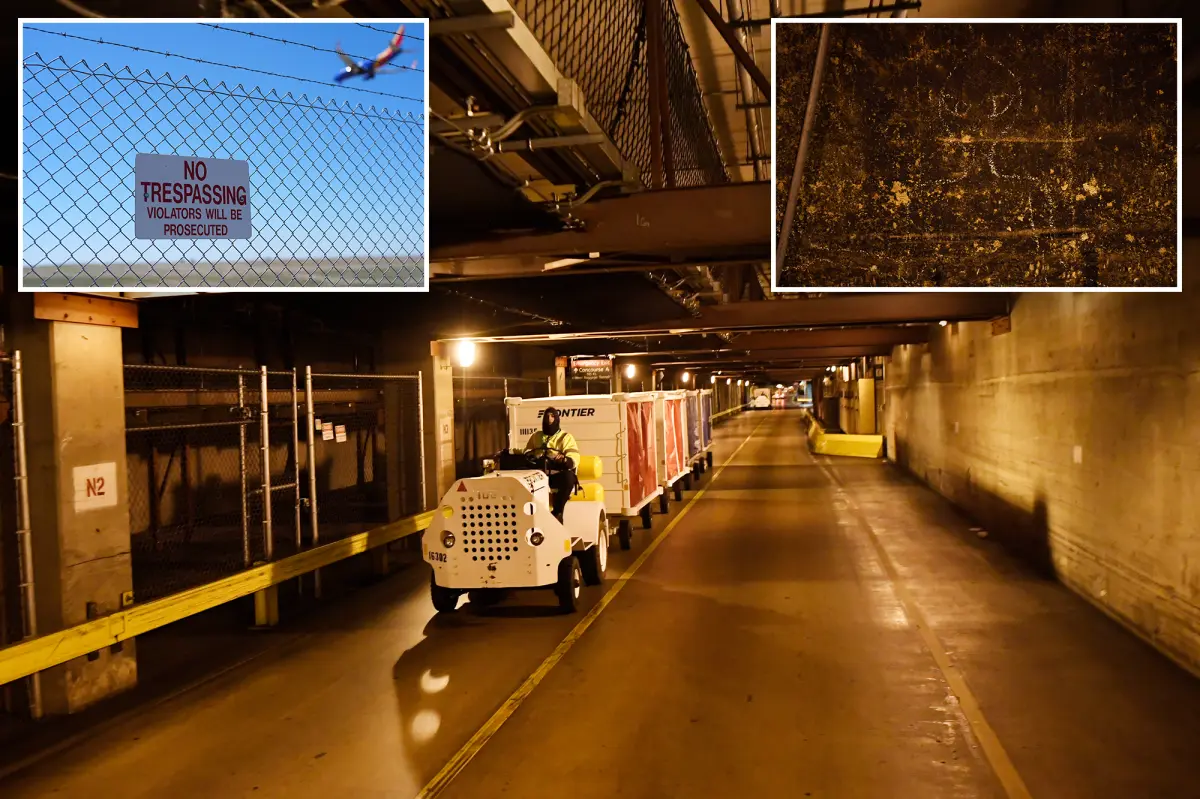
For decades, Denver International Airport has existed as much in the realm of modern folklore as it has in the practical world of global aviation. Sprawled across the windswept plains of Colorado, its iconic white peaked roofs, designed to mimic the snow-capped Rocky Mountains, have long harbored rumors of a far more shadowy world lurking directly beneath the feet of unsuspecting travelers. In a move that feels like a playful nod to pop culture detectives and a practical step forward for weary passengers, airport officials recently announced plans to pull back the curtain on this subterranean realm. Large, untapped sections of the airport’s vast underground baggage tunnel network will soon be transformed into vibrant, well-lit pedestrian walkways. This ambitious conversion will connect Concourses A, B, and C, offering human travelers a scenic alternative to the automated trains that have long served as the sole terrestrial link between terminals. Commenting on the decision, Denver Mayor Mike Johnston playfully embraced the airport’s eccentric legacy, noting that this project might finally give travelers a first-hand look at the infamous underbelly of the airport, allowing them to decide for themselves where the line between wild internet rumors and concrete engineering reality truly lies.
This massive infrastructure project is far more than a tongue-in-cheek response to internet subcultures; it is a vital organ of the airport’s aggressive “Vision 100” expansion plan. As one of the busiest travel hubs in the world, Denver International Airport is rapidly outgrowing its current footprint, prompting leadership to prepare the facility for an expected influx of over 100 million passengers annually. Construction on the new pedestrian corridors is scheduled to break ground in 2027, with estimated costs fluctuating between a substantial $300 million and $700 million. While the price tag is eye-watering, Denver International Airport CEO Phil Washington has assured the public that the massive undertaking will not cost taxpayers a single dime. Instead, the entire capital project will be funded entirely through the airport’s own operational revenues, which are generated by parking fees, airline gate leases, concessions, and passenger facility charges. For the average commuter, the new tunnels represent a massive structural upgrade, providing a reliable human-powered bypass for those times when the automated train system experiences occasional maintenance delays, which can currently leave thousands of travelers stranded in long, stressful bottlenecks.
To understand why the opening of these tunnels has generated such widespread excitement, one must look back at the colorful history of Denver International Airport’s relationship with the paranormal and the speculative. When the airport first opened its doors in 1995, it was already shrouded in controversy, having suffered a chaotic, sixteen-month delay and running billions of dollars over its original budget. The primary culprit for this delay was a revolutionary, fully automated baggage system designed to transport suitcases through miles of underground tunnels with laser-guided precision. Instead, the system became a legendary logistical nightmare, famously chewing up luggage, misrouting bags, and ultimately being abandoned in favor of traditional manual tugs and carts. This left behind vast, unused concrete chasms beneath the concourses, sparking the imagination of the public. Before long, these empty vaults became the focal point of elaborate conspiracy theories suggesting they were home to secret post-apocalyptic vaults, command centers for the New World Order, or hidden offices designed to shield global elites and “lizard people” in the event of an apocalypse.
These underground myths were further fueled by the airport’s highly unusual, occasionally jarring public art pieces scattered throughout the terminals. Chief among these is the towering, 32-foot-tall blue fiberglass stallion that stands guard near the entrance of the airport, officially named “Mustang” but affectionately and fearfully dubbed “Blucifer” by locals and visitors alike. The sculpture’s anatomical realism, coupled with its glowing neon-red eyes, has terrified generations of drivers, and its dark mystique was cemented in tragedy when a piece of the sculpture broke free during its creation, severing the femoral artery of its creator, the renowned artist Luis Jiménez, and claiming his life. Beyond the demonic horse, the airport’s interior features an array of bizarre artifacts, including a Masonic dedication capstone referencing a fictitious “New World Airport Commission,” and vivid, sweeping murals painted by Leo Tanguma. Though the murals were intended to depict environmental destruction giving way to world peace, their initial imagery of gas-masked soldiers and crying children served as fertile ground for travelers convinced the airport was trying to warn them of an impending, manufactured global catastrophe.
The announcement that these infamous underground spaces would soon be open to the public spread like wildfire across social media, igniting a wave of humor, nostalgia, and genuine relief. Online communities, particularly on platforms like Reddit, erupted with satirical warnings urging travelers to pack their battle gear to fend off subterranean reptilian overlords during their walks between flights. Other users quickly raised their digital glasses to the regional mascot, posting playful chants of “Praise Blucifer” and sharing memes of aliens disguised as TSA agents. Yet, beneath the lighthearted internet banter lay a deep, shared sense of appreciation from seasoned flyers who have long advocated for a walking option. Traveling through modern airports can be an incredibly stressful and sensory-disrupting experience, and many passengers suffer from claustrophobia or general anxiety when forced to cram into tightly packed, windowless automated trains. Having the freedom to self-pace, stretch one’s legs after a grueling multi-hour flight, and walk comfortably from one concourse to another is a simple human pleasure that many believe should have been integrated into the airport’s original design decades ago.
Ultimately, this project highlights an incredibly unique aspect of Denver’s civic identity: the brilliant way the airport has learned to stop fighting its reputation and instead wrap its arms around it. Rather than dryly dismissing the conspiracies with boring bureaucratic statements, the airport’s marketing team has spent the last decade leanings into the weirdness, plastering construction barriers with posters of green space aliens and gargoyles asking travelers if they are remodeling a food court or building a secret portal to another dimension. By slowly turning these once-forbidden baggage paths into bright, modern pedestrian walkways, the airport is pulling off the ultimate public relations victory. They are addressing a critical infrastructure bottleneck, promoting physical wellness, and giving travelers direct, firsthand access to the very spaces that have fueled decades of late-night forum discussions. When the walkways finally open, the dark, quiet tunnels that once lived in our collective imagination will be filled with the mundane, comforting sounds of rolling suitcase wheels, family chatter, and travelers quietly rushing to catch their flights, proving once again that reality is often far more practical, and far more human, than the myths we create.