


Politics is so often analyzed through the cold, calculated lens of voting data, strategic fundraising, and partisan maneuvering, but at its very core, it remains an intensely human enterprise driven by personal ambition, deep-seated loyalties, and the emotional quest for cultural representation. This fundamental truth was vividly on display in the aftermath of a highly competitive Democratic primary runoff in Texas, which quickly escalated from a standard local contest into a fiery national debate over the soul, future, and execution of Democratic identity politics. Ultimately, former Representative Colin Allred emerged victorious in his quest to reclaim a deep-blue congressional district anchored in the Dallas metropolitan area, but his triumph was met not with universal party celebration, but with an immediate and vocal fracturing of the Democratic coalition. Allred, a prominent Black Democrat, former NFL linebacker, and previous Senate nominee, defeated Representative Julie Johnson, a deeply respected and trailblazing figure in her own right. Johnson’s loss in the primary runoff effectively ended her tenure as the sole openly lesbian lawmaker representing the state of Texas at any federal or high state level—a loss of representation that sent a shockwave of grief, anger, and betrayal through the LGBTQ+ community. This race, which could have been perceived as a healthy debate between two highly qualified progressive candidates, was instead recast as a painful zero-sum game of identity, showcasing a profound paradox for the contemporary Democratic Party. When a party defines its moral authority and governing philosophy through the diverse backgrounds of its leaders, the triumph of one marginalized voice can sometimes feel like a devastating erasure to another, exposing raw wounds that cannot be easily healed by simple, empty calls for party unity.
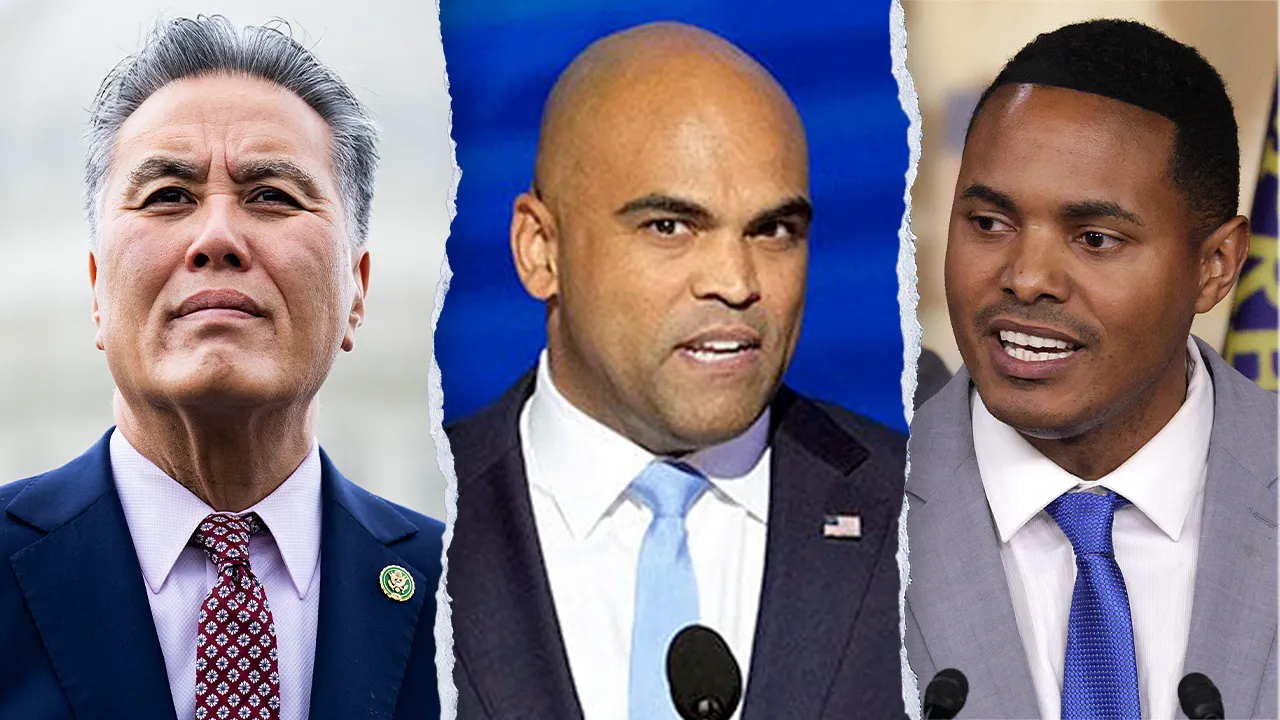
The primary catalyst for this intense wave of Democratic infighting was an unusually sharp, public condemnation issued by the political arm of the Congressional Equality Caucus, a group dedicated to advancing and protecting LGBTQ+ representation on Capitol Hill. In a deeply personal, emotionally charged statement, the PAC’s co-chairs, Representatives Mark Takano of California—the first openly gay Asian-American elected to Congress—and Ritchie Torres of New York—the first openly gay Afro-Latino member of Congress—publicly and fiercely rebuked Allred for his decision to run against Johnson. They highlighted the devastating reality that, without Johnson in office, the state of Texas, and indeed the entire American South, is at risk of losing crucial, visible queer representation in the federal legislature at a time when LGBTQ+ rights are under sustained legislative attack in conservative-led statehouses. The Equality PAC had put its money where its mouth was, contributing close to half a million dollars of its hard-earned political capital to bolster Johnson’s campaign, a highly competitive race where she also served as a vice-chair of the organization. To Takano and Torres, Allred’s opportunistic entry into the primary looked less like a fair democratic challenge and more like an insensitive betrayal of a vulnerable community by a fellow minority coalition member who should have known better. They openly declared that many within their community remained “deeply hurt” by Allred’s political ambitions, warning that as he moves forward in his career, he bears a heavy, personal responsibility to mend the divisions he created and actively work to rebuild broken trust with the communities most impacted by this race.
To view the race solely through the lens of external criticism, however, is to overlook the deeply human and complex motivations of Colin Allred himself, a dedicated public servant navigating his own challenging career path in the high-stakes arena of Texas politics. Having recently completed a grueling, high-profile statewide campaign to unseat Republican Senator Ted Cruz in 2024, Allred found himself as a highly popular national figure but without a seat in Congress to continue his legislative work after falling short in the general election. When he made the decision to return to the House arena by contesting the Dallas-anchored district he had previously represented, he was acting on a personal sense of duty to his constituents and a desire to bring his extensive experience back to Washington. As a Black man, Allred is no stranger to the realities of systemic underrepresentation, and his political identity has long been built on championing civil rights, voter protection, and economic opportunity for historically marginalized populations. This background made the accusations of insensitivity from his fellow Democrats particularly difficult to digest, as his campaign had focused heavily on a message of broad-based progressivism, public service, and district-wide coalition building. Ultimately, Allred secured a decisive eight-percentage-point victory over Johnson, a margin that clearly demonstrated that primary voters in the district favored his leadership and vision for the future. Yet, the victory carried a heavy emotional weight, illustrating the cruel irony of modern progressive politics where two leaders, both dedicated to fighting systemic inequality, find themselves forced into a political Colosseum where only one can survive.
The public scolding of Allred by the Equality PAC did not go unanswered, quickly sparking a fierce counter-backlash from moderate Democrats and centrist political commentators who are increasingly weary of what they view as excessive, counterproductive identity politics. Critics wasted no time in pointing out that the PAC’s public grievances were exactly the kind of exclusionary, grievance-based rhetoric that alienates working-class Americans and independent voters who are looking for practical governance. High-profile national commentators, like journalist Josh Barro, ridiculed the PAC’s statement on social media, expressing frustration with the ongoing internal policing of candidate identities by dryly declaring that straight people are, in fact, allowed to run for public office without causing a crisis. Tré Easton, a former senior advisor to progressive Pennsylvania Senator John Fetterman, joined the chorus of disapproval, urging his colleagues to leave behind such hypersensitive grievances, labeling it as a relic of an over-corrective political culture that does more to damage the party’s general election prospects than to protect minority rights. This pushback highlights a growing, profound divide within the Democratic Party itself, pitting those who believe that descriptive representation must be protected at all costs against those who argue that merit, voter choice, and electoral viability must remain the ultimate arbiters of political success if the party is to remain competitive on the national stage.
This local Texas conflict must also be understood within the broader, high-stakes national chess match currently being played out between Democratic and Republican leadership over the configuration of voting districts across the country. House Minority Leader Hakeem Jeffries has consistently and forcefully accused the Republican Party of attempting to systematically erase Black and Hispanic representation in Congress by dismantling minority-majority districts through aggressive redistricting efforts in southern states. For Jeffries and other national leaders, protecting the voice of minority voters is an existential civil rights battle, a narrative that becomes significantly more complicated to maintain when Democrats are seen fighting among themselves over safe, deep-blue seats. The internal friction highlights the delicate, often unstable architecture of the modern Democratic coalition, which relies on a fragile alliance of various identity-based groups, including Black, Hispanic, Asian, and LGBTQ+ voters, all of whom expect an equitable share of political power. When resources are limited and safe seats are scarce, these advocacy groups are often forced to compete directly against one another, transforming what should be a unified front against conservative policies into a self-destructive struggle for demographic dominance that threatens to undermine the party’s message of overarching unity heading into crucial midterms.
As the dust finally begins to settle over the Dallas-area primary, the path forward for Colin Allred, Julie Johnson, and the wider Democratic Party will require an immense amount of empathy, open dialogue, and deliberate reconciliation. Allred faces the delicate, long-term challenge of returning to the halls of Congress not merely as a victorious politician, but as a healing force who must actively demonstrate to the LGBTQ+ community that their rights and voices will remain a central priority of his legislative agenda. For Julie Johnson, the narrow defeat is undoubtedly a painful setback in a career defined by breaking barriers, leaving her supporters with the difficult task of finding new, creative avenues to maintain their political influence in a state that remains highly hostile to queer rights. Ultimately, this intense primary battle is a deeply human story about the rising pains of a shifting nation, showing that the pursuit of a perfect, fully representative democracy is a messy, flawed, and often painful process that cannot be solved by simple bumper-sticker slogans. If the Democratic Party is to survive and thrive as a broad, national coalition, its leaders must find a way to honor and celebrate the diverse identities of its members without allowing those same identities to become weapons that fracture their shared progressive vision, proving that true representation is not just about who holds the seat, but how they work together to lift everyone up.