


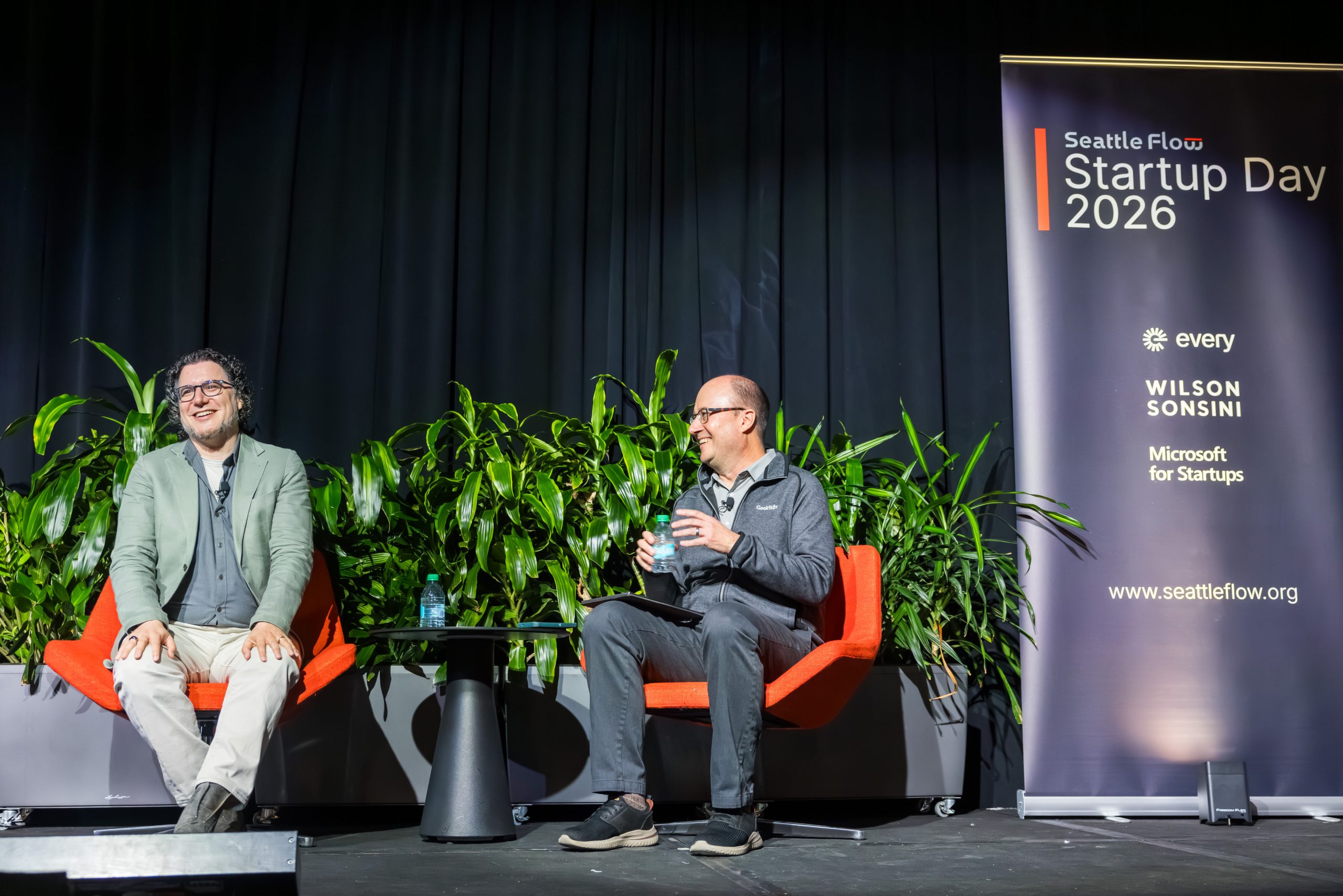
On a crisp, energetic morning in late May 2026, the atmosphere inside the Seattle Flow Startup Day venue was charged with the kind of nervous optimism that defines the modern entrepreneurial spirit. Founders, investors, and tech enthusiasts had gathered in droves, eager to glean practical tactics and conventional wisdom from the celebrated veterans of the industry, but they were instead treated to an intellectual earthquake. Sitting on stage with GeekWire’s Todd Bishop, Eric Ries—the celebrated author who once revolutionized the global business world with The Lean Startup—unveiled a thesis so radical that it seemed to challenge the very gravitational pull of modern capitalism itself. Ries, with his characteristic blend of analytical sharpness, system-level thinking, and deeply felt humanism, argued that we must completely retire our traditional definition of “profit.” In his highly anticipated, visionary new book, Incorruptible: Why Good Companies Go Bad and How Great Companies Stay Great, Ries makes the passionate, urgent case that true profit should not be measured in the cold, detached, and often manipulated metrics of quarterly balance sheets, EBITDA, or stock buyback capacity, but rather in the maximization of human flourishing. It was a startling, disruptive assertion to throw down before a room full of hungry people whose professional survival and daily stress levels depend on securing venture funding and hitting aggressive revenue targets. Yet, Ries refused to play the role of the polite corporate cheerleader. He explicitly challenged the audience to abandon the collective delusion that all money-making enterprises are created equal, pointing out that deep down, in our quietest moments, none of us actually believe that strip-mining a community’s resources, underpaying workers, or systematically degrading a beloved product’s quality to squeeze out extra pennies counts as genuine success or contribution. Instead, he introduced a framework that uses the word “corruption” not to describe dramatic backroom bribes or illegal accounting schemes, but as a biological metaphor for the structural decay that inevitably occurs when a company’s original, noble purpose is slowly hollowed out and consumed by the insatiable, short-sighted demands of external capital.
This systemic decay is not merely an optical problem or a minor public relations issue; it is legally and structurally hardwired into the foundations of our global economic system, a reality that was starkly illustrated during the high-stakes federal trial involving Elon Musk and OpenAI. During those intense court proceedings, Microsoft CEO Satya Nadella took the witness stand and delivered a testimony that, for many observers who had read Ries’s work, laid bare the fundamental, institutional tragedy of modern corporate design. Under oath, in a matter-of-fact tone, Nadella acknowledged that his primary, non-negotiable fiduciary responsibility is to maximize value for Microsoft’s shareholders, precisely because Microsoft is structured as a traditional, for-profit corporation. To Ries, this courtroom exchange was not a revelation of personal greed or a lack of individual ethics on Nadella’s part, but rather a chilling demonstration of structural imprisonment on an epic scale. It proved that even the most well-meaning, highly sophisticated, and empathetic leaders are ultimately bound by a legal architecture that prior to everything else prioritizes short-term financial returns over long-term societal well-being, ecological health, or ethical considerations. When applied to powerful, world-altering technologies like artificial intelligence, this fiduciary straightjacket becomes an existential threat to humanity. If a corporation’s legal DNA compels it to prioritize shareholder value above all else, any public statements about safety, alignment with human values, or ethical guardrails will eventually be crushed under the weight of market expectations and the pressure to generate immediate returns. This legal obligation creates an intense, systemic pressure to cut corners, rush highly volatile technologies to market, and abandon the founding mission, transforming what could have been a gift to humanity into another engine of short-term wealth extraction for a tiny fraction of the population. This disconnect highlights how OpenAI’s unique structure struggled to survive within the standard corporate universe, exposing a deep vulnerability in how we govern modern technological advancements.
To understand how we arrived at this precarious juncture, Ries urges us to look back at the historical shift that occurred in the 1980s, when the doctrine of shareholder primacy—championed by economists like Milton Friedman—became the undisputed, almost religious orthodoxy of the corporate world. Before this era, classic corporate governance acknowledged a much broader, more balanced spectrum of responsibilities, including duties to employees, local communities, customers, and the environment. The catastrophic narrowing of this focus to a single, easily manipulated financial metric has led to what Ries defines as the systemic corruption of beloved institutions. We have all witnessed this painful phenomenon: a cherished local grocery chain is bought by a massive private equity firm, only for the shelves to empty, the wages of loyal staff to be slashed, and the community core of the business to be hollowed out; or a groundbreaking software startup goes public, only to immediately replace its passion for product excellence with endless pop-up ads, intrusive tracking, and aggressive subscription paywalls designed to please Wall Street analysts. It is a slow, agonizing process of structural decay that robs businesses of their souls and breeds widespread public cynicism toward the entire concept of free enterprise. Ries’s book, Incorruptible, serves as an emergency manual for resisting this trend, offering a blueprint for how companies can construct legal and governance bulwarks capable of repelling the corrosive influence of short-term investor greed. By centering human flourishing as the ultimate objective of business activity, Ries seeks to restore the original, noble promise of entrepreneurship: that a business can be a highly effective vehicle for solving human problems, fostering meaningful collaborations, and creating genuine, lasting abundance for society as a whole. This is not about being anti-market, but about building markets that serve people rather than parsing them.
When the founders of Anthropic reached their breaking point and decided to leave OpenAI over deep-seated concerns regarding its commercial trajectory and ethical guardrails, they knew they needed a radically different structural foundation to avoid repeating history, prompting them to seek the counsel of Eric Ries. Having witnessed the incredible speed with which profit incentives can erode the grandest humanitarian intentions, the Anthropic team originally planned to shield themselves by registering as a Delaware Public Benefit Corporation, a legal status that theoretically allows directors to balance social missions with financial goals. Ries, however, delivered a tough and vital truth: a simple two-page filing, while a noble gesture, is a dangerously weak shield against the immense, crushing gravity of multi-billion-dollar venture capital and the relentless pursuit of commercial dominance. If a company’s mission is truly of epochal importance—such as ensuring the safe development of artificial intelligence—it requires a governance structure with real teeth and structural checks and balances. Acting on this advice, Anthropic ultimately went a step further, establishing a groundbreaking governance model centered around a Long Term Benefit Trust. This independent trust, composed of disinterested trustees with no personal financial stake in the company’s commercial upside, possesses the supreme legal authority to appoint and remove board directors. By decoupling the ultimate governance of the company from the financial incentives of its shareholders, Anthropic created a robust, two-tiered system that Ries notes is statistically modeled after the most resilient, stable, and long-lasting legacy organizations of the past century and a half, proving that mission-preservation is not merely a matter of pure goodwill, but of deliberate, sophisticated legal engineering. This trust-based structure acts as a true constitutional check, protecting the company’s core values even when billions of dollars are actively trying to persuade them otherwise.
Perhaps the most deeply poignant chapter in Ries’s legal and philosophical exploration of corporate vulnerability centers on the tragic rise and fall of Whole Foods Market, which culminated in public heartbreak when it was acquired by Amazon in 2017. For decades, founder John Mackey had championed “conscious capitalism,” a beautiful corporate philosophy built on the belief that a business can operate out of love, focusing on the well-being of its employees, local farmers, loyal customers, and the environment, while still remaining highly profitable. Indeed, Whole Foods was an astronomical success, posting consistent profits quarter after quarter and proving that high-quality, ethically sourced food could build a massive, passionate, and lucrative market. But when activist investors spotted an opportunity to extract short-term value from the company’s plateauing growth, Mackey’s beautiful philosophy proved to be entirely defenseless against the cold, hard realities of shareholder primacy. These activist shareholders accumulated a minority stake, initiated a predatory proxy fight, and ultimately forced a sale of the company to Amazon, pocketing an astronomical $500 million for just six months of aggressive financial maneuvering. Mackey, who poured his life, heart, and soul into building a pioneering cultural phenomenon, still carries this outcome as a profound personal failure and a source of deep grief. Ries, however, views the tragedy of Whole Foods through a much more objective, systemic lens: Mackey did not fail because his ideas were wrong or his business was weak, but because he tried to run an ethical, mission-first enterprise using the standard, vulnerable corporate architecture of a shareholder-first system. It is a stark, cautionary lesson for every modern entrepreneur that if you want to build a company with a lasting, incorruptible ethos, the underlying legal skeleton must match that spirit, or the market will eventually crush it. Our values require robust architectural protection if they are to endure.
Looking toward the horizon, Ries is surprisingly optimistic, asserting that the suffocating era of shareholder primacy is already collapsing under its own unsustainable weight, even if the vast majority of the business world has not yet realized it. He poetically likens our current economic state to the iconic cartoon character Wile E. Coyote, who has already sprinted off the edge of the canyon and is suspended in mid-air, running on nothing but momentum, oblivious to the fact that there is no longer any ground beneath his feet. The crises of our age—from environmental degradation and escalating economic inequality to the existential anxieties surrounding runaway technological advancement—are forcing a collective awakening that profits decoupled from human welfare are not only unsustainable but deeply dangerous. We are on the precipice of a profound transition toward “mission primacy,” an era where it will once again be self-evident that the ultimate purpose of any human enterprise must be to serve the collective good. By designing organizations that embed their missions directly into their legal DNA, using innovative models like trusts, multi-class voting structures, and public benefit declarations, the next generation of founders has the historic opportunity to build genuinely incorruptible institutions. These companies will prove that financial viability is not the ultimate destination of economic activity, but the fuel that powers a far grander journey: the continuous, enduring elevation of the human condition. As Ries left the stage in Seattle, his message resonated not as a condemnation of capitalism, but as a hopeful roadmap for its survival, challenging us to build systems where humanity is the primary beneficiary of our creative labor. If we have the courage to rewrite our foundational rules, we can build a future where our greatest successes are measured by how much we help each other thrive.