


Humanity has always gazed up at the pale, cratered face of the Moon not merely as a cold, distant celestial body, but as a silent witness to our history and a beacon for our ultimate potential. Decades after the pioneering footprints of the Apollo missions were left permanently etched in the fine lunar dust, a new and profoundly collaborative era of cosmic exploration is dawning, driven by a shared dream of permanence rather than temporary triumph. At the heart of this historic revival is NASA’s ambitious initiative to establish a sustainable human presence near the Moon’s rugged, shadow-drenched south pole, a mission that has officially enlisted the innovative prowess of Jeff Bezos’ aerospace company, Blue Origin. In a major announcement delivered from the space agency’s historic headquarters in Washington, D.C., NASA Administrator Jared Isaacman declared that America is not just returning to the lunar surface, but doing so alongside a powerful coalition of commercial and international partners to construct a lasting home for science and discovery. To launch this grand endeavor, NASA has awarded Blue Origin an initial $188 million contract to ready its cutting-edge, robotic Blue Moon Mark 1 lander to carry the heavy-duty machinery required for long-term lunar survival. This catalytic agreement includes an option period that could inject an additional $280.4 million across subsequent phases, contingent upon Blue Origin meeting rigorous performance standards. This financial and strategic commitment marks a major shift in how we approach space exploration, moving away from government-sole-source programs toward a dynamic, competitive market of commercial developers. By funding Blue Origin’s heavy lander technology, NASA is laying down the physical highway for a permanent base—a bustling hub where international scientists, commercial miners, and intrepid explorers can live and work together. This is a monumental step toward making the moon an accessible destination, a basecamp where the dreams of science fiction writers are slowly forged into the concrete reality of human history. Through these public-private partnerships, the dream of lunar residency ceases to be a distant mirage and becomes an engineering plan with milestones, budgets, and launch windows.
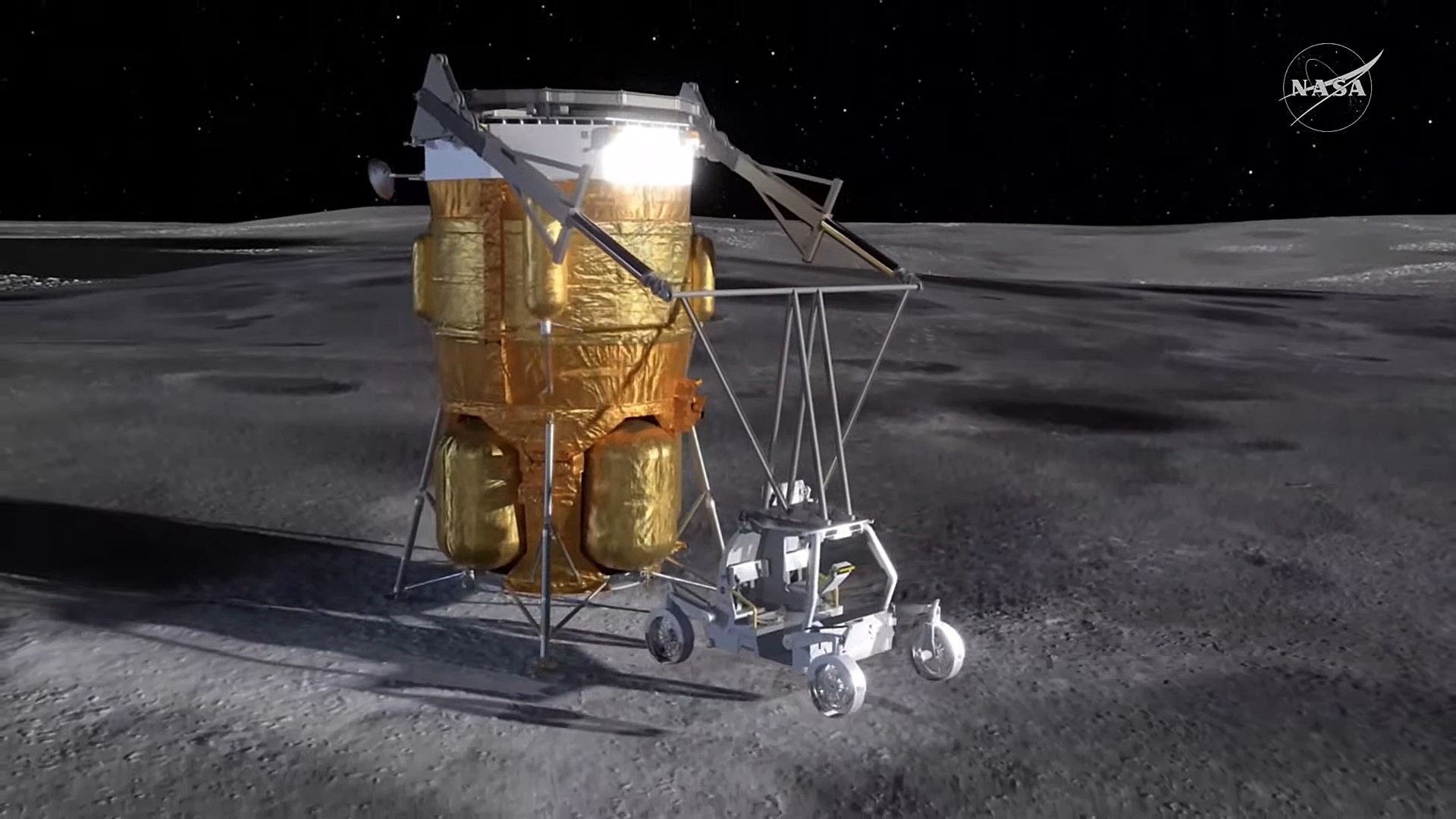
The success of any permanent colony relies heavily on mobility, and to traverse the challenging, heavily cratered terrain of the lunar south pole, astronauts will require highly advanced, robust transport vehicles. Carlos Garcia-Galan, the visionary program manager for NASA’s Moon Base program, envisions these new Lunar Terrain Vehicles (LTVs) as a brilliant evolutionary leap—a sophisticated hybrid blending the vintage spirit of the Apollo-era buggies with the autonomous, rugged intelligence of modern Mars-style rovers. Weighing nearly a metric ton each, these massive vehicles must be folded with origami-like precision to fit within the snug payload fairing of Blue Origin’s Blue Moon lander, only to unfold themselves autonomously upon touching down on the lunar plains. The primary contenders tasked with designing these miraculous machines represent a diverse cross-section of modern engineering excellence. One of the LTVs will be crafted by California-based Astrolab, supported by the scientific expertise of Seattle-based Interlune, which is currently cultivating specialized varieties of simulated lunar soil at its Texas facility to rigorously test the rover’s resilience against the notoriously abrasive lunar dust. Meanwhile, Colorado’s Lunar Outpost is spearheading the development of the Pegasus rover, drawing on the historic manufacturing power of General Motors, the traction engineering of Goodyear, and the systems integration of Leidos. Both vehicles are engineered to be marvels of dual-purpose utility: they can comfortably carry two astronauts at speeds of up to ten kilometers per hour for localized scientific expeditions, or operate as fully autonomous robotic scouts capable of embarking on solo journeys spanning up to two hundred kilometers. Backed by substantial funding—with Astrolab securing a $219 million contract and Lunar Outpost earning $220 million—these rovers will serve as the indispensable workhorses of the new lunar frontier, transforming these distant regions into active centers of human discovery. This cooperative engineering ecosystem reflects a beautiful truth about modern spaceflight: it takes a village of dreamers, from tire manufacturers to dust scientists, to safely transport humanity across the airless deserts of another world.
But before humans and heavy rovers can safely venture into the Stygian darkness of the lunar craters, the terrain must first be surveyed and mapped with absolute precision. To achieve this, NASA is preparing to deploy an innovative, highly agile fleet of rocket-powered scouts known as “MoonFall” drones, designed specifically for rapid reconnaissance and reliable communication relay in areas where traditional satellite signals cannot reach. These highly specialized drones, conceptualized by the brilliant engineers at NASA’s Jet Propulsion Laboratory, will be carried to the moon and deployed by the Texas-based aerospace company Firefly Aerospace using their highly adaptable Elytra Dark spacecraft. Securing a lucrative $75 million contract for a four-drone delivery mission, Firefly is stepping into a crucial role that highlights how vital smaller, more agile commercial companies have become to the broader lunar pipeline. Imagine the breathtaking technical choreography: the Elytra Dark spacecraft descending gracefully into low lunar orbit, releasing four sleek, rocket-propelled drones that ignite their thrusters to hover, dart, and glide over the jagged, airless valleys of the south pole. Without an atmosphere to provide lift, these drones must rely entirely on delicate thrust vectoring to navigate, mapping out safe pathways for the larger terrestrial rovers and identifying potentially hazardous craters before a single human boot touches the ground. This aerial network will function as a vital celestial safety net, providing real-time data and acting as localized communications towers to link remote explorers with their home base and, ultimately, with Earth. By bridging the gap between orbit and the rugged ground, these rocket-powered scouts represent a major leap in tactical explorer safety, embodying the courage and technological audacity of this new space race. It is a stunning reminder that our journey into the unknown is guided by unseen robotic guardians, carefully lighting the way through the eternal dark of the lunar wilderness, ensuring that our pioneers never walk blindly into danger.
The logistical architecture of this grand return is structured around a sequence of meticulously planned missions, starting in the immediate future with the launch of “Moon Base 1.” This foundational mission will feature Blue Origin’s maiden Blue Moon Mark 1 lander, appropriately named Endurance, which is currently undergoing rigorous preflight testing ahead of its planned launch of scientific payloads designed to study how rocket thrusters interact with delicate lunar dust. Following closely behind, “Moon Base 2” will see a massive SpaceX Falcon Heavy rocket launch Astrobotic’s Griffin lander toward the southern polar region, carrying a heavy cargo payload that includes an Astrolab rover equipped with an advanced Interlune imaging system designed to scout for rare and valuable helium-3 deposits. This will be swiftly followed by “Moon Base 3,” which will deploy Intuitive Machines’ Nova-C Trinity lander to carry out the first-ever scientific investigations selected under NASA’s PRISM initiative, including the Lunar Vertex project aimed at studying the mysterious, magnetically induced bright swirls on the lunar surface. As NASA Administrator Isaacman passionately remarked, these initial flights represent just the tip of the iceberg, with more than a dozen missions slated for announcement as humanity builds its base, returns to the lunar surface, and pledges never to give up the moon again. The beauty of this sequential approach lies in its compounding nature; each lander, rover, and scientific instrument left on the surface builds upon the success of the last, turning isolated scientific experiments into a highly connected, functional web of interstellar infrastructure. It is a thrilling, step-by-step masterclass in cosmic choreography, demonstrating that our return to the moon is not a series of disconnected PR stunts, but a deliberate, unstoppable construction project aimed at establishing a permanent home for humanity among the stars. Every rocket flight carries not just metal, but the hopes of generations of thinkers who believed that our destiny lies beyond our atmosphere.
This ambitious choreography is not limited to raw robotics; it also serves as the proving ground for the massive human landers that will soon carry the next generation of astronauts down to the lunar surface. Blue Origin is actively developing its larger, crew-rated Blue Moon Mark 2 lander, running parallel to SpaceX’s highly anticipated Starship human landing system, both of which NASA plans to test in low Earth orbit during the upcoming Artemis missions. Lori Glaze, the associate administrator for NASA’s Human Spaceflight Mission Directorate, explained that the agency is moving forward strongly with both aerospace giants, actively conducting complex trade studies to optimize mission designs, ensure safe landing conditions, and guarantee that the operational objectives align with the harsh realities of the lunar environment. This dual-source strategy exemplifies the modern NASA philosophy: fostering a healthy spirit of competitive cooperation where private rivals push each other to innovate faster, safer, and more cost-effectively than any government agency could do in isolation. Administrator Isaacman noted that while the technology is modern, the strategic mindset draws straight from the classic NASA playbook of the 1960s—leaning heavily into trial and error, understanding what works in the harsh theater of deep space, and mastering the epic science of physical survival. Behind the cold statistics of thrust, weight, and payload capacities lie the tireless efforts of thousands of passionate human engineers, programmers, and technicians who spend their days analyzing data and their nights dreaming of the cosmos. Their collective labor is bridged by a shared human objective: to build a bridge to the heavens that is sturdy enough to bear the weight of our species’ future, transforming the moon from a source of distant wonder into an active, breathing workplace where humans live, learn, and grow. Through their efforts, we are learning that space exploration is not just about visiting new places, but about the profound transformation of who we are as a species.
Looking further down the road, this monumental venture is organized into three distinct, visionary phases designed to gradually transition the moon from a temporary scientific outpost into a thriving, self-sustaining society. The first phase focused heavily on establishing fundamental access and mapping vital resource deposits—specifically looking for the vast reserves of water ice locked away in the permanently shadowed craters of the south pole, which can be harvested to create breathable oxygen and liquid rocket fuel. The second phase, scheduled to unfold between 2029 and 2032, will see the installation of critical, heavy-duty operational infrastructure, including advanced energy grids powered by solar arrays and compact nuclear fission reactors to keep the lights on during the freezing, two-week-long lunar nights. Finally, the third phase will culminate in the establishment of a permanent, sprawling moon base encompassing hundreds of square miles, bringing to life a vibrant orbital and surface economy that will forever change our relationship with the solar system. Program Manager Carlos Garcia-Galan paints a breathtaking picture of this future, imagining a vast, interconnected lunar metropolis where different modules, habitats, and mining sites all contribute to an enduring human presence. For NASA and its global partners, however, the ultimate objective of this lunar endeavor lies even further on the horizon: the moon is our training ground, a vital cosmic classroom where we will master the essential survival skills, fuel production techniques, and psychological endurance necessary to take the ultimate leap to Mars. As Isaacman beautifully summarized, the true glory of building this moon base lies in establishing a proving ground where we can learn to survive in the deep cosmos, so that one day, in the not-too-distant future, a crew of brave explorers can step out onto the red soil of Mars and plant the flag of a united, spacefaring humanity. This is the ultimate destiny of our journey into the dark: to become a multi-planetary species, carrying the light of consciousness to worlds we have only ever dreamed of.