


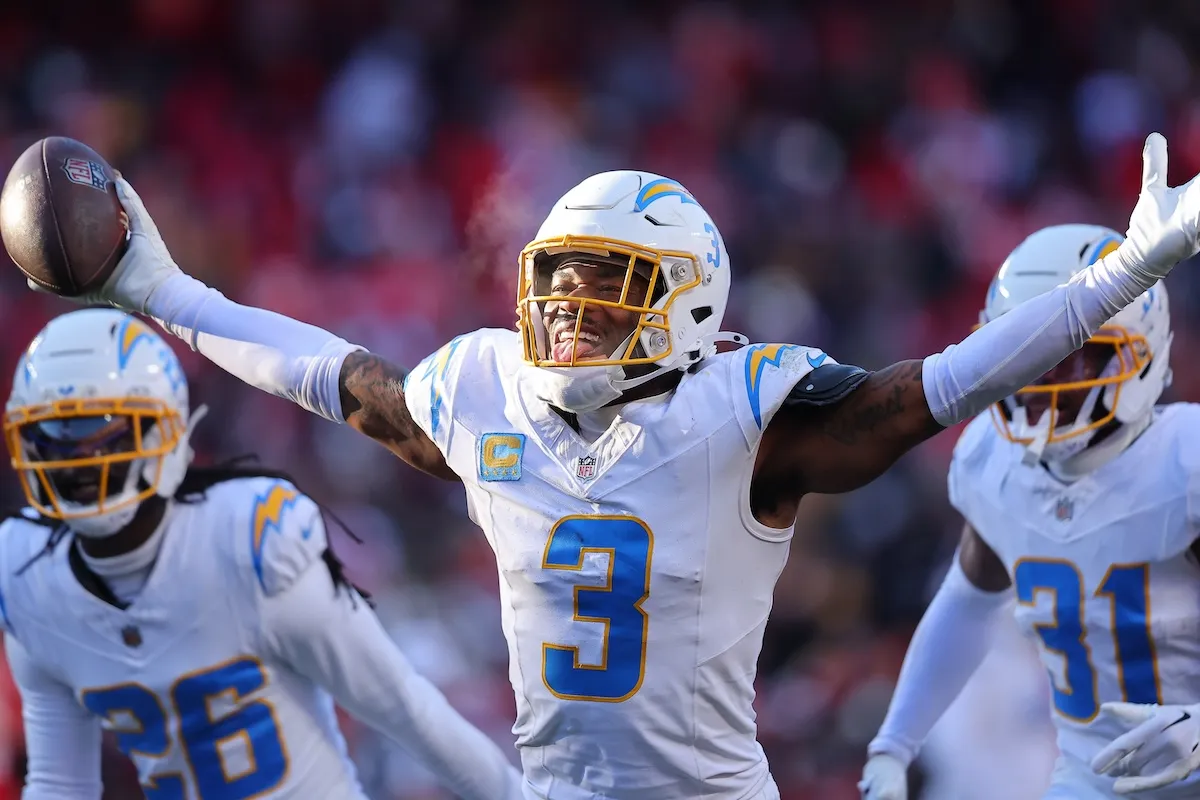
The business of professional football is a relentless cycle of calculation and compromise, a realm where a player’s entire life’s work is routinely distilled into spreadsheets, risk assessments, and salary cap percentages. Yet, when the Los Angeles Chargers finalized a monumental three-year, $75.6 million contract extension with star safety Derwin James on a Tuesday that will linger long in the memory of the franchise, the numbers on the page felt secondary to the human triumph they represented. Negotiated by his agent, David Mulugheta, the deal guarantees James a jaw-dropping $57.5 million, elevating him once again to his rightful place as the highest-paid safety in the National Football League. For James, this historic payday is not merely a financial achievement, but a profound vindication of a journey defined by breathtaking talent, devastating physical setbacks, and an unbreakable competitive spirit. Drafted in the first round of the 2018 NFL Draft out of Florida State, James burst into the league as a generational defensive weapon, a rare athlete possessing the size of a linebacker, the coverage skills of a cornerback, and the instinctual ferocity of a traditional safety. Yet, his path was soon derailed by the cruel hand of fate; during the 2019 and 2020 seasons, devastating injuries limited him to a combined total of just five games, leaving many to wonder if his immense promise would become one of the league’s great unfinished stories. Instead of succumbing to despair during those long, isolating months of rehabilitation, James engineered a remarkable renaissance, culminating in his fifth Pro Bowl selection in 2025 and a stellar campaign where he tied his career-best with three interceptions. By securing his financial future with this landmark extension, the Chargers have not only protected their defensive centerpiece but have also rewarded a leader who poured his sweat, soul, and resilience into the very fabric of their organization.
To understand the gravity of James’s extension, one must look at the turbulent landscape of the Chargers’ front office throughout the offseason, where decision-makers had been navigating a storm of public skepticism regarding their financial restraint. Across sports talk radio and social media, a loud segment of the fan base and national media had begun criticizing the franchise for what appeared to be an overly frugal approach to roster construction. This discontent crystallized around the team’s maneuvers along the offensive line, particularly at the guard position, where instead of pursuing a premier, high-priced free agent to shield their franchise quarterback, the front office opted for a more conservative route by signing Cole Strange to a modest two-year, $13 million contract. While Strange brought valuable experience and starting-caliber utility, the move was widely viewed as a compromise, sparking fears that the team was unwilling to spend the necessary capital to build a true championship contender. However, General Manager Joe Hortiz remained steadfast under fire, quiet in his convictions because he was hiding an ace up his sleeve. Hortiz understood that a team’s identity is not forged solely by chasing every expensive name on the open market, but by meticulously identifying the core players who establish the culture in the locker room and prioritizing them above all else. By declaring early in the offseason that retaining Derwin James was the franchise’s absolute priority and subsequently delivering on that promise, Hortiz silenced the critics, demonstrating a clear strategic vision that balanced pragmatic, cost-conscious signings at auxiliary positions with blockbuster investments in the indispensable pillars of the team’s defense.
This strategic continuity is poised to pay immediate dividends as the Chargers transition into a new chapter under defensive coordinator Chris O’Leary, a brilliant young football mind whose promotion represents a seamless evolution for the unit. O’Leary, who earned widespread player respect while serving as the team’s safeties coach in 2024, understands the intricate geometry of modern NFL offenses better than most, but more importantly, he possesses an intimate, trust-built shorthand with James. In the game of defense, where pre-snap disguises and split-second adjustments dictate the boundary between a devastating sack and a game-winning touchdown, having an on-field general who functions as an extension of the coaching staff is an invaluable luxury. James is not a safety who can be easily pigeonholed into a single defensive scheme; he is a versatile chess piece who can drop deep into coverage, crowd the line of scrimmage to stifle the run, or blitz off the edge with terrifying speed. Under O’Leary’s guidance, James will not just be executing a playbook; he will be orchestrating it on the grass, teaching younger players where to line up, reading the opposing quarterback’s eyes, and igniting the emotional fire that fuels a championship-caliber defense. This deep connection between coordinator and captain creates a reassuring sense of stability for a locker room adapting to new schemes, ensuring that even as the team introduces new concepts and faces elite opponents, the heart of the defense remains anchored by a familiar, dominant force who speaks the same football language as his coach.
While veteran leadership forms the foundation of this defensive unit, the front office recognized that sustained success requires an injection of young, hungry talent, a reality that guided their hand during a highly praised draft cycle. The crown jewel of their defensive haul came at pick No. 22, where they selected Miami edge rusher Akheem Mesidor, a physical specimen whose path to the NFL brings a unique level of maturity to the locker room. At 25 years old, Mesidor is considered an older rookie by modern draft standards—a factor that caused some analytics-driven franchises to hesitate—but ESPN’s Kris Rhim astutely pointed out that this maturity is precisely what makes him a wise and immediate contributor for a team in win-now mode. Mesidor does not possess the raw, unrefined traits of a teenager who needs years in an NFL strength program; he arrives with a grown-man build, refined technical hand-work, and a veteran-like seriousness that will allow him to instantly rotate into the edge-rush group and make his presence felt. To complement this high-impact first-round selection, the Chargers focused on back-end depth and run defense by targeting developmental prospects with high upside, securing Arizona defensive back Genesis Smith at pick No. 131 and South Carolina defensive lineman Nick Barrett at pick No. 145. These rookies enter a defensive system designed to highlight their strengths, and under the watchful eye of veterans like James, they will have the rare privilege of learning how to prepare, study film, and recover from the physical toll of an eighteen-week season from one of the absolute best to ever play the position.
The commitment to locking down Derwin James and surrounding him with young, dynamic contributors becomes even more logical when analyzing the sheer dominance of the Chargers’ defense during the previous season. In an era dominated by high-powered passing attacks, explosive dual-threat quarterbacks, and offensive coordinators using pre-snap motion to create defensive mismatches, the Chargers’ defensive unit stood tall as an elite, resilient fortress. The team finished the year ranked an impressive fifth in the NFL in total defense, allowing a stingy 285.2 yards per game, a metric that reflects a collective discipline and an ability to make offenses earn every single inch of turf. Even more impressive was their performance against the pass, where they also ranked fifth in the league, holding opposing passing games to a meager 179.9 yards per contest. These statistics are not abstract figures; they represent real moments of physical confrontation, of safeties seamlessly switching coverages in mid-air, of defensive backs refusing to give up the deep boundary, and of a defensive line creating the pressure necessary to force hurried, inaccurate throws. James was the catalyst for this statistical excellence, acting as the ultimate eraser in the secondary whose presence alone forced opposing quarterbacks to hesitate, a split-second delay that often resulted in a devastating sack or a turnover. Retaining a player of this caliber is not just about keeping a talented athlete on the roster; it is about preservation of identity, ensuring that the team’s greatest competitive advantage remains intact as they prepare to battle through a brutal division schedule.
Yet, even as a wave of optimism washes over the defensive side of the ball, a quiet, lingering anxiety continues to hover over the franchise regarding the state of their offense and the enigmatic status of their superstar quarterback, Justin Herbert. Over the past month, Herbert’s conspicuous absence from several team practices and media availability has ignited a firestorm of speculation throughout the national sports media landscape, cast against the backdrop of a pending contract negotiation that will inevitably reshape the team’s entire salary structure. Herbert, who has shouldered the immense weight of the franchise’s expectations and successfully guided the Chargers to the postseason in three of his first four professional seasons, represents the long-term hope of the city, making any disruption to his preparation a cause for profound concern. In the modern NFL, a championship roster is a delicate ecosystem where the massive contract of a franchise quarterback must coexist with the market-setting deals of elite defensive cornerstones like James, requiring masterclass salary-cap management from the front office. As the team marches toward the grueling crucible of the regular season, the contrast between the secured, celebratory future of their defensive leader and the unresolved, scrutinized future of their offensive savior creates a narrative of high stakes and high tension. Ultimate success will depend on whether the franchise can harmonize these competing financial and emotional demands, using the stability of Derwin James’s defense to support Justin Herbert’s offense as they embark on a relentless pursuit of a Super Bowl championship.