


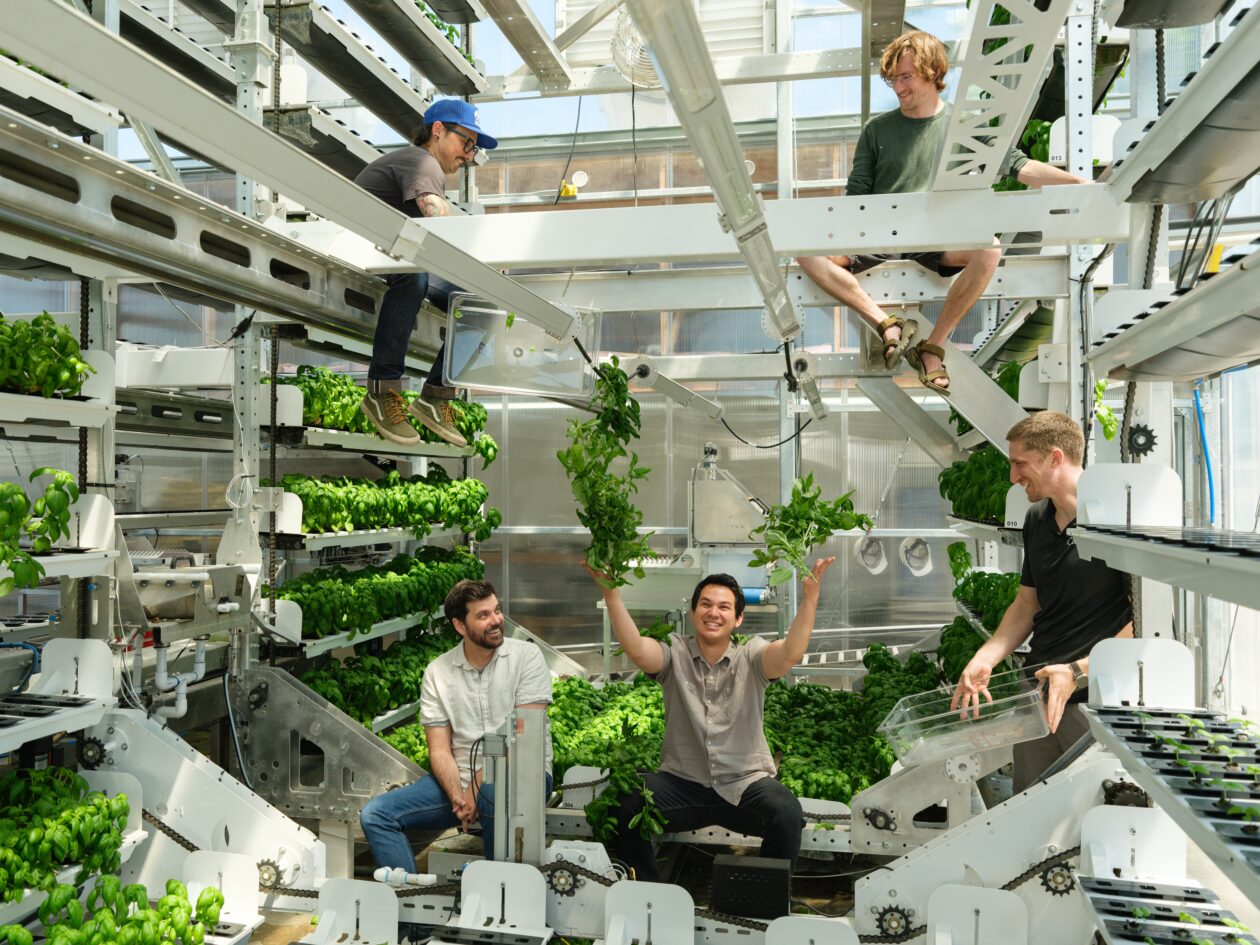
There is a bittersweet and quietly unsettling running joke that has long circulated among professionals in the agricultural field: the average age of an American farmer today is fifty-eight years old, and next year, that number will inevitably tick up by one more. Underneath the dry, dark humor of this industry joke lies a looming, deeply existential crisis for global food security, as the veteran growers who truly understand the complex rhythms of the earth are aging out of the profession with almost no younger generation stepping forward to inherit their heavy mantles. For decades, traditional open-field farming has been plagued by backbreaking physical labor, severe financial instability, and increasingly erratic weather patterns, making it a highly difficult sell for younger, career-minded generations seeking viable pathways in the modern gig and tech economies. Recognizing this critical generational void, David Ashton, the energetic, forward-thinking CEO and co-founder of the Oregon-based startup Canopii, is pictured playfully tossing fresh basil greens in his facility, symbolizing his mission to entirely redefine what it means to be a local food producer. Rather than letting our localized food systems collapse under the weight of demographic decline, Canopii is pioneering a movement to create the highly alluring, sustainable, and prestigious “future job” of agriculture. By designing a beautifully integrated and completely automated conveyor-based greenhouse system, they are establishing a visionary model where individuals can easily franchise a compact robotic farm, operate the entire system with virtually no traditional employees, and reliably offer premium, pesticide-free organic produce directly to their surrounding community. It is a brilliant concept of agricultural democratization that transforms a historically grueling, resource-intensive occupation into a highly sophisticated, clean, and deeply rewarding experience of neighborhood stewardship and entrepreneurial independence.
The technological magic powering Canopii’s system lies in a marvelously compact and thermodynamically efficient greenhouse design that produces massive, high-quality agricultural yields within an exceptionally small physical footprint. Standing thirty feet tall and sitting on a footprint of just two thousand five hundred square feet—considerably smaller than the boundaries of a standard tennis court—this micro-farm is engineered to integrate seamlessly into diverse urban environments, producing an extraordinary forty thousand pounds of specialty greens each year, which is more than enough to feed roughly twenty thousand people. Inside this highly optimized environment, a state-of-the-art automated conveyor system operates with seamless, hypnotic precision, carrying delicate specialty lettuces, vibrant Asian broccoli, and fragrant herbs along a clean path from tiny seeds to fully boxed produce. A gentle, custom-designed robotic arm initiates this lifespan by carefully inserting seeds into organic soil pucks the size of miniature cupcakes, which are rich in natural, living nutrients. As those young seedlings sprout their first true leaves, the conveyor system intelligently senses their progress, automatically transplanting them into progressively larger growth trays to maximize spatial efficiency. Upon reaching peak maturity, the system shears the greens with absolute precision, depositing the clean, fresh harvests into collection bins for final packaging. To optimize this automation even further and keep system costs within reach for local operators, the six-person team is developing an artificial intelligence-driven plant monitoring system that routes these mobile growth trays directly to stationary diagnostic cameras, using computer vision to monitor crop health in real-time without the high hardware costs of outfitting an entire facility with expensive sensors.
This passionate commitment to crafting the most efficient and localized greenhouse possible was sparked by an environmental wake-up call that David Ashton experienced during his formative years at California Polytechnic State University. Located in a scenic but deeply vulnerable agricultural corridor situated between San Francisco and Los Angeles, Ashton was pursuing his agricultural engineering degree in the early-to-mid 2010s, a period when California was suffering through a historic, parched drought that decimated local reservoirs. Participating in regular field trips to massive industrial farms across the region, Ashton was struck by a single, desperate theme that dominated every conversation with older farmers: water was running dangerously low, and the future of open-field farming was highly precarious. He was deeply disturbed by the staggering millions of gallons of water wasted by massive outdoor irrigation networks and the massive environmental footprint of shipping delicate greens thousands of miles across state lines to supermarket shelves. This profound realization of ecological vulnerability inspired him to dedicate his engineering talents to creating a radically sustainable solution. The resulting Canopii greenhouse structure is a masterclass in modern ecological design, utilizing controlled-environment technology to yield on a mere twentieth of an acre what would typically require three to four full acres of traditional, water-intensive outdoor farmland, proving that we can grow premium food while treating our planet’s precious water and soil resources with the utmost respect.
To transition this remarkable technological proof-of-concept into a widespread, community-led reality, Canopii has established a robust financial and operational framework centered around a highly accessible franchise model. Backed by $3.6 million in early-stage capital—primarily secured through prestigious research grants from the National Science Foundation and the United States Department of Agriculture, along with strategic investments from Elevate Capital, Onami, and Vertue Labs—the company is launching a highly anticipated $1.5 million crowdfunding campaign on WeFunder. This strategic capital injection will fund the construction of a beautiful flagship commercial greenhouse in Portland, Oregon, serving as a live, working showcase of their vision. For approximately $600,000, aspiring local business owners can purchase a complete turn-key Canopii greenhouse package, where Canopii manages the complex engineering, structural installation, and comprehensive operational training, leaving the franchisee free to focus on local distribution. Canopii has already validated this localized, high-demand approach with an operating prototype greenhouse in Hubbard, Oregon, which currently supplies top-tier greens to premium regional establishments like the acclaimed Ōkta Farm and Kitchen. Expanding their reach even further, they have partnered with GK Machine to mass-manufacture their custom agricultural robotics and have secured a landmark agreement with the Confederated Tribes of the Umatilla Indian Reservation for a future installation.
Canopii’s localized, highly calculated approach serves as a critical and timely course correction to the volatile, often troubled history of the wider indoor farming sector. Over the past decade, a wave of heavily funded vertical farming giants, such as Plenty, AppHarvest, Bowery Farming, and Kalera, secured billions of dollars in speculative investments only to spectacularly collapse into bankruptcy due to the crushing financial realities of astronomical utility bills and unsustainable operational overhead. Ashton observed that the fatal flaw for many of these failed enterprises lay in their massive, centralized scale, which tried to copy the very industrial food distribution models they were supposedly attempting to replace. By contrast, Canopii bypasses these crippling pitfalls by championing decentralized, micro-scale greenhouse ecosystems that emphasize localized distribution and dramatically reduced energy consumption. Furthermore, while other regional players utilize strictly soil-free, energy-intensive hydroponic techniques, Canopii’s decision to plant directly into soil pucks preserves natural biological ecosystems, resulting in highly resilient crops with exceptional flavor profiles. By keeping facilities small, automated, and situated directly within the communities they serve, Canopii ensures that local farmers can comfortably maintain high profit margins without succumbing to the exorbitant logistical costs that previously doomed the first wave of vertical farming pioneers.
At its absolute core, the ultimate promise of Canopii extends far beyond the engineering of clever robotic arms, high-efficiency conveyors, and advanced automated climate controls; it is a movement to reclaim the lost human soul of our relationship with food. By placing these compact, aesthetically striking vertical greenhouses directly in the middle of urban centers, schoolyards, local restaurant backyards, and supermarket parking lots, Canopii is actively working to dismantle the invisible walls that have long separated modern consumers from the realities of food production. This visible presence transforms the concept of “locally grown” from a shallow, overused marketing buzzword on a plastic package into an engaging, sensory, and deeply meaningful neighborhood experience. When citizens, and especially children, can walk down their local street and witness their leafy greens being planted, grown, and harvested right before their eyes, a profound psychological shift takes place that fosters a deeper respect for our planet and the nourishment it provides. By seamlessly blending cutting-edge technology with the age-old, noble tradition of cultivation, David Ashton and his passionate team are successfully carving out a vibrant, inviting path forward for the future of farming—proving that with a little imagination, we can cultivate resilient, sustainable food systems that flourish alongside our daily lives.