


In the chilly late autumn of November 1993, the quiet community of Granite City, Illinois, became the backdrop to a horrific nightmare that would remain unsolved for over three decades. Randy Gail Sperino, a loving mother from Charleston, Missouri, had traveled to the area simply to spend precious time visiting her father. On a fateful day that began like any other, she was spotted walking down a local street before climbing into a dark-colored, late-1970s or early-1980s pickup truck—a vehicle that would carry her toward her tragic end. Shortly after, her lifeless body, brutally bludgeoned, was discovered abandoned in a desolate Granite City field. For her family, particularly her fifteen-year-old son who was suddenly thrust into a world without his mother’s warmth and guidance, the discovery was a devastating blow that shattered his youth. The violent theft of her life left an agonizing void, leaving a grieving teenage boy to grapple with a profound sense of loss and the chilling realization that her killer had vanished into the shadows without a trace.
As the weeks turned into months, and eventually into decades, the investigation into Sperino’s death seemed destined to remain a tragic footnote in regional cold case files. Detectives worked tirelessly, conducting hundreds of emotional interviews and running extensive DNA analyses on the biological evidence recovered from the crime scene. Yet, every lead dried up, and the suspect’s DNA profile, though safely preserved, remained an anonymous ghost, never triggering a single hit in federal law enforcement databases. The reason for this silence was simple but frustrating: the killer had no criminal record. Albert Lee Zigler, a local man who worked quietly in airport maintenance and lived in Caseyville, Illinois, went completely unnoticed by police. To his neighbors and coworkers, Zigler was just an ordinary citizen, a man living a peaceful life while harboring a monstrous secret. He was never on anyone’s radar, walking the very same streets as his victim’s family, entirely insulated by a lack of prior convictions that kept his genetic footprint out of the criminal justice system.
Despite the decades of silence, the promise of justice was never truly extinguished, kept alive by a quiet vow made between a detective and a grieving son. About eight years ago, Madison County Sheriff Jeff Connor took a fresh look at the dusty box containing Randy Gail Sperino’s case files. He reached out to her son, who by then had grown into adulthood and moved to California, still carrying the heavy burden of his mother’s unsolved murder. Connor looked the young man in the eyes and offered a bold, comforting guarantee: he promised that the rapid, unstoppable evolution of forensic science would one day bring his mother’s killer to light. Connor’s conviction wasn’t just empty comfort; it was a commitment to action. Last year, the Sheriff’s Office took a leap of faith, investing $10,000 to submit the killer’s decades-old DNA sample to a specialized, state-of-the-art laboratory in Houston, Texas, bypassing traditional police databases in favor of an entirely new frontier in criminal investigative techniques.
This critical decision allowed scientists to harness the revolutionary power of forensic genetic genealogy, transforming a dead-end DNA profile into a living, breathing family tree. Instead of waiting for a direct match in a database of convicted criminals, the Houston lab compared the killer’s genetic material against public DNA databases where everyday citizens submit samples to uncover their ancestry. While Albert Lee Zigler himself had never submitted his genetic makeup to these databases, his relatives had. By meticulously tracing these familial connections, genetic genealogists constructed a web of shared DNA that eventually led straight to southern Illinois and pointed directly to Zigler. This masterful blend of advanced molecular biology and old-school genealogical research bridged a thirty-year gap, translating a sequence of proteins into a concrete name and address, finally lifting the veil of anonymity that had protected a murderer for half his life.
The emotional culmination of this scientific breakthrough unfolded in a packed press conference room, where the victim’s son stood before reporters, his eyes filled with a mixture of disbelief and overwhelming relief. Having traveled all the way from California to hear the news in person, he bared his soul to the cameras, describing the profound shock of receiving the call he thought would never come. For thirty years, he had resigned himself to a life of unresolved grief, harboring the quiet, painful assumption that he might eventually pass away without ever knowing who took his mother’s life. “I was just ecstatic,” he shared, describing the overwhelming wave of “tears of joy” that washed over him upon hearing of Zigler’s arrest. Standing alongside the law enforcement officers who had kept their promise, the son expressed a deep, heartfelt gratitude to the men and women who refused to let his mother’s memory fade into history, proving to a skeptical world that love and dedication can outlast even the longest passage of time.
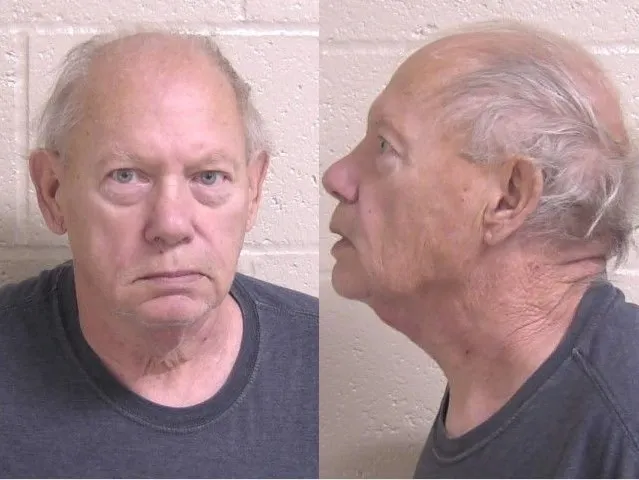
Today, seventy-year-old Albert Lee Zigler sits behind bars, charged with first-degree murder and awaiting his day in court, a stark reminder that the wheels of justice, though sometimes agonizingly slow, grind exceedingly fine. In announcing the arrest, Madison County State’s Attorney Thomas Haine emphasized that while modern scientific miracles like genetic genealogy are invaluable, those tools are only as powerful as the human hearts behind them. He credited the resolution of this cold case to the unrelenting grit, professional persistence, and deep compassion of investigators who were willing to dig up old pain, knock on doors, and aggressively pursue the truth decades after the trail had gone cold. As Zigler awaits his detention hearing with a public defender by his side, the resolution of Sperino’s murder stands as a beacon of hope for families of cold case victims everywhere. It sends a clear and resounding message that no matter how many years slip away, a stolen life is never forgotten, and there is no dark corner deep enough to hide from the light of justice.