


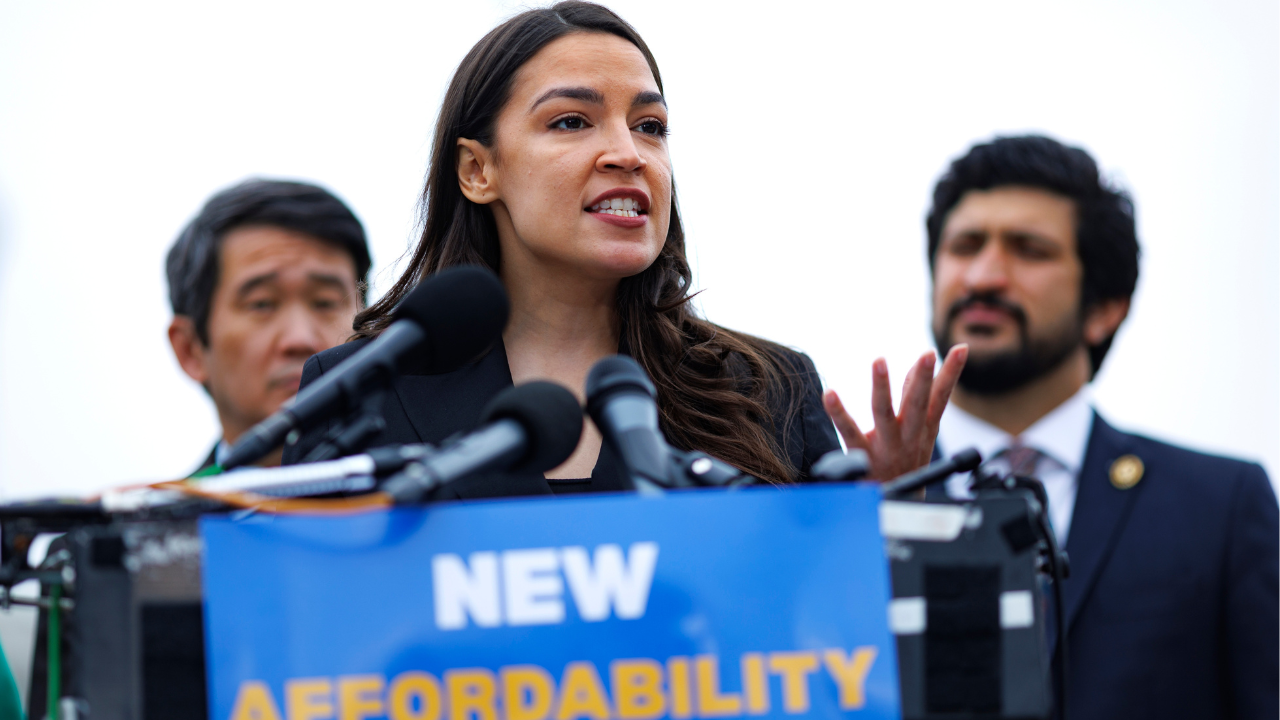
In the sweltering heat and emotionally charged atmosphere of Montgomery, Alabama—a city forever etched into the landscape of American history as both a former historical stronghold and the birthplace of the modern civil rights movement—Representative Alexandria Ocasio-Cortez of New York took to the stage last week to deliver a message that would instantly ignite a national firestorm. Addressing a passionate crowd gathered at the “All Roads Lead to The South” rally on May 16, the high-profile progressive icon and standard-bearer of the congressional faction known as “The Squad” sought to fundamentally challenge the historical narratives of American governance. With her signature fiery rhetoric, Ocasio-Cortez boldly asserted that the United States did not function as a true, legitimate democracy until the passage of the landmark Voting Rights Act of 1965, arguing that the centuries prior were defined by deep systemic exclusion and disenfranchisement. She then turned her sights toward the current legal establishment, launching a direct and blistering critique against the Supreme Court under Chief Justice John Roberts, whom she accused of actively participating in a “long history of regression and repression in America” aimed at dismantling the hard-won victories of the civil rights era. By choosing Montgomery as the backdrop for her speech, a place once walked by legendary civil rights advocates, Ocasio-Cortez attempted to frame her modern progressive platform as the direct continuation of their sacred legacy. However, by launching such a sweeping and aggressive critique of Southern political structures, she set the stage for a dramatic clash of values between coastal progressivism and traditional Southern identity, highlighting the deep regional divisions that continue to define the nation.
The true epicenter of the controversy, however, lay in an explicit and highly provocative call to action that took aim at the geographic and ideological boundaries of the modern American electorate. Rather than merely encouraging local grassroots organizing among Alabama progressives, the New York representative directed her eyes northward, asking progressive activists across the country to physically relocate their efforts and march down into the deep South. Specifically targeting deeply conservative red states such as Alabama, Georgia, Louisiana, Tennessee, and Mississippi, she urged her supporters to travel to these regions to directly combat what she characterized as systemic political injustice and voter suppression. To ensure her message reverberated far beyond the immediate crowd in Montgomery, the congresswoman quickly turned to social media to amplify her battle cry to her millions of followers, solidifying her stance with a post that read, “If you’re not from these states, it’s time to pull up.” This modern framing of activist migration was presented as an urgent moral obligation, suggesting that the political salvation of these states could only be achieved through the intervention of outsiders. While her progressive base viewed this as a rallying cry for national solidarity, many Southern residents and local leaders interpreted her remarks as an offensive, patronizing attempt to export northern urban values to a region with its own complex, self-contained political and cultural ecosystems, viewing her words as a heavy-handed effort at ideological colonization.
Almost immediately, the rhetoric coming from the New York congresswoman faced a wall of intense skepticism, with critics quickly pointing out a glaring irony in Ocasio-Cortez’s fiery performance. As videos of her speech began circulating online, viewers noticed a striking visual detail that seemed to completely contradict her message: while she was passionately urging her followers to bravely “pull up” and put themselves on the front lines of political struggles in conservative states, she was speaking from behind a massive, highly visible barrier of bulletproof glass. This elaborate security setup, which critics quickly compared to the protective “pope glass” used to shield global figures from high-risk threats, became a focal point of intense criticism and online mockery. To many observers, it seemed extraordinarily ironic that a wealthy politician from New York would stand in a position of secure, armored safety while demanding that ordinary citizens travel hundreds of miles to engage in volatile political confrontations in unfamiliar and supposedly hostile communities. This visual discrepancy spoke volumes to her detractors about the disconnect between elite national politicians and the working-class people they seek to influence, shifting the public focus away from her policy goals and placing it squarely on the theater of political optics. Rather than appearing as a brave grassroots leader standing shoulder-to-shoulder with the working class, Ocasio-Cortez was painted as a detached elite lecturing ordinary people from behind a shield of privilege, exposing a deep gap between political theater and real-world vulnerability.
This backlash found a powerful, humorous, and highly entertaining representative in conservative podcaster Todd Spears, whose viral reaction video on TikTok quickly captured the national mood, gathering over one million views in a matter of days. Spears used a potent combination of classic Southern humor and sharp, common-sense criticism to dismantle the congresswoman’s dramatic call to arms, asking her point-blank what north-eastern activists were actually expected to do upon their arrival. He jokingly questioned whether these northern progressives were coming down to help locals perform basic everyday tasks like backing a boat trailer down a muddy ramp, trimming overgrown grass, or tracking deer through the dense southern woods. On a more serious note, Spears highlighted the absurdity of her calling for confrontation from behind protective glass, mockingly suggesting that if activists truly intended to follow her advice and stir up trouble in states like Alabama, they had better bring a military-grade tank. He pointedly warned against bringing such political theater into southern communities, advising her supporters that starting conflict in the area was an incredibly dangerous idea and telling Ocasio-Cortez to stay where she was. In the caption of his video, Spears expressed a deeper frustration that resonates with many Americans, lamenting that political figures seem far more interested in stoking divisions reminiscent of the 1860s Civil War era than in working together to fix the actual, tangible crises facing families across the nation today.
This sentiment of fierce local resistance was further amplified by another popular TikTok creator, Kei Bennett, whose reaction video went viral with more than 800,000 views, offering a colorful and highly direct warning to anyone foolish enough to follow Ocasio-Cortez’s advice. Bennett, who boasts a dedicated social media following of over half a million users, blended traditional Southern hospitality with a stern reminder of the physical and cultural realities of life in the deep South. She urged the congresswoman’s metropolitan followers to ignore the call to “pull up on Alabama,” warning them of the practical, non-political dangers that await urban outsiders, ranging from wild hogs and swamp alligators to locals who would not tolerate disruption. Bennett painted an unvarnished picture of a community that values self-reliance and privacy, reminding outsiders that southern culture has a very long tradition of handling its own affairs without relying on government intervention or outside instruction. Her blunt and memorable warning that residents of the deep South don’t call the police in times of trouble, but rather call the coroner, became a viral sensation, encapsulating the region’s protective and fiercely independent nature. This response highlighted a deep-seated truth about the region’s people: they do not seek out national political drama, but they are exceptionally ready to unite and defend their way of life and peaceful communities against any outside agitators trying to remake their homes in an urban progressive image.
Ultimately, this clash between a high-profile New York politician and everyday Southern social media voices reveals a profound and continuing disconnect in modern American life. Alexandria Ocasio-Cortez’s venture into Montgomery was intended as a bold statement of progressive expansion, an energetic effort to challenge conservative dominance on its traditional home turf and build a nationwide movement. However, the subsequent fallout, characterized by sharp humor, cultural pride, and warnings of self-defense, shows just how deeply resistant local communities are to top-down, outsider-led political interference. The entire episode serves as a powerful reminder that nationalized political rhetoric often fails to account for the unique histories, daily practices, and deep-seated identities of the actual people living in these states. The strong defensive reaction from figures like Todd Spears and Kei Bennett shows that many Southerners see these calls for ideological intervention not as a pursuit of justice, but as an offensive, patronizing lecturing from coastal elites who do not understand or respect their lifestyle. Until national political figures learn to approach these communities with genuine humility, authentic understanding, and a willingness to listen rather than criticize from behind bulletproof barriers, their efforts to import social movements will continue to meet a solid wall of local resilience, humor-filled defiance, and a firm, unified demand to simply be left alone.