



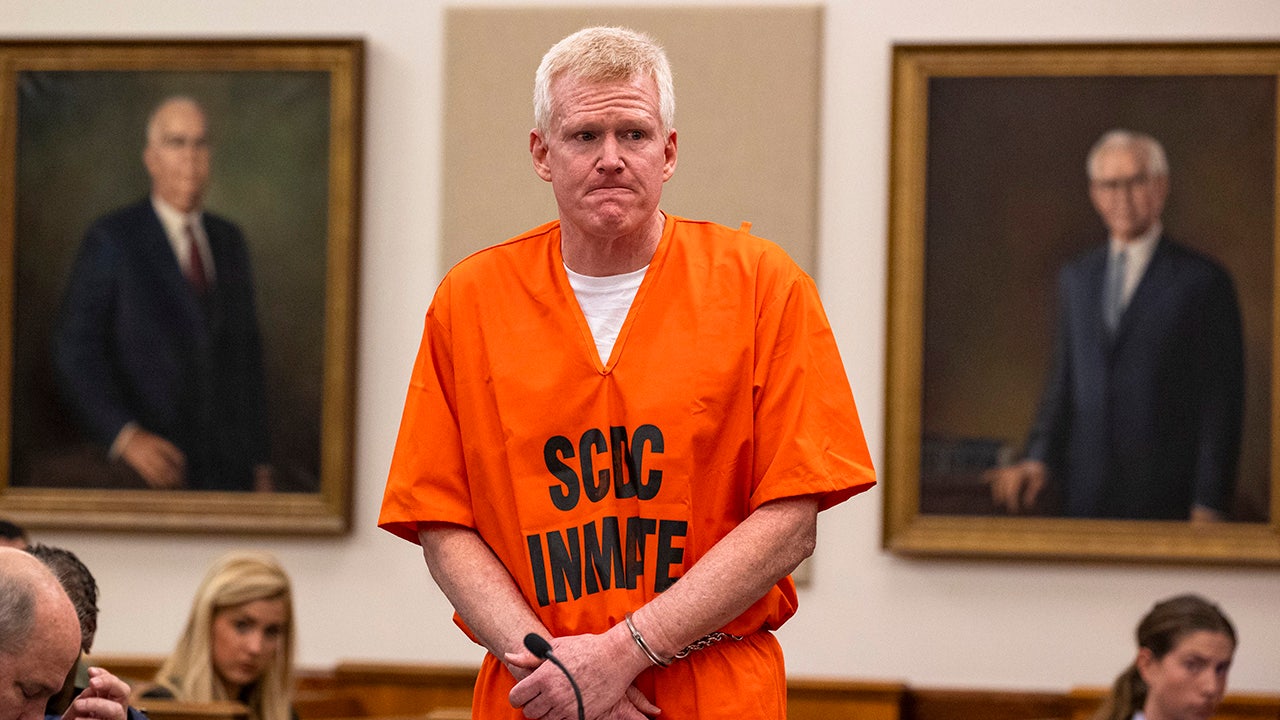
The saga of the Murdaugh family represents one of the most tragic collapses of a legal empire in American history, turning the sleepy, moss-draped landscape of the South Carolina Lowcountry into a global stage for a high-stakes, real-life Southern Gothic drama. For eighty years, the Murdaugh name meant absolute authority; three generations of the family served as the elected chief prosecutors for a five-county region, while their private law firm wielded immense financial and political power that could make or break lives with a single courthouse filing. Yet, this illusion of invincibility was permanently shattered on the dark, humid night of June 7, 2021, when Margaret “Maggie” Murdaugh and her twenty-two-year-old son, Paul, were brutally executed near the dog kennels of their sprawling Moselle hunting estate. The patriarch of the family, Alex Murdaugh—once a charismatic, red-haired, smooth-talking personal injury attorney who commanded every courtroom he entered—quickly transformed from a grieving husband and father into the prime suspect in a double murder that shocked the nation. Prosecutors argued that Alex, drowning in millions of dollars of hidden debt and facing imminent exposure for stealing from his own clients and partners, committed the unthinkable acts of violence in a desperate, cold-blooded bid to buy time, generate public sympathy, and distract from his mounting financial ruin. Though his highly publicized 2023 trial ended with a swift conviction and consecutive life sentences, the legal drama was far from over. In a stunning, unanimous turn of events on May 13, the South Carolina Supreme Court threw out the convictions, ruling that the trial had been fundamentally compromised by outside interference. Now, as the state of South Carolina prepares for a highly anticipated historic courtroom do-over, the community is left to grapple with the haunting reality of a dynasty undone, preparing to relive a painful tragedy to finally secure an unassailable measure of justice.
At the heartbreaking core of this web are the victims, Maggie and Paul Murdaugh, whose lives were cut short in a hail of gunfire that forever altered the lives of those they left behind. Maggie, fifty-two, was a beloved figure in her community, known for her devotion to her two sons, her active involvement in local charities, and her deep roots in Charleston, where she had married Alex in 1993. On that fateful, mosquito-heavy June night, she was shot four or five times with an assault rifle, her lifeless body found lying face down in the dirt, a tragic end for a woman who spent her life supporting her family’s heavy social and legacy ambitions. Beside her lay Paul, her younger son, whose life was ended by two devastating close-range blasts from a powerful shotgun. Long before his death, Paul was already a deeply controversial and polarizing figure, haunted by the specter of a tragic 2019 boat crash that claimed the life of nineteen-year-old Mallory Beach. Paul was driving his family’s boat while heavily intoxicated, leading to a catastrophic collision that not only took a young girl’s life but also sparked a multi-million-dollar wrongful death lawsuit that threatened to expose Alex’s decades of financial deception. State prosecutors argue that this impending financial reckoning, catalyzed by the litigation surrounding Paul’s actions, became the motive for the murders. Yet, even in death, Paul’s presence loomed large over the first trial; it was a minute-long video recovered from his cellphone, recorded at the kennels just minutes before his death, that placed Alex at the scene of the crime and completely dismantled his father’s alibi. As the state gears up for the retrial, the memory of Maggie and Paul will once again take center stage, as prosecutors seek to prove beyond a reasonable doubt who pulled those triggers, stripping away the myth of the family to reveal the raw, human tragedy at its center.
The spectacular unraveling of the initial guilty verdict did not stem from a breakthrough in forensic science or a confession from an overlooked suspect, but rather from a mind-boggling betrayal within the courtroom itself, orchestrated by the very officer sworn to protect the sanctity of the trial. Rebecca “Becky” Hill, the elected Clerk of Court, became the catalyst for intervention after she exerted “improper external influences” over the jury during the six-week trial. In the months following the verdict, multiple courageous jurors came forward with shocking testimonies, revealing that Hill had subtly but systematically poisoned their minds against Alex Murdaugh. She allegedly whispered to jurors to “watch him closely” during his testimony, instructed them “not to be fooled” by his defense team, and pressured them to reach a quick verdict. The high court’s ruling painted a damning portrait of a public servant completely seduced by the “siren call of celebrity,” accusing Hill of prioritizing the success of her self-published book, Behind the Doors of Justice: The Murdaugh Murders, over her constitutional duties. Her book, which detailed her decades-long knowledge of the Murdaugh family’s rumored corruption, became her undoing, proving that the lure of the spotlight was too strong for her to resist. Becky Hill’s desperate attempt to cash in on the tragedy disintegrated when she was accused of plagiarism and ultimately pleaded guilty to multiple state and federal felonies, including perjury, obstruction of justice, and misusing her public office for personal enrichment. Though Hill expressed deep shame as she received three years of probation, her contrition came too late to save the trial. By choosing personal fame and financial gain over the administration of justice, Hill effectively blew up a multi-million-dollar prosecution, leaving a trail of institutional embarrassment and forcing the state’s highest court to completely vacate the double-murder convictions.
Moving forward into this clean slate, the Murdaugh family remains deeply fractured, with Alex’s surviving son, Buster Murdaugh, standing as a poignant figure of grief and familial loyalty. Having lost his mother and brother in one night, Buster was forced to endure a grueling, public trial where he sat behind his father, watching the intimate details of his family’s private struggles, financial crimes, and emotional betrayals laid bare for the world to dissect. In a remarkably candid, deeply emotional interview on the television series, Buster broke his silence to express his firm belief that his father was completely innocent of the murders, asserting that he could never associate his father with the brutal slaughter of Maggie and Paul. This unwavering support provides a psychological shield for Alex’s aggressive and formidable defense team, led by veteran attorneys Dick Harpootlian and Jim Griffin. Armed with the Supreme Court’s scathing ruling against Becky Hill, Harpootlian and Griffin are not merely sitting back and planning a standard defense; they are launching a full-scale legal offense to ensure the next trial is conducted under drastically different conditions, including demanding a change of venue to escape the local media storm, sequestering the new jury, and advocating for intensive, attorney-led questioning during jury selection. Their focus is no longer just about proving innocence, but exposing how a compromised process robbed Alex of a fair hearing. Furthermore, they have hit back at the state system by filing a massive civil lawsuit against Hill, seeking compensatory and punitive damages along with over $600,000 in attorney’s fees to hold her fully accountable for compromising their client’s constitutional right to a fair trial. By transforming their defense into an aggressive campaign for systemic accountability, Murdaugh’s lawyers have set the stage for a brutal legal war that will test the very limits of South Carolina’s judicial system.
On the other side of the aisle, prosecutors face the monumental challenge of securing a conviction for a second time, knowing that the entire world will be watching their every move with heightened skepticism. Chief prosecutor Creighton Waters, who won praise for his relentless cross-examination of Murdaugh during the first trial, must now rebuild his complex, highly circumstantial case without the benefit of the massive evidentiary momentum and public support he spent years carefully establishing. Waters has acknowledged the immense difficulty of finding an impartial jury in a state where the Murdaugh name has been endlessly dissected on podcasts and social media. He has emphasized that the success of the retrial relies heavily on finding citizens who can honor their civic oath, tune out the overwhelming media circus, and make a decision based strictly on the physical evidence presented within the four walls of the courtroom. Raising the stakes to an unprecedented level, South Carolina Attorney General Alan Wilson delivered a defiant and highly unusual public warning to the defense, declaring that the state is returning to “square one” and that all legal options, including the death penalty, are firmly on the table for the retrial. This dramatic escalation underscores the state’s absolute determination to show that no pedigree, no matter how historic or influential, can escape the ultimate weight of the law. In the first trial, the state chose not to pursue capital punishment, resulting in Murdaugh receiving consecutive life sentences; however, this new, aggressive stance from the Attorney General signals a willingness to play absolute hardball, raising the terrifying possibility that Alex Murdaugh could face the execution chamber if a second jury finds him guilty of executing his wife and son.
As South Carolina prepares for another sensational and emotionally exhausting trial, the haunting timeline of the Murdaugh family’s downfall serves as a grim reminder of the high cost of unchecked power and greed. The sequential, agonizing collapse of their dynasty—starting with the fateful boat crash in 2019, progressing to the horrific double murder in 2021, and culminating in the dramatic Supreme Court reversal in 2026—highlights a deep, systemic rot that went completely ignored for many generations. The upcoming proceedings are not merely a rerun of technical legal arguments, but a necessary psychological reckoning for a community that has lived under the shadow of one family’s heavy hand for nearly a century. Regardless of the murder retrial, Alex Murdaugh’s remaining days as a free man are permanently over; he continues to serve several decades in prison for federal and state financial crimes after admitting to stealing roughly $12 million from vulnerable clients, including the family of his deceased housekeeper. Nevertheless, the pursuit of a definitive, legally sound verdict in the deaths of Maggie and Paul remains an essential moral obligation for a justice system that was so deeply compromised by its own officers. For the grieving relatives of the victims, and for a public fatigued by years of sensationalized headlines, this upcoming trial represents more than just a search for a killer; it is a vital, desperate test of whether true justice can ever be pulled from the wreckage of a shattered Southern dynasty. The second trial of Alex Murdaugh will not undo the tragedies of the past, but it holds the collective hope that out of the dark, moss-shrouded swamp of Lowcountry corruption, a clean, untainted truth will finally emerge.