



Trump’s Bold Boeing Claim Sparks Uncertainty in China-U.S. Trade Talks
In the high-stakes arena of international diplomacy, where words from world leaders can ignite markets and reshape global economies, President Donald Trump’s Thursday announcement about a massive jet order from China seemed like a glimmer of hope for American manufacturers. During his visit to Beijing for meetings with Chinese President Xi Jinping, Trump declared that China had agreed to purchase 200 Boeing passenger jets—a deal that could rejuvenate the fortunes of the iconic U.S. aircraft maker in one of the planet’s most lucrative aviation markets. However, as Trump’s delegation departed the Chinese capital on Friday, Beijing’s officials offered a markedly cooler response, leaving analysts and industry watchers questioning the reality of the proclaimed agreement. This discrepancy underscores the fragile dance of Sino-American relations, where grand overtures often mask underlying tensions and unmet expectations. As the world watches, the stakes for Boeing and broader trade dynamics couldn’t be higher.
Trump’s enthusiasm bubbled over during an interview with Fox News, conducted right after the morning sessions with Xi. He painted a rosy picture of progress, terming it a “success story” from the very first day of deliberations. “He’s going to order 200 jets. That’s a big thing,” Trump said, his words carrying the weight of presidential authority as he hailed what he described as a concrete commitment from China’s top leader. The president portrayed the discussions as a breakthrough, emphasizing how such an order would symbolize mutual economic ties and boost American jobs back home. Yet, this wasn’t just idle chatter; Trump’s delegation included Boeing’s chief executive, Kelly Ortberg, alongside other business heavyweights, suggesting the meetings were serious affairs aimed at bridging long-standing rifts in trade and commerce. Industry insiders noted that the involvement of key executives lent credibility to the talks, positioning Boeing as a potential beneficiary in the volatile China market. But as Trump returned to Washington, the optimism seemed vulnerable to the realities of geopolitics.
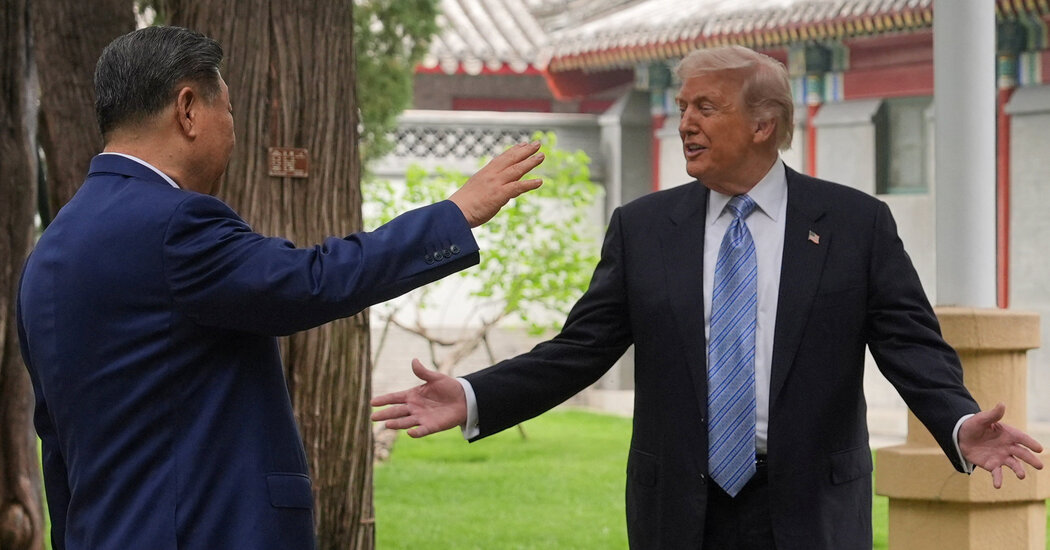
The Chinese side, however, remained conspicuously silent on the specifics of any aircraft agreement, casting doubt on Trump’s assertions almost immediately after his exit from Beijing. When pressed by reporters, Guo Jiakun, a spokesman for China’s Ministry of Foreign Affairs, steered clear of confirming the Boeing order, instead opting for diplomatic vagueness. He stressed the “mutually beneficial” nature of Sino-American trade relations, urging both nations to “jointly implement the important consensus reached by the two heads of state” to stabilize economic cooperation. Xi Jinping echoed this cautious tone during a joint appearance with Trump before his departure, highlighting “a wide range of cooperative outcomes” without delving into aviation specifics. This noncommittal stance left observers puzzled, as past summits had teased similar blockbuster deals that fizzled into nothingness. Analysts pointed out that such discrepancies aren’t uncommon, serving as a reminder that leadership summits can be theater as much as substance in the opaque world of China-U.S. relations.
Delving into history reveals a pattern of tantalizing announcements overshadowed by unfulfilled promises. Predictions of massive Boeing orders have trailed previous meetings between American presidents and Chinese leaders like a recurring script, yet none have come to fruition in nearly a decade. Trump’s claim marked the closest any U.S. president has come to announcing a major deal post-summit, stirring memories of unkept vows. For context, in September 2024, China Development Bank’s leasing arm did sign for 50 Boeing 737 MAX 8 jets— a step forward—but this was separate from any summit, underscoring the chasm between rhetoric and reality. The aviation industry, ever sensitive to global geopolitics, has seen Boeing’s prospects in China wax and wane amid trade tariffs and diplomatic spats. In Trump’s first term, a 2020 agreement outlined sharp increases in Chinese purchases of U.S.-made goods, with Boeing jets positioned as a key component to meeting those targets. China initially balked at fulfilling this due to the COVID-19 pandemic, canceling 29 undelivered 737 MAX planes in April 2020. While the deal extended through 2025, progress stalled, with deliberations on aircraft buys inching forward glacially.
Boeing’s turbulent journey in the Chinese market traces back to setbacks and strategic missteps that have favored European rival Airbus. The American giant’s planes represent one of the few sectors where Western companies maintain an edge over China’s push for self-reliance, yet past challenges have eroded that advantage. Deliveries to Chinese buyers ground to a near halt after two deadly 737 MAX crashes in 2018 and 2019, prompting widespread scrutiny and regulatory turmoil in aviation safety. Resumption of shipments in 2024 offered a reprieve, but last year’s slowdown—allegedly government-directed in protest of U.S. tariffs—delayed deliveries once more before tensions eventually eased. As China accelerates its drive for industrial independence, Boeing’s fixed presence contrasts sharply with Airbus, which has localized production of its A320 jets in Tianjin since 2008, yielding to Chinese demands for greater control. This concession has bolstered Airbus’s market share, helping China nurture expertise through its state-backed Comac firm, which produces the C919—a domestic jet eerily similar to the A320, though still reliant on foreign components like engines and avionics.
Cirium’s 2025 data underscores China’s colossal appetite for air travel, estimating that one in seven global planes operates here, with Boeing projecting a doubling of China’s fleet to nearly 10,000 jets by 2045. In this sprawling market, Boeing trails Airbus, with outstanding orders for fewer than 200 planes compared to nearly 500 for the European competitor. The duel between the two giants reflects broader U.S.-China dynamics, where economic interdependence clashes with strategic rivalries. As Beijing funnels resources into homegrown innovations like the C919, foreign firms grapple with balancing lucrative sales against technology transfers that could empower a rising competitor. Trump’s alleged 200-jet order, if real, could recalibrate this balance, infusing Boeing with much-needed momentum and signaling a thaw in bilateral trade. Yet, without concrete confirmation, such claims risk breeding skepticism, reminding the world that in the complex tapestry of global commerce, optimism must be tempered by prudence. As the aviation saga unfolds, stakeholders from Boeing executives to policymakers eagerly await clarity, knowing that a genuine deal could soar high in an otherwise turbulent sky.