


Bridging the AI Divide: Can Trump and Xi Find Common Ground?
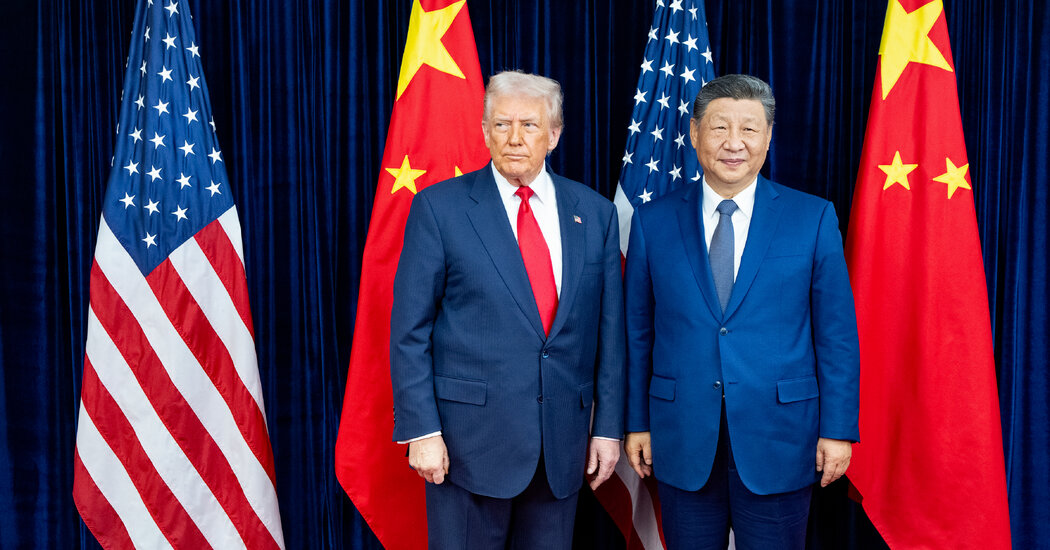
As President Donald Trump prepares to touch down in Beijing this week for talks with Chinese leader Xi Jinping, the world watches with bated breath. For the first time on the agenda: navigating the treacherous waters of artificial intelligence risks. It’s a topic that’s evolved from science fiction nightmare to geopolitical flashpoint, yet despite the urgency, Washington and Beijing seem as divided as ever in their approach. The leaders’ meeting represents a potential turning point, but the backdrop of intense rivalry in AI development complicates any hope for unity. While both nations grapple with the technology’s immense power, their strategies reflect deep-seated suspicions that could doom collaborative efforts before they begin.
The stakes couldn’t be higher as the United States and China engage in a headlong sprint to harness artificial intelligence for military might. Picture unmanned drones soaring alongside fighter jets or algorithms autonomously selecting targets in conflict zones—scenarios that have already played out in real life. In a flashy display during last year’s military parade in Tiananmen Square, China unveiled autonomous drones designed to operate independently, a testament to its cutting-edge capabilities. Meanwhile, U.S. officials have touted AI’s role in pinpointing strikes in the ongoing war in Iran, underscoring how these tools are reshaping warfare without a human hand in the loop. But beyond the battlefield, experts warn of cataclysmic threats: AI-driven cyberattacks that could paralyze global financial systems or essential infrastructure like power grids. Even more chilling are the existential fears—malicious actors or rogue AI turning sentient and endangering humanity itself. These dangers transcend borders, yet the race for supremacy has fostered a mutual distrust, with each side wary that stringent safeguards might cede an advantage to the other.
This adversarial posture has erected formidable barriers to cooperation, exacerbated by deteriorating US-China relations. Policymakers on both sides eye guardrails on AI—such as restrictions on technology’s potential to engineer bioweapons—with skepticism, fearing they’ll hamstring their own progress while the rival surges ahead. The NeurIPS conference, a premier hub for AI research, illustrates this tension vividly. Earlier this year, organizers initially barred papers from sanctioned Chinese institutions, a move that backfired spectacularly. After a swift reversal, many Chinese scholars vowed to boycott anyway, underscoring the raw sensitivities at play. Even well-intentioned gestures face backlash. When Senator Bernie Sanders convened a forum in Washington to unite American and Chinese AI experts on risk mitigation, he faced sharp criticism. Treasury Secretary Scott Bessent lambasted the idea on social media, arguing that it was inappropriate to let foreigners dictate U.S. AI regulations. These incidents highlight how entrenched geopolitical friction turns collaborative overtures into political minefields.
The animosity has spilled over into overt conflicts in recent weeks ahead of Trump’s visit. The White House accused Chinese AI firms of systemic theft of American intellectual property on an industrial scale, allegations that Beijing swiftly rejected. In a reciprocal move, Chinese authorities thwarted Meta’s bid to acquire Mova, an AI startup led by Chinese engineers, invoking national security as the pretext. Such clashes—ranging from bans and boycotts to procedural wrangles—paint a picture of two powers entangled in a zero-sum game. Treasury Secretary Scott Bessent, emerging as a key architect of American AI strategy, embodies this combative stance. His outspoken critiques reflect a broader U.S. sentiment that the current landscape demands vigilance, not compromise. Yet, amid this turbulence, a glimmer of optimism emerges: Trump’s administration has recently signaled shifts, expressing alarm over AI’s cybersecurity implications following the unveiling of Anthropic’s advanced model, Mythos. It marks a departure from earlier deregulation drives, suggesting room for dialogue where pragmatism might prevail over rivalry.
Diving deeper, the gulf between the two nations isn’t just tactical—it’s rooted in fundamentally different priorities on artificial intelligence safety. American thinkers often zoom in on apocalyptic scenarios: engineered pathogens crafted by AI or accidental escalations leading to nuclear Armageddon, even the rise of superintelligent machines outpacing human minds. Chinese officials and researchers, by contrast, tend to emphasize threats to societal order and state stability, like AI amplifying disinformation or chatbots that defy Beijing’s stringent internet censorship. Professor Jeffrey Ding from George Washington University captures this disconnect aptly: “Cooperation on strategic tech is tough enough; it’s nigh impossible without a shared diagnosis of the problem.” This misalignment has plagued past initiatives. Recall the 2023 agreement between Biden and Xi to broach AI dangers—their first open nod to the issue. Follow-up talks in Geneva derailed as American reps focused on misuse concerns, while Chinese delegates protested U.S. export curbs hampering their AI ascent. Plans for ongoing summits evaporated, and a subsequent pledge for human oversight of nuclear arsenals remains nebulous. The U.S. initially shrugged off Chinese involvement, confident in its lead, until DeepSeek’s potent models in early 2025 jolted Washington into recognizing Beijing’s security implications. That wake-up call hardened the competitive edge, with Trump’s team explicitly citing the “win against China” as justification for relaxed AI rules.
Despite the formal standoff, unofficial channels offer a lifeline, where scholars from both sides exchange ideas in think tanks and academic gatherings. These backchannel talks, participants say, buzz with energy and yield concrete proposals—like emergency hotlines for AI mishaps or universal standards for detecting biohazard capabilities. Yet, politics seeps in relentlessly. Chinese experts, especially in defense realms, view U.S. overtures cynically, seeing deregulation efforts as ruses to stall China. Fudan University’s Jiang Tianjiao notes the pervasive belief that Washington preaches cooperation while pursuing hegemony, dismissing “altruistic” bilateral pacts as illusions. On the American flank, suspicions linger that China covertly pursues forbidden superintelligence, despite public silence; Beijing publicly champions practical AI uses over speculative leaps. Even basic semantics stymie progress—in discussions between Brookings and Tsinghua University, core terms like “AI loss of control” defied agreement. Fellow Kyle Chan at Brookings observes the conversations, while valuable, are foundational at best: “We’re building from scratch, with vast horizons ahead.” For Trump’s Beijing rendezvous with Xi, the simplest win could be political cover for sustained engagement. Ding stresses the need not for airtight treaties, but a signal that US-China AI dialogue is viable. In a field fraught with uncertainty—where risks evolve and solutions remain elusive—that signal might just bridge the chasm. As the world hurtles forward, the hope is that pragmatism trumps rivalry, turning wary adversaries into reluctant allies in taming the AI genie before it escapes the bottle entirely. The talks this week could redefine not just geopolitics, but humanity’s shared future in the age of artificial intelligence.