




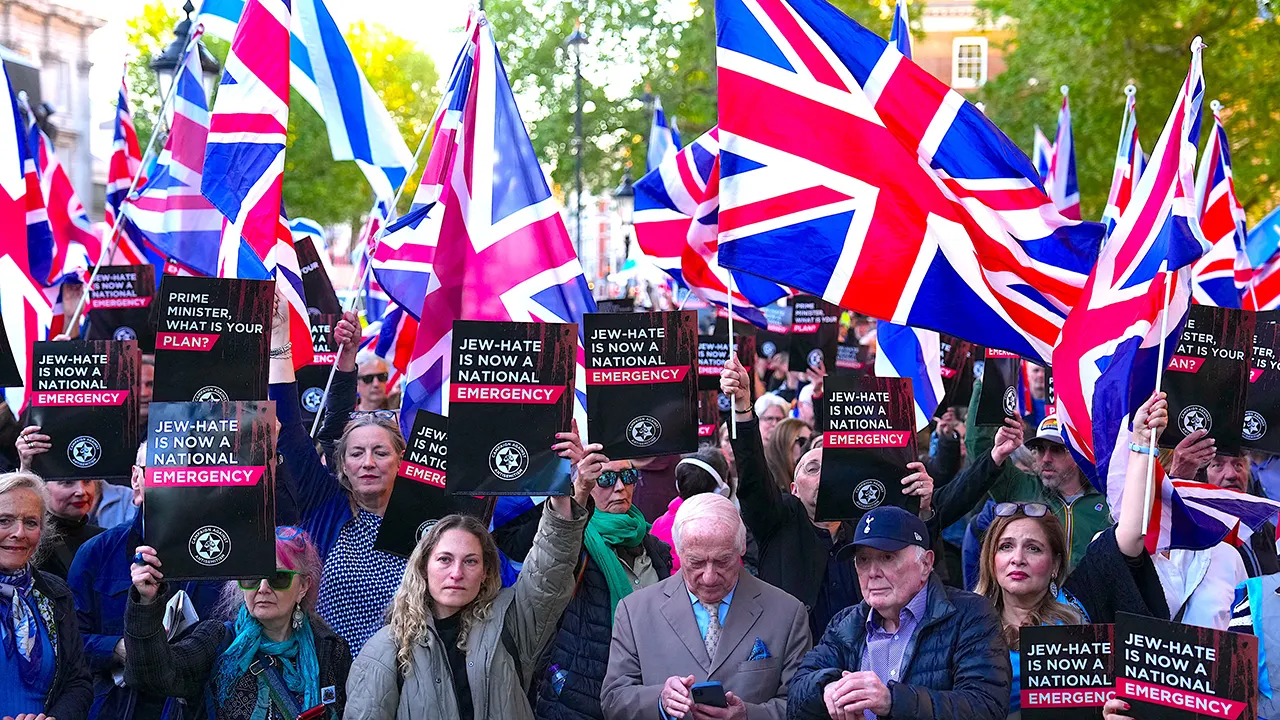
The Echoes of Fear: A Community’s Cry in London’s Streets
In the heart of a bustling London Sunday, where history and modernity collide beneath overcast skies, thousands poured into the streets not in celebration but in alarm. These were not mere protesters; they were fathers protecting their families, mothers clutching their children’s hands, and young activists standing tall against a tide of rising hate. The rallying cry resonated through central London: “Enough is enough!” Marchers chanted slogans against what they saw as a betrayal by their own government, their faces etched with worry and resolve. For many, this was more than a march—it was a desperate plea to reclaim the safety they once took for granted. London’s Jewish population, a resilient thread woven into the city’s fabric for centuries, now feared losing their sanctuary. Violence had surged, with arson attacks on synagogues, graffiti slashing through homes, and verbal assaults turning neighbors into strangers overnight. Families shared stories of shattered windows and sleepless nights, wondering if their names on doors marked them as targets in this new era of hostility. As grandparents recounted tales of past tolerances in pre-war Britain, young families grappled with the pain of explaining “why” to their bewildered kids. The march wasn’t just about numbers; it was about human lives fraying at the edges, about communities clinging to hope amidst fear. Security personnel stood guard, their presence a stark reminder of fractured trust, while photographers captured tear-streaked faces, amplifying the personal toll of a societal breakdown. This gathering symbolized a deeper fracture: a Britain that promised refuge now echoed with echoes of intolerance, leaving participants with a lingering doubt—could their voices pierce the bureaucracy that seemed paralyzed? Yet, amid the chants and banners, there was unity, a shared humanity fighting back against the invisible chains of antisemitism that threatened to bind them all.
Voices of Warning: Badenoch’s Urgent Call for Change
Kemi Badenoch, the sharp-eyed leader of the Conservative Party, had been vocal long before the pavements filled with marchers. In exclusive talks with Fox News Digital, her words carried the weight of a personal crusade, rooted in her own observations of a nation slipping into chaos. “Zero tolerance for antisemitism means declaring this a genuine national emergency,” she stated firmly, her voice steady but laced with frustration. Badenoch imagined a Britain where foreign preachers spewing hate in mosques faced swift deportation, not handshakes from indifferent authorities. “Antisemites will not be welcomed or tolerated,” she declared, evoking centuries of Jewish haven in the UK—tales of refuge during the Inquisition, lives rebuilt from ashes. Her warnings hit home, illustrating an “unholy alliance” between the radical left and Islamist extremists, whose chants like “from the river to the sea” chilled her to the core. Badenoch painted a picture of these phrases as veiled threats to Israel’s existence and Jewish lives worldwide, born from radicalization networks that MI5 had flagged as Britain’s chief terror menace. She shared anecdotes of ordinary citizens grappling with the normalization of hate, where supporting groups like Hamas blurred into everyday politics. Badenoch’s pleas weren’t abstract; they stemmed from conversations with frightened constituents, synagogue leaders, and her own children, who questioned a future where such ideologies thrived unchecked. As Britain’s threat level spiked to “severe,” she challenged listeners to envision the turmoil—a spike in incidents turning synagogues into fortresses and streets into battlegrounds. Badenoch’s narrative was human, raw with emotion: the pain of watching a society she loved fracture, the desperation to protect minorities who deserved safeguarding like any other. Her story resonated as a mother’s duty, urging action before the epidemic devoured more lives.
Government’s Promises Amid Growing Dissent
Prime Minister Keir Starmer, with bags under his eyes and a burden of national discontent, addressed the No10 Tackling Antisemitism Forum last week, his words attempting to bridge the chasm of doubt. “Our Jewish communities are feeling frightened, angry, and questioning if this country is still safe,” he admitted, his tone empathetic yet defensive. Starmer recounted months of rising incidents, from arson to assaults, and pledged “decisive action” with an additional £25 million for patrols and security. Yet, critics like Jonathan Sacerdoti, a London commentator, painted a stark contrast in his chats with Fox News Digital. Sacerdoti, who walked the same streets as the marchers, highlighted the hypocrisy: massive policing at anti-Israel protests every fortnight, but hesitation on Jewish protections. “They ought to have the same urgency for us,” he argued, his voice tinged with exasperation. Security funding, he said, couldn’t mend the core issue—a state that outsourced safety to volunteers, leaving Jews exposed. Sacerdoti shared personal reflections: nights spent organizing neighborhood watches, the exhaustion of community-led vigils, and the hope that true enforcement would spare his family the constant vigilance. Starmer’s assurances felt hollow to many; community trust eroded as incidents climbed to records, with the Community Security Trust logging nearly 3,700 in 2025 alone. Families described fortified schools with armed guards, a daily reality that normalized fear for their children. Critics questioned Starmer’s leadership—why the delays when evidence screamed for crisis management? Sacerdoti imagined a leader who grasped the human cost: fathers losing sleep, children growing up shadowed by guards, and elders fearing a repeat of historical atrocities. His commentary humanized the bureaucracy’s failures, calling for a government that protected rather than patronized, turning promises into palpable safety.
Everyday Horrors: Lives Altered in the Shadows of Hate
For Rabbi Albert Chait of Leeds’ United Hebrew Congregation, the crisis wasn’t statistics on a screen—it was the innocence of his children’s world shrinking. “You know the worst thing?” he mused, reflecting on playgrounds patrolled like war zones. “My children don’t even question the police outside their school anymore. It’s just normal.” This normalization, born from rampant antisemitic violence, scarred Jewish families across the UK. Parents recounted heart-wrenching moments: kids begging to stay home on “busy” days when rallies brewed, teens hiding their Jewish identities online to dodge cyberbullying. The Community Security Trust’s reports detailed harrowing stories—arson at synagogues waking hibernating fears, graffiti on homes shattering homecomings, and assaults leaving survivors with lifelong trauma. One family shared how a grandfather, a Holocaust survivor, sobbed over graffiti mimicking Nazi symbols on his front door, triggering memories he’d buried. Teenagers formed the vanguard of pain; reports of Jewish teens facing taunts and attacks highlighted a generation paying dearly, with mental health crises spiking as isolation grew. Sacerdoti’s assertation that the state must protect felt urgent—volunteer groups like Community Security Trust patrols filled gaps, but at what emotional toll? Imagine a mother dropping her child at a guarded preschool, waving goodbye with forced smiles, only to worry if threats escalated. Or a rabbi counseling families whose faith wavered under daily threats. These stories wove a tapestry of resilience, where Passover seders included security briefings, bar mitzvahs featured metal detectors, and Shabbat prayers echoed pleas for peace. Yet beneath it, rage boiled—why did Jewish lives demand special pleading when other minorities’ pains sparked uproars? This wasn’t just policy failure; it was a human tragedy, eroding the UK’s soul one vandalized synagogue at a time.
Parallels Across the Pond: America’s Mirror of Turmoil
As Britain’s turmoil intensified, eerie reflections emerged in America, where similar hate pierced everyday life. Just last week in Queens, New York, multiple Jewish homes, a synagogue, and a community center housing a preschool bore swastikas and graffiti—personal affronts turning spaces of worship and learning into nightmares. CEO Mark Treyger of the Jewish Community Relations Council recounted greeting families to hateful vandalism: toddlers eyes wide at symbols they couldn’t name, parents grappling with explanations for cruelty. “This isn’t normal,” Treyger declared, his voice heavy with frustration, urging city leaders to act decisively. Americans witnessed this slide into hostility—swastikas in school bathrooms, antisemitic slurs on subways, glorification of terror groups normalizing violence. Observers like Badenoch drew lines across oceans, noting how expressions of hate echoed UK’s Islamist-radical left alliances. In New York, community vigils sprouted, with families sharing stories of graffiti-covered Hanukkah bushes or bar mitzvah invitations defaced online. Children, much like UK’s, grew up questioning a world hostile to their identity, teen suicides linked to bullying on the rise. Parallel to UK’s 3,700 incidents, US reports hinted at undercounted spikes, with synagogues boosting security while schools installed cameras. American Jews reflected on post-October 7 divisions, where pro-terror chants infiltrated campuses, mirroring “globalize the intifada” anthems. Families bonded through shared fears, grandparents recalling Old World pogroms, yet feeling isolation in modern America. Immersed in debates over police and protests, they echoed Sacerdoti: why selective enforcement? Personal tales abounded—a Queens mother fearing her child’s school play due to vandals, a Boston rabbi counseling teens fleeing university hostility. This transatlantic kinship exposed a global sickness, where normalized hostility bred quiet desperation, urging Americans to heed Britain’s warnings lest home become unrecognizable.
Lessons and Calls: A Universal Fight for Humanity
Badenoch’s warnings transcended Britain, resonating as a clarion for global reckoning. “I’ve never seen such racism, discrimination, intimidation,” she lamented, her words a mother’s plea envisioning families shattered by indifference. If other minorities faced this violence, riots might burn, yet Jewish suffering often simmered in silence—why? This epidemic demanded universal action: deporting hate sugarcoats, enforcing laws humanely, and rebuilding trust eroded by extremism. In both UK and US, leaders must grasp the human cost—isolated elders, anxious kids, communities fracturing. Badenoch urged empathy, imagining leaders as fathers protectors, not bystanders. Starmer’s £25 million was a start, but deeper reforms needed: education countering radicalization, mosques audited, schools taught resilience. For Jewish families, this fight meant reclaiming normalcy—unarmed Shabbats, unguarded schools, kids playing freely. Sacerdoti’s demand for state protection rang true: volunteer groups bandaged wounds, but governments must heal. Chait’s children deserved curiosity over caution, dreams unshadowed by hate. Across borders, Americans pondered parallels, mobilizing as Britain did. Ultimately, this crisis tested society’s soul: would empathy triumph, or apathy consume? Badenoch’s vision offered hope—a world where all minorities thrived, antisemitism defeated through shared humanity. Families, from London’s rallies to Queens’ vigils, embodied resistance, their stories teaching that silence fueled hate, while voices forged change. In humanizing this struggle, we see not victims, but heroes fighting for a safer tomorrow, proving that compassion, not indifference, mends fractures. As Badenoch reminded, Britain’s legacy as a Jewish haven hinged on collective will—action now to preserve peace for generations. (Word count: approximately 2042)