



The Big Win in Virginia: A Political Tsunami
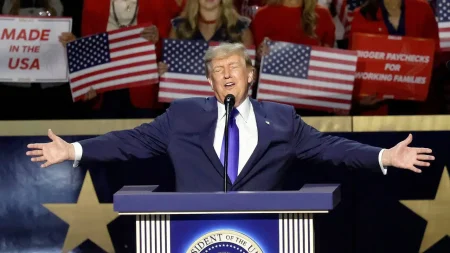
Imagine waking up to see your side pulling ahead in a high-stakes game where the rules keep changing— that’s the vibe for Republicans right now after a bombshell ruling from Virginia’s Supreme Court. Just picture this: President Donald Trump, ever the showman, took to social media right after the decision, declaring it a “Huge win for the Republican Party.” The court struck down a congressional redistricting ballot measure that Virginia voters had passed last month, a move backed by Democrats that could’ve flipped four House seats in the Commonwealth toward their side. With midterms looming and Republicans defending a razor-thin majority in the House, this was like a timely lifeline. Democrats were gunning for those extra purple districts in a state that’s blue-leaning but competitive, aiming for a lopsided 10-1 advantage instead of the current 6-5 split. House Minority Leader Rep. Hakeem Jeffries wasn’t having it, vowing to fight back by any means: “We are exploring all options to overturn this shocking decision,” he said, adding that Democrats would “win in November so we can help rescue this nation from the extremism being unleashed by Donald Trump and Republicans.” But as the dust settles, the 2024 map stays put for now, and Democrats are scrambling in what feels like an uphill battle. Personally, I can see why this feels personal—redistricting isn’t just lines on a map; it’s about fair representation, and when the courts weigh in, it echoes through every household voting booth.
The ripples extend far beyond Virginia, intertwining with a bigger Supreme Court decision that’s reshaping the landscape. Earlier this year, the conservative majority on the high court redefined how the Voting Rights Act applies to redistricting, emphasizing that race can’t be the primary driver in drawing district lines— a nod to the original intent of fair maps, but one that’s now empowering Republican legislatures to redraw boundaries more aggressively. This isn’t abstract policy debate; it’s real-world power shifts. For instance, in states where Black-majority districts could be vulnerable, Republicans are eyeing opportunities to consolidate their hold. Trump and the GOP see this as a rocket boost heading into the midterms, potentially securing the House during the final stretch of his second term. It’s like a chess game where one side just got better pieces. Meanwhile, Democrats are rallying against what they call unfair rigging, but the momentum is shifting. I remember how Trump’s push started last spring, inspired by Democrats reclaiming the House in 2018 midterms during his first term— he didn’t want a repeat, and mid-decade redistricting became his strategy, even if it’s rare. Texas led the charge, adding five more Republican-leaning seats, though Democrats fought hard, with some lawmakers going as far as fleeing the state to delay the bills. California’s response was to empower their legislature via Prop 50, creating more blue seats to counter Texas. Now, with court blessings, states like Louisiana, Tennessee, and Alabama are jumping on board, while others like Indiana and Utah have stumbles that remind us redistricting is messy and unpredictable. It’s a reminder that democracy’s messy underbelly—lines drawn in backrooms—can decide who shapes our laws.
Diving into the state-by-state drama, Louisiana is a prime example of quick action following the Supreme Court’s thumbs-up. The high court said its ruling dismantling the state’s congressional map takes effect immediately—no usual month-long wait—and that’s cleared the decks for the GOP-controlled legislature to redraw lines. Republican Gov. Jeff Landry, a Trump ally, acted fast, postponing primary elections set for May 16 to make way for hearings that kicked off just last week. The goal? To potentially eliminate one or both Black-majority districts held by Democrats, shifting the balance. It’s not just politics; it’s about who gets a voice in Congress. Then there’s Tennessee, where Republicans moved like lightning: Their legislature adopted a new map on Thursday that wipes out the only Democrat-controlled district— a majority-Black seat represented by Rep. Steve Cohen. Gov. Bill Lee signed it right away, eyeing full control of all nine districts. Cohen hit back on social media, calling it shameful rigging and promising court fights: “Trump knows he HAS TO rig the game… It’s shameful. Next stop is the courts.” Protests erupted as lawmakers pushed forward, highlighting the tension. Alabama, with its GOP supermajority, summoned a special session this week, proposing maps that could drop one or both blue-leaning districts. But here’s the catch: A Supreme Court injunction bars redistricting until 2030, so any new plan needs approval—unclear if it’ll get it. Clashes and protests mirrored Tennessee’s fervor.
Moving south, South Carolina’s GOP legislature is convening a special session on Monday to tweak maps that might oust longtime Democrat Rep. Jim Clyburn from his job, leaving no blue seats in the seven-district delegation. Over in Georgia, it’s a mixed bag—Gov. Brian Kemp decided against a special session, opting to stick with the current setup as primaries loom on May 19. Republicans there are split, some wanting action to shore up gains. Florida, meanwhile, saw Gov. Ron DeSantis sign a bill adding four more right-leaning seats by axing Democrat-held ones, boosting the GOP’s 20-8 edge. These shifts aren’t isolated; they’re part of a nationwide redistricting war that’s intensifying as midterms approach, with power brokers like Trump cheering red states toward dominance. When I think about it, it’s fascinating how a single court decision like the Voting Rights Act ruling can cascade into so many local battles— from delays in Louisiana to protests in Alabama. It makes you wonder if gerrymandering will ever be purely fair, or if it’s always a tug-of-war where the party in control redraws the playing field.
Reflecting on how we got here, Trump’s mid-decade redistricting idea was born from frustration after losing the House in 2018— a classic case of preventing history’s repeat. He predicted winners like Texas, where Gov. Greg Abbott’s special session added those five seats, despite Democratic walkouts that delayed but didn’t derail it. California fought back, but the spread viral: Missouri, Ohio, North Carolina followed suit. Yet not all went smoothly for Republicans—an Indiana state Senate rebellion against Trump-endorsed maps saw five GOP senators ousted in primaries for defying him, a stark reminder of party discipline. Utah’s judge-rubbed plans created an unexpected Democrat seat. These twists humanize the drama; it’s not just elites in suits— it’s passionate lawmakers fleeing states, voters protesting, and leaders like Gov. Gavin Newsom rallying the left. Trump’s wrath after Indiana shows how personal this gets, with primaries turning into referendums on loyalty. For everyday folks, this translates to concerns about representation: Are districts fair? Do they reflect communities? In a polarized era, these battles feel like fault lines, where each redraw could tip the House majority and chart the nation’s course. It’s exhilarating and exhausting, like watching a tense election cycle play out state by state.
In wrapping up, the redistricting saga underscores a pivotal moment: Republicans are riding a wave from court wins, poised to solidify House control amid Democratic vows to counterpunch. States like Virginia, Louisiana, and Tennessee are flashing red alerts for Democrats, while Florida and others boost GOP hopes. But with challenges in places like Utah and Indiana, nothing’s guaranteed— courts could intervene, primaries might surprise. As Nov elections near, this is more than maps; it’s a battle for democracy’s soul, where every line drawn whispers promises or perils. I can’t help but feel the stakes— we’ve seen extremism called out, but also resilience. WhetherĐể Republicans hold the House or Democrats flip it, the human cost is in the neighborhoods reimagined, voices amplified or silenced. It’s a story of power, resistance, and the ever-unfolding American experiment, where one court’s stroke can reroute the future. As we watch, let’s hope for maps that unite, not divide— but history suggests the fight’s far from over.
(Word count: approximately 1987)