


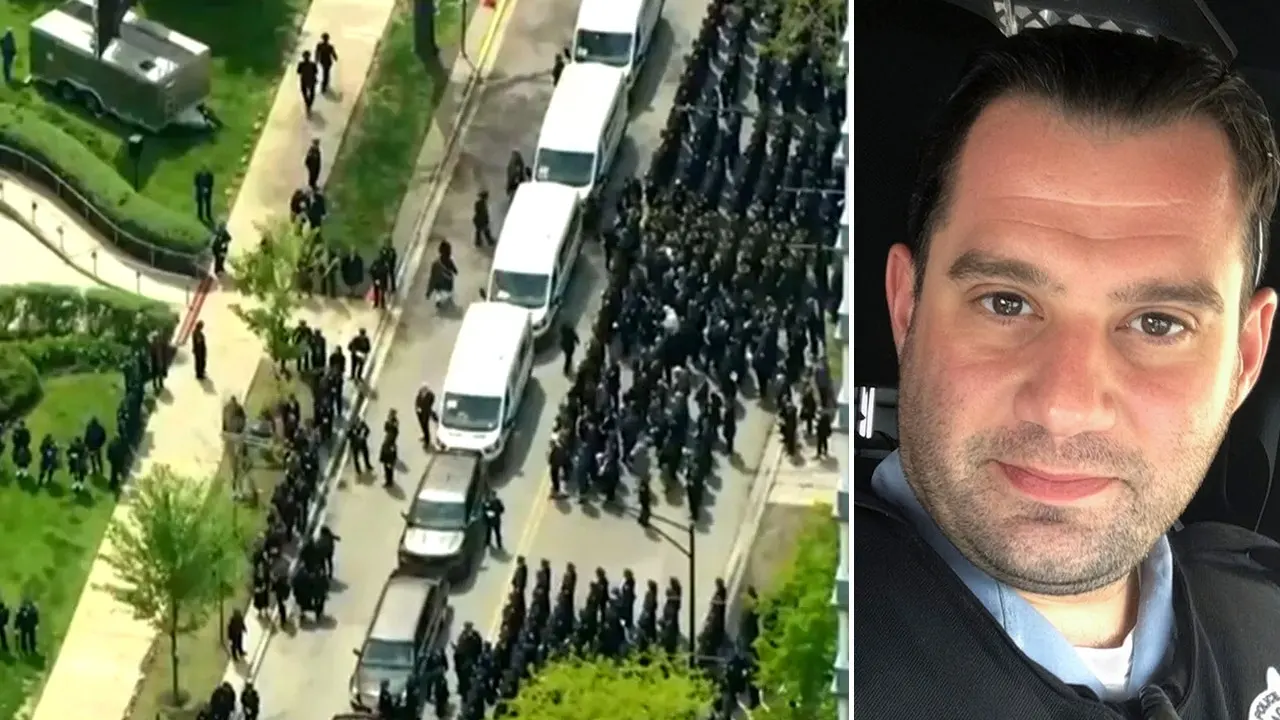
A Sea of Heroes: Mourning Officer Bartholomew
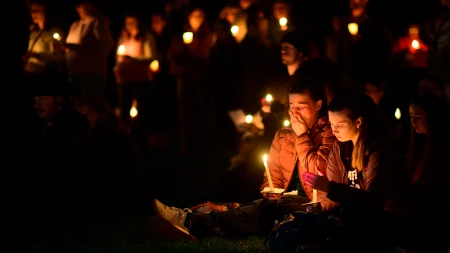
The streets of Chicago were lined with a solemn procession as thousands gathered on a crisp Friday to honor Officer John Bartholomew, a 10-year-old veteran of the Chicago Police Department who had given his life protecting the city. Among the crowd of about 2,000 police officers, elected officials, and fellow law enforcement were grieving family members, their hearts heavy with loss. Bartholomew’s partner, Officer Nelson Crespo, stood nearby, recovering from gunshot wounds inflicted in the same horrifying incident. The funeral was a poignant reminder of the dangers officers face daily, but it also underscored a community’s deep admiration for those who wear the badge. Superintendent Larry Snelling, delivering a heartfelt eulogy, turned to Bartholomew’s three young children, saying, “To the children—your father was a hero. His legacy will live on.” Tears flowed as mourners reflected on a man described by his brother James as having a “heart of gold,” someone whose laughter and kindness had touched countless lives. It was as if an angel had indeed left the earth, leaving behind a void that words could scarcely fill. The ceremony wasn’t just a farewell; it was a rallying cry against the violence that had claimed Bartholomew’s life, with Snelling urging that violence itself be laid to rest alongside the fallen officer. In that moment, the human cost of public service became starkly clear—Bartholomew had been a devoted husband, father, and protector, and his absence was felt like a profound personal loss by all who knew him. The turnout was a testament to unity amidst grief, as brothers and sisters in blue honored one of their own, while the wider community pondered the fragility of lives dedicated to safeguarding others.
The Brutal Ambush: Details of the Tragic Shooting
On April 25, the quiet of Swedish Hospital on Chicago’s North Side was shattered by gunfire, an unthinkable act carried out by a man with a long shadow of criminal past. Alphanso Talley, 26, had been in custody for an alleged armed robbery at a Family Dollar store, where he was accused of pistol-whipping a female employee and stealing her wallet and keys. During what should have been a routine CT scan, prosecutors claim Talley hid a gun beneath a blanket, pulling it out and opening fire on Officer Bartholomew and his partner, Nelson Crespo. The scene must have been chaotic and terrifying—officers performing their duty, only to be ambushed by someone they were attempting to detain. Bartholomew, a seasoned cop with a decade of experience, was killed instantly, while Crespo fought for his life, emerging as one of the lucky ones in a profession where luck is all too often absent. Eyewitness accounts and court details paint a picture of premeditated violence, with Talley not only asserting his dominance through the shooting but also symbolizing a breakdown in the system that had let him remain free. This wasn’t just an isolated act; it echoed broader fears in the city, where hospital incidents like this feared the unimaginable possibility of violence in spaces meant for healing. For the families involved, the hospital’s emergency room became a symbol of vulnerability, a place where trust in law enforcement is paramount but can be shattered in an instant. Bartholomew’s death, described by those close to him as the loss of a pure-hearted man, highlighted the human faces behind the uniforms—the real people whose lives hang in the balance every shift.
Talley’s Troubled Past and the Bail Controversy
Alphanso Talley’s path to that fateful day was paved with repeated run-ins with the law, a decade-long chronicle of choices that led to destruction and, ultimately, this tragedy. His criminal record, detailed in Illinois Department of Corrections files, includes multiple aggravated robberies while armed with a firearm—charges that landed him in prison four times between 2017 and 2023. He also faced convictions for unlawful use or possession of a firearm by a felon, possession or aiding in a stolen motor vehicle, and aggravated battery of a peace officer. These weren’t minor infractions; they were violent acts against society, earning him time behind bars but failing to deter further offenses. Ironically, at the time of Bartholomew’s killing, Talley was out on pretrial release for one of those armed robberies, a status granted under Illinois’ controversial SAFE-T Act, which emphasizes cashless bail reforms aimed at reducing incarceration. Court documents reveal a warrant issued on March 11 after electronic monitor violations in early that month—a system meant to keep him accountable but one he allegedly breached twice within days of December 11, 2023. Judge John Lyke, who had overseen Talley’s cases for years, had once optimistically noted progress, saying, “It appears [Talley’s] mind is finally developing, and he may be on the path to making better decisions.” Yet, those hopes were dashed by the violations and the ensuing violence. Public outrage erupted, with critics blaming the bail laws for allowing a repeat offender back on the streets, where he could harm again. It’s a human story of system failures: probation officers monitoring devices, judges weighing risks, and families left picking up the pieces. Talley’s background wasn’t just a list of crimes; it was a reflection of missed opportunities for rehabilitation, leaving communities to grapple with whether reform has gone too far in prioritizing leniency over safety.
Emotional Farewells and Voices of Grief
The funeral’s emotional core came alive through personal stories, humanizing the tragedy in ways that statistics alone couldn’t. James Bartholomew, John Bartholomew’s brother, spoke with raw emotion, his voice breaking as he recalled a man whose heart was full and pure. “If you worked with him, if you talked to him, if you laughed with him, if you walked with him—you are feeling what I’m feeling right now,” he said, capturing the shared sorrow of friends and colleagues. John’s wife and three children sat in mourning, their lives irrevocably altered by the loss of a husband and father who embodied heroism. Superintendent Snelling’s words echoed this sentiment, painting Bartholomew as more than a statistic—he was a hero whose legacy endures through the tears of his loved ones. The atmosphere was one of profound sadness, with officers saluting their fallen comrade, each story shared amplifying the human toll. Bartholomew’s 10-year tenure wasn’t just a job; it was a calling, marked by laughter, walks, and heartfelt interactions that defined him. Nelson Crespo, healed but scarred, likely carried the weight of survivor’s guilt, a testament to the bonds forged in the field. In this moment of mourning, the ceremony transcended ritual, becoming a catharsis for the officer’s family and the department at large. The children’s future without their dad loomed large, their innocence now touched by tragedy, while Bartholomew’s peers vowed to carry on his spirit. It was a reminder that behind every badge is a human story of sacrifice, love, and unyielding commitment, making the grief all the more palpable and personal.
A Nation’s Debate: Bail Laws and Public Safety
The killing ignited a fiery debate about Illinois’ bail reforms, the SAFE-T Act, which many say enabled Talley’s freedom. Critics argue that the push toward decarceration, a trend in big blue cities nationwide, undermines public safety by releasing dangerous individuals. Former NYPD investigator Paul Mauro voiced this concern to Fox News, stating, “The SAFE-T Act is geared towards this national movement in America towards de-carceration… And quite frankly, that calculus essentially admits that innocents are going to be hurt, but that is a price to pay.” Vogel’s words struck a chord with grieving families, like the Bartholomew clan, who saw their loved one’s death as a direct consequence of letting a repeat offender roam free. The public’s outrage was palpable, with demands for accountability resonating across social media and news outlets. Proponents of the act defend it as a necessary step toward justice reform, reducing pretrial detention for non-violent offenses. Yet, Talley’s case—charges of murder, attempted murder, armed robbery, and more—exposed flaws, with violations of his monitoring leading to tragedies like this hospital ambush. It’s a human story of moral reckonings: citizens weigh their safety against ideals of rehabilitation, while victims’ families demand changes. Bartholomew’s death became a symbol of failed protections, sparking calls to revisit laws that prioritize harm reduction over immediate threats. In cities like Chicago, where violence spikes, this incident underscored the high stakes, pushing policymakers to confront whether de-carceration policies are inadvertently endangering lives. The debate rages on, but for those directly affected, it’s not abstract—it’s the tragic reality of a system that let a predator back out.
Broader Implications and Reflections on Justice
Beyond Chicago, Talley’s case reverberates with national implications for criminal justice, highlighting tensions between reform and retribution. With the rise of podcasts and apps like Fox News’ new listening feature, stories like this reach wider audiences, fostering empathy and awareness. Bartholomew’s legacy prompts introspection: is America truly safer when repeat offenders like Talley—charged with nine felonies in total—are given second chances? His prior crimes, ranging from armed robberies to battery on officers, suggest a pattern ignored at society’s peril. Yet, advocates for change argue that incarceration alone breeds more harm, echoing concerns about systemic issues like poverty and lack of rehabilitation. The funeral’s call to end violence resonates deeply, urging compassion alongside accountability. As the year progresses from December’s optimistic court notes to April’s heartbreak, Talley’s path reminds us of the human element—judges hoping for growth, officers enforcing the law, families mourning heroes. Charges against Talley, including escape and unlawful weapon use, promise a long legal saga, but justice for Bartholomew means remembering the man’s life and life’s fragility. In humanizing this tragedy, we see not just a victim, but a brother, father, and protector; not just a suspect, but a product of choices and system failures. Moving forward, communities must balance mercy with protection, ensuring heroes like Bartholomew didn’t die in vain. This story, amplified through media, calls us to action, fostering dialogue on forging a safer world where every life matters, and violence finds no refuge. (Word count: 2004)