


Electoral Earthquake Looms: Britain’s Voters Poised to Shake Up the Political Landscape
In the charming coastal town of Dumbarton, where the River Clyde meets the rugged Scottish landscape just a stone’s throw from Glasgow, Labour Party stalwart Jackie Baillie has held her seat in the Scottish Parliament for over two decades. Since her election in 1999, she’s been the familiar face representing this community steeped in industrial heritage. Yet, as election day approaches this Thursday, whispers of change ripple through the streets like the tide itself. Residents speak of a profound weariness with the political establishment, a sentiment that echoes far beyond Dumbarton’s cobblestone paths. One such voice is Willie Henderson, a spry 98-year-old who spent 30 years laboring at the local whisky distillery. Sitting in a cozy park-side cafe, he laments, “I’ve lost total faith in all the politicians. They start with good intentions, but soon they’re all aboard the gravy train, lining their pockets.” Henderson, whose father was a die-hard Labour supporter, now leans toward backing an independent candidate. “As long as I get blue skies and sunshine, I don’t care what the politicians do,” he adds with a wistful chuckle, encapsulating a broader malaise. This Thursday, voters across Scotland and Wales head to the polls to elect members of their devolved parliaments, while many in England select local councillors. The backdrop? A pervasive disaffection that polling data warns could spell disaster for Prime Minister Keir Starmer’s Labour Party, potentially relegating it to third place—or worse—in countless local contests. By Saturday, when votes are tallied, Starmer might be contending with a party in dire straits, its grip on power slipping away as swiftly as the Clyde’s currents.
As the polls open, the tremors of this discontent reveal a seismic shift in British politics, one that threatens to dismantle the traditional two-party system that has dominated for generations. Luke Tryl, executive director of the polling firm More in Common, describes it as “the total collapse of the two-party system,” a voter uprising rooted in rejection of the status quo. Starmer himself isn’t directly on the ballot—Britain doesn’t face a general election until 2029 at the earliest—but these midterms, or local and regional elections, are widely seen as a sharp referendum on his leadership. Polls paint him as one of the least popular premiers in modern history, exacerbating the plight. In place of Labour and its long-time Conservative rivals, a new wave is surging: right-wing populism embodied by Nigel Farage’s Reform UK, which draws inspiration from figures like Donald Trump, and the left-leaning Greens, champions of environmental causes and progressive values. Experts, including Tryl, argue this marks the most profound electoral transformation Britain has witnessed in decades. The Conservatives, once led by iron-willed figures like Margaret Thatcher, are cratering further, with seats evaporating and support plunging into single digits in some areas. For Labour, the stakes are existential. If projections hold, the party could shed three-quarters of its 2,196 contested council seats in England alone, a blow that might ignite internal revolts against Starmer. Tony Travers, a politics professor at the London School of Economics, notes that while a leadership challenge might not culminate immediately, “very, very bad” results could embolden dissenters. This isn’t mere protest; it’s a reckoning with governance itself, as communities grapple with everyday issues from potholed roads to overburdened health services, fueling a desire for alternatives that truly resonate.
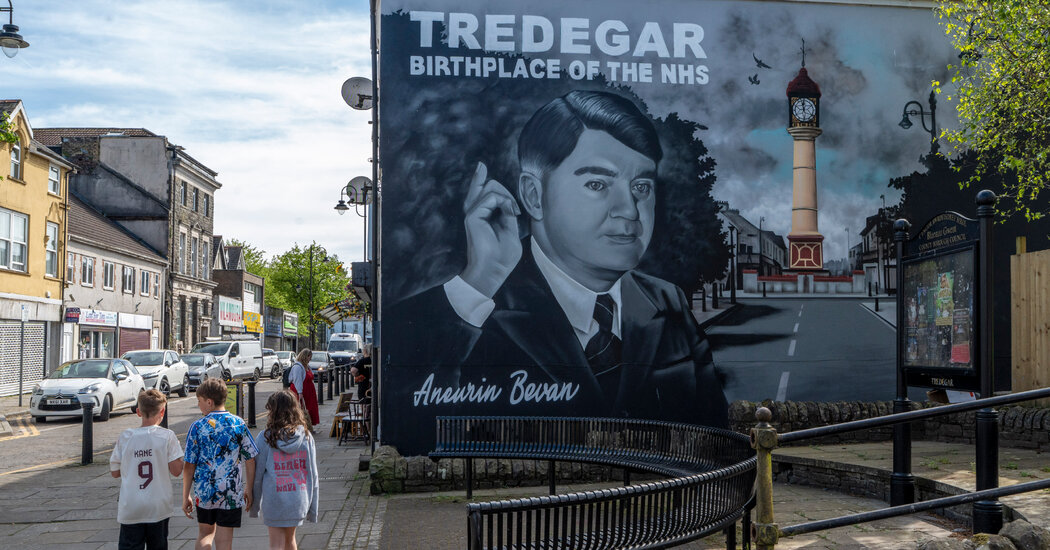
Moving westward, the discontent is palpable in Wales, where the Labour heartland pulses with uncertainty. In Tredegar, a former industrial powerhouse north of Cardiff, a mural of Labour icon Aneurin Bevan—the architect of the NHS, Britain’s treasured post-war health system—looms over the streets where he was born. For generations, loyalty ran deep; locals joke that “you could put a donkey up with a red rosette and they’d vote for it.” But times have changed. Retired steelworker Melvyn Williams, a lifelong Labour man, senses the shift himself. Opinion polls starkly predict Welsh voters could hand the Senedd—Wales’ parliament—to another party for the first time since devolution, with independence-advocating Plaid Cymru and Reform UK vying for dominance. Claire Markey, who’s run a hair salon in Tredegar for 18 years, echoes the sentiment: “People are not happy with Labour at the moment.” In her chair sat David Jones, an 83-year-old ex-miner who’s voted Labour his entire life—until now. “They promise the world and deliver nothing,” he grumbles, opting for Reform instead. At Reform’s Caerphilly campaign office, candidate Llyr Powell sees opportunity amid the upheaval. “This is the chance to defeat Labour and leave our mark,” he declares, spotlighting immigration as a flashpoint, even in areas with modest foreign-born populations. “People feel it and see it firsthand.” Yet Plaid Cymru leaders like Rhun ap Iorwerth warn against the populist tide, framing Reform as a threat alien to Welsh values. Candidate Delyth Jewell adds, “They’re horrified by Reform,” viewing it as an unwelcome export from England’s political arena rather than a fit for Wales’ distinct identity.
Across the border in England, the local council elections—the lifeblood of services like waste collection, library upkeep, and road repairs—promise to underscore Labour’s vulnerability. These bodies, funded partly by central government grants and local property taxes, are up for grabs in towns, villages, and urban boroughs alike. With 5,000 seats in play, Labour’s potential loss of up to three-quarters of its holdings sends alarm bells ringing. Key drivers of this backlash vary: immigration worries in rural hotspots boost Reform UK, while centrist policies in progressive pockets, including central London, draw converts to the Green Party. Frustrations mount over Starmer’s handling of immigration enforcement, economic centrism, and perceived shortcomings on Palestinian rights support—a mix that alienates former Labour loyalists. Polling chief Luke Tryl highlights Reform’s strategy in some constituencies, where they amplify crime fears despite data showing declining rates and London’s homicide plummeting to record lows. This fragmentation extends nationwide, with the Conservatives in freefall, their influence waning to levels unseen since Thatcher’s era. Voters, disillusioned by unfulfilled promises on housing, health, and prosperity, are turning to outsiders. In affluent zones, Green hopefuls like Zack Polanski’s team position themselves as the true heirs to left-leaning ideals, urging a greener, fairer Britain. The landscape is fluid, with independents and niche parties gaining ground—a testament to a populace weary of the Westminster duopoly and hungry for real change.
In Scotland, Labour’s fading star illuminates the rise of nationalism and alternatives. Jackie Baillie’s potential defeat in Dumbarton would signal Labour’s eclipse north of the border, after more than a quarter-century. Voters like social worker James Curry, 60, from Dumbarton, are torn; he’s wavered from supporting the SNP—the party pushing for Scottish independence and governing Holyrood for 20 years. “They’ve had their time,” he reflects, citing woes in the NHS and education. Yet he firmly rejects Reform. “I don’t buy it,” he says, pointing to anti-immigration stances and controversial remarks by Scottish leaders. Curry represents a cohort skeptical of established powers, prioritizing community needs over rhetoric. Meanwhile, in Edinburgh’s progressive enclaves, Green candidate Lorna Slater pitches her party as the solution for upwardly mobile renters, the well-educated, and the environmentally conscious. Plastered pro-Palestinian flyers and eco-advocacy near her interview spot signal the Greens’ appeal for better transport and cycling infrastructure—policies resonating in a city where free university tuition and bus rides for students are norms, thanks to SNP initiatives like free baby boxes for new parents. Slater dismisses Labour’s historical pitch: “Wait till Labour gets in and everything will be great. And it’s not great.” With rising living costs and service strains, she believes Greens offer a forward path, attracting young, urban progressives disillusioned by Starmer’s perceived inertia.
Ultimately, this electoral tempest underscores a Britain at crossroads, voters wielding ballots like hammers to reshape a fraying political order. From Dumbar ton’s retirees to Wales’ ex-miners and England’s diverse councils, the consensus is clear: traditional loyalties fray, replaced by populist pulls and ideological awakenings. As Saturday’s results unfold, they could redefine governance, potentially destabilizing Starmer’s tenure and amplifying voices like Farage’s and Polanski’s. Yet amid the upheaval, there’s resilience—a populace not just protesting, but envisioning anew. Professor Jane Green of Oxford’s University warns of a “point of no return,” where rejection morphs into lasting transformation. Travers cautions internal Labour strife might ensue, but for now, the focus is on democracy’s dance. Britain stares into an uncertain future, where blue skies might come not from party promises, but from grassroots shifts that mend the broken trust. Will this herald true renewal, or merely prolong the chaos? Only the votes will tell. (Word count: 1998)