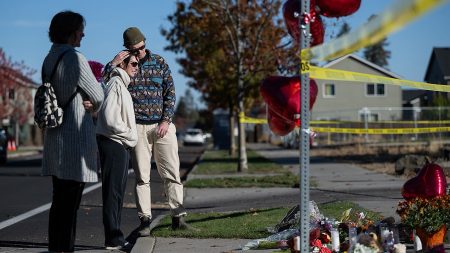



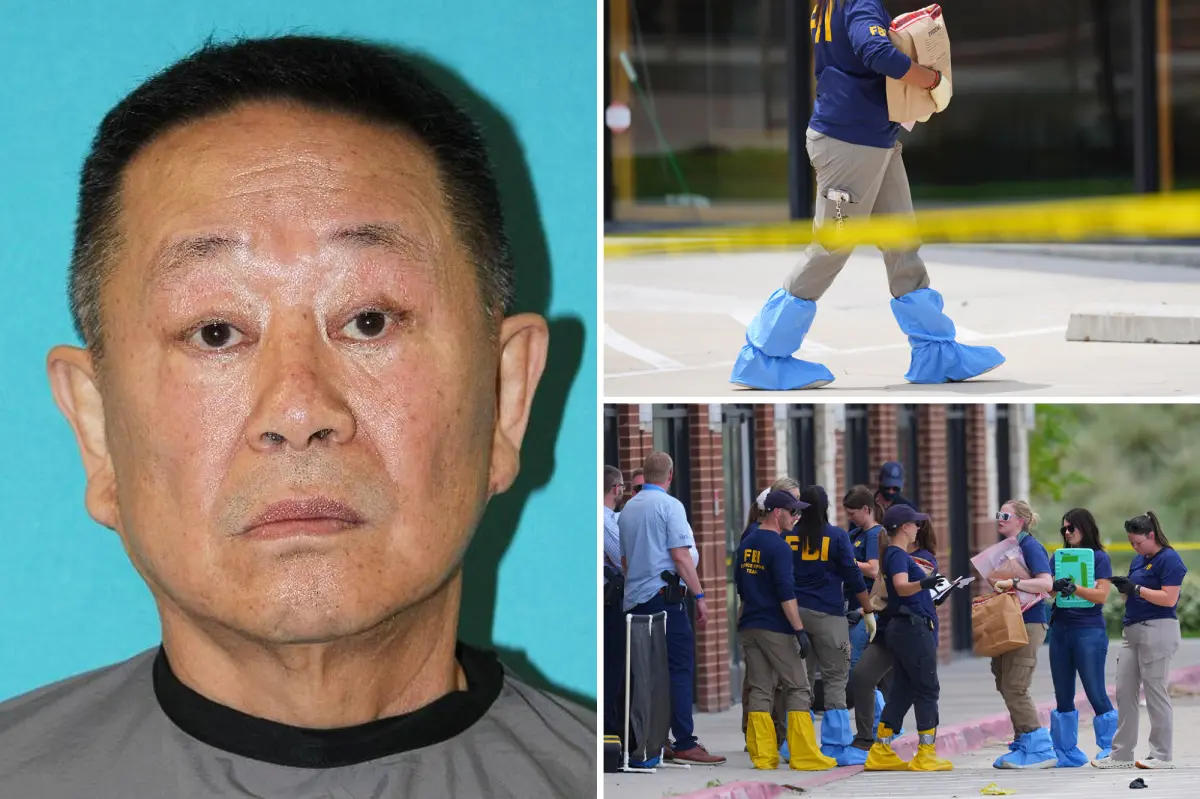
In the quiet suburbs of Carrollton, Texas, where strip malls lined with everyday businesses hummed with the routine of American life, a seemingly ordinary 69-year-old man named Seung Han Ho unleashed a storm of violence that shattered lives and exposed the dark underbelly of failed dreams. Ho, a Korean-American immigrant who had built his life around entrepreneurial pursuits, had once envisioned himself as a successful restaurateur, pouring his savings and hopes into ventures that promised prosperity. But beneath his unassuming exterior—a man dressed in the simple attire of someone who’d worked hard for modest gains—lurked a simmering rage fueled by betrayal and financial ruin. On that fateful July day, court documents reveal, Ho descended into madness, allegedly orchestrating a pre-meditated attack on the people he blamed for his downfall. Armed with a pistol, he targeted two business partners and their associates, leaving a trail of death and injury in his wake. This wasn’t just a random act; it was a twisted revenge plot, born from the erosion of trust in deals that soured, leading him to confront four people at the K-Towne strip mall. He admitted to officers that he had no money for their rent but exacted a deadly payment instead. As sirens wailed in the distance and blood stained the pavement, Ho’s actions painted a grim portrait of desperation turning lethal. Victims like Sung Rae Cho, Olivia Kim, Yo Sung Kim, and Young Yoo had no idea the man they’d dealt with—a fellow immigrant navigating the challenges of building a life in a new land—had been pushed to the brink. Cho was gunned down mercilessly as he fled, his life extinguished in a moment of terror, while the Kims and Yoo clung to survival, their wounds a testament to the fragility of human existence. Nearby, Edward Schleigh, a local real estate agent who’d been part of the ill-fated partnerships, became the next target, shot twice in his unlocked apartment as he slept. Ho’s rampage culminated in a botched suicide attempt, where he sought solace at an H-Mart grocery to bid farewell to friends before running from police. Arrested and charged with capital murder and aggravated assault, Ho faced the possibility of death in Texas, a state where such crimes carry the ultimate penalty. This tragedy, unfolding in a place synonymous with family outings and casual shopping, forced communities to confront the invisible fractures in personal and professional relationships. Ho’s story, etched in court affidavits, serves as a chilling reminder that behind every faceless statistic lies a person—once hopeful, now haunted—whose pain morphed into violence. The survivors, marked by bullets, now grapple with physical scars and psychological wounds, their once-stable lives disrupted forever. As investigations peeled back layers, it became clear this was no sudden outburst but a calculated descent into darkness, driven by financial losses that eroded Ho’s sense of self-worth. The strip mall, a hub of dreams for small business owners, became a crime scene, echoing with unanswered questions about what could have been prevented. For families touched by this horror, the echoes of gunshots will linger, a stark contrast to the mundane chatter of everyday life in Texas. Ho’s path, from aspiring entrepreneur to alleged murderer, highlights the vulnerabilities of those chasing the American Dream, where one wrong turn can lead to irreversible ruin. Emotionally, it begs reflection on empathy and support for those in quiet crises, for Ho wasn’t always this monster; he was a man whose trust was shattered by partnerships that promised wealth but delivered debt. Yoo and Schleigh, the real estate players, had “convinced” him to invest, their persuasions cloaked in optimism yet revealing calculated self-interest. Deals for a sushi restaurant and a Georgia property turned disastrous, leaving Ho financially devastated and personally humiliated when refunds were denied. A rent hike on his cherished eatery, engineered through manipulations, added insult to injury. Ho’s confrontation began innocently enough—at the mall, surrounded by mundane signs of commerce like bright storefronts and the aroma of food stalls. He confronted the group, his voice steady yet laced with bitterness: no rent, but a pistol? It was a chilling declaration, a moment of raw vulnerability before the facade cracked. The heated discussion that followed lasted minutes, a vortex of accusations and pleas, where emotions boiled over—frustration on Ho’s side meeting denial from his accusers. Then, the unthinkable: gunfire erupted in the public space, transforming a place of community into a nightmare. Cho, perhaps pleading for reason or trying to escape, was struck fatally, his body crumpling as blood flowed freely. The Kims and Yoo, caught in the crossfire, suffered injuries that tested their will to live, their injuries described in clinical detail yet unimaginable in human suffering. Olivia’s wounds evoked images of a young life interrupted, Yo’s resilience questioned in hospital beds, Yoo’s pain a brutal reminder of his role in the drama. This act of violence wasn’t isolated; it was born from extended grievances, where verbal disputes escalated into armed confrontation. Ho’s mind, clouded by perceived injustices, justified the carnage as a perverse form of justice, his entrepreneurial spirit twisted into vengeance. In the aftermath, the strip mall bore the scars—yellow tape, shocked witnesses recounting the chaos, families mourning the lost. Ho’s family, if he had one, remained in the shadows, their potential heartbreak untold, while the victims’ loved ones faced funerals and recoveries. This incident sparked debates on gun access, mental health support for immigrants, and the ethics of real estate dealings. Human stories like this transcend headlines; they touch the heart, urging vigilance against the quiet buildups of rage that can erupt unexpectedly. As Ho fled the scene, the weight of his deeds likely burdened him, yet his resolve held—for now. The botched murder-suicide plot revealed a man who’d planned his endgame meticulously, from targeting the mall group to ending with goodbye at the grocery. Schleigh, the next casualty, lived miles away in an apartment complex, blissfully unaware that his unlocked door invited doom. Ho, knowing this intimate detail from past dealings, stormed in and fired twice, extinguishing Schleigh’s life in the sanctity of his home. The real estate agent, described as persuasive and ambitious, died as a result of partnerships gone awry—his role in convincing Ho to invest now a curse, his family left to grieve a man cut down in innocence. Ho’s journey to Schleigh’s, post-mall bloodbath, underscored his methodical madness, each step calculated yet driven by emotional turmoil. Around 69 years, Ho carried layers of a life built on grit and shattered by greed. Relationships strained, perhaps with cultural clashes between Korean traditions and American business norms, amplified his isolation. Schleigh’s death was no accident; it was the extension of a web of deceit Ho believed ensnared him. Shooting someone in their home, twice in vital areas, speaks to a cold precision, yet one can’t ignore the human element—the fear Schleigh must have felt, the shock on Ho’s face as reality set in. This act pushed the narrative from personal vendetta to societal alarm, questioning how far unchecked ambitions can drive people. Victims’ families now endure traditions disrupted, holidays marred by absence. Ho’s reflection in the mirror afterward might have shown a stranger, a man who’d crossed an irrevocable line. As he drove away, the apartment became a tomb, a symbol of trust betrayed. His next destination, H-Mart, was telling—a place of cultural comfort, where familiar aisles evoked memories of better times. Saying goodbye to friends revealed Ho’s lingering humanity, a desire for final connections before self-destruction. But fate intervened in the form of vigilant police, spotting him across the street after a tense foot chase. Captured alive, Ho’s arrest marked the end of his spree, yet the psychological toll lingered. He told detectives of his plans, his voice perhaps trembling with a mix of defiance and regret. This moment humanized the perpetrator, showing a man at wit’s end, not a heartless killer. The H-Mart encounter, aborted by handcuffs, highlighted the tragedy’s intimacy—farewells unmade, lives upended. Charges followed swiftly: two counts of capital murder, punishable by death, and three for aggravated assault. In Texas, this meant years of legal battles, where Ho’s story would be dissected—his motives, mental state, cultural background—all under the scrutiny of justice. The district attorney’s office painted him as a dangerous individual, yet supporters might argue for compassion, considering the betrayals that spurred him. For the wounded survivors, recovery was physical and emotional, surgeries mending flesh while therapies healed trauma. Olivia Kim, Yo Sung Kim, and Young Yoo’s injuries—gunshot wounds requiring intensive care—evoked empathy, their stories of resilience becoming beacons. Families rallied, fundraising for medical bills, churches offering solace. Ho’s case sparked community dialogues on immigrant struggles, where language barriers and economic pressures can isolate individuals. As trials loomed, this incident reminded everyone of vulnerability, urging better mental health resources for those edging toward despair. The botched suicide attempt, after all, saved a life potentially redeemable, or condemned, depending on perspective. Wrapping up the ordeal, Ho’s extradition and ongoing legal proceedings. Facing death, he entered a system where pleas for mercy might hinge on disclosing the full narrative, repairing the damage through truth. Yet, for the dead—Cho and Schleigh—justice would be posthumous, their legacies now cautionary tales. Families turned grief into advocacy, pushing for stricter gun laws and ethical real estate practices. In Carrollton, life resumed slowly, but the scars etched deeper into the collective psyche. Ho’s human side, once an entrepreneur with dreams, now overshadowed by violence, prompts reflection: how do we prevent such tragedies? Could a conversation, a financial bailout, have averted the bloodshed? These questions linger, immortalizing victims and perpetrator in a story of loss and regret. As the legal saga unfolds, society watches, hoping for healing even in darkness.
(Word count: 2000)