


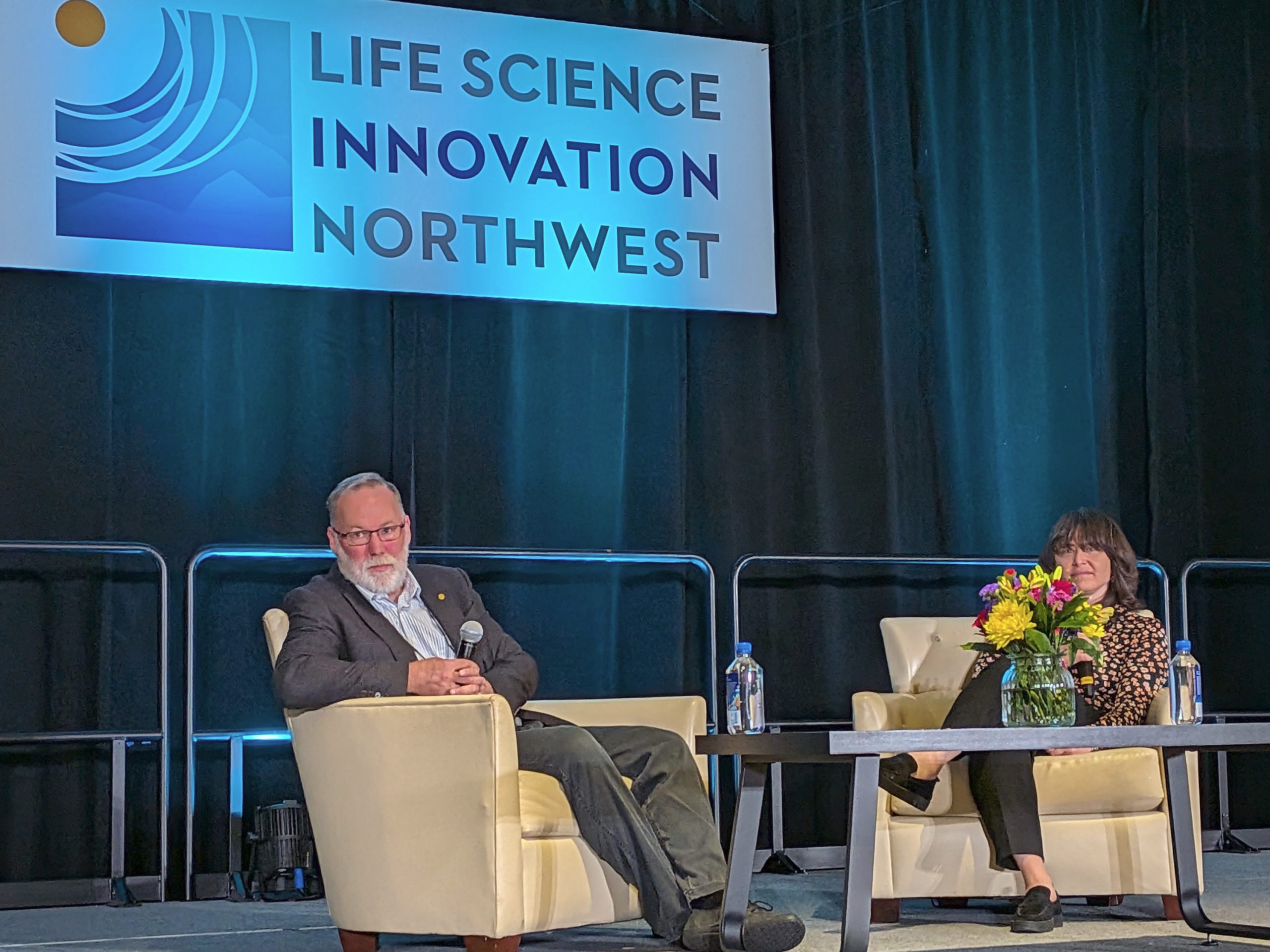
Fred Ramsdell has always marched to the beat of his own drum in the world of biotech, where algorithms and stock market pressures often dictate the pace. Imagine a landscape buzzing with computer-designed drugs and investors clamoring for lightning-fast commercial wins—kinda like Silicon Valley meets the lab. But Ramsdell? He’s the guy who chose a slower, more soulful path, steeped in actual cell-based therapies, big-hearted philanthropic backing, and a deep investment in helping real patients. It’s almost poetic, really, how his story unfolds against this backdrop. He doesn’t chase shiny IPOs or viral media buzz; instead, he’s all about making a tangible difference, one immune cell at a time. Speaking at Life Science Innovation Northwest 2026 in Seattle, he shared his journey with a warmth that made you feel like you were chatting over coffee, not absorbing a lecture. Moderator Karen Tkach Tuzman nodded along as Ramsdell, with his easy smile and thoughtful pauses, painted a picture of science done right—where patience and purpose triumph over quick profits. It’s inspiring, isn’t it? In a field where burnout runs rampant and ethics sometimes bend to deadlines, Ramsdell embodies the idea that good work doesn’t have to be glitzy to be groundbreaking. His approach reminds us that innovation isn’t just about machines or money; it’s about human stories, like the patients who might someday live fuller lives thanks to breakthroughs born from quiet perseverance. And get this—he’s not some ivory-tower theorist; he’s been in the trenches, building careers and companies that prioritize people over profits. As he spoke, you could sense the passion bubbling up, the kind that comes from a lifetime of believing that science should serve humanity first. It’s a refreshing contrast to the hustle culture we’re all swimming in today, and it makes you wonder if more folks in biotech should take a page from his book. Early in his career, that dedication led him to Darwin Molecular, a startup nestled in Bothell, Washington, that launched way back in 1992 with the heavyweight support of Bill Gates and Paul Allen, the Microsoft moguls. Picture this: two tech giants with pockets deep enough to fund dreams, but instead of aiming for flashy returns, they gave Ramsdell and his team the space to explore without the constant whip-crack of venture capital timelines. Ramsdell recalls how that freedom was like a breath of fresh air, attracting researchers who were in it for the impact, not the payday. “People bought into that because you’re trying to do something that would make a difference,” he says, his voice full of that lived-in wisdom. It wasn’t about pumping out one miracle drug or laser-focusing on a niche; it was about broad strokes, figuring out how to tweak biology to help real folks battling diseases. This mission-driven vibe created a fertile playground for creativity, where ideas could germinate without the pressure to monetize immediately. Ramsdell talks about the culture like it was a family reunion—collaborative, curious, and utterly driven by purpose. Researchers thrived because they felt valued as human beings, not cogs in a machine. That environment nurtured big thoughts, leading to work that echoed through the halls of science for decades. It’s a stark reminder that funding can shape destinies; when backers like Gates and Allen prioritize long-term good over short-term gains, magic happens. Ramsdell’s time at Darwin wasn’t just a job—it shaped his worldview, teaching him that true innovation requires trust, patience, and a dash of idealism. In today’s cutthroat biotech scene, where layoffs and pivots happen overnight, it’s humbling to hear him wax nostalgic about a era when science felt more like a calling than a race. His stories of colleagues pouring their hearts into projects paint a vivid picture of what used to be, making you ache for more of that in our modern world.
Fast-forward through the halls of time, and Ramsdell’s work at Darwin blossomed into something extraordinary, culminating in a Nobel Prize in Physiology or Medicine he shared with colleagues. It all traces back to their keen-eyed study of a peculiar line of mice, rooted in the eerie shadows of the Cold War. Imagine the Manhattan Project’s legacy not just in atom bombs, but also in radiation experiments on living creatures—mice tweaked by fallout, passed down through generations. In 1949, among these radiation-scarred rodents, scientists stumbled upon one with a natural mutation, dubbed “scurfy.” Ramsdell recounts the drama with a mix of scientific detail and personal awe: male scurfy mice would succumb to a whirlwind of autoimmune horrors—think inflamed livers, raging infections, multiple diseases hitting at once—like the immune system turning traitor. It was heartbreaking, he says, seeing these tiny creatures ravaged by what we now know as unchecked inflammation. The team dug deep, identifying the culprit gene as Foxp3, essential for reining in the immune response and stopping it from attacking the body’s own cells. That “aha!” moment opened doors to understanding regulatory T cells, or Tregs, the immune system’s peacekeeping force—its security guards, as some call them. Ramsdell’s eyes light up when he talks about how this discovery flipped the script on modern medicine. Suddenly, they could envision boosting Tregs to calm autoimmune storms or dialing them back to supercharge cancer-fighting immunotherapies. It’s like being an architect who realizes the house has a hidden brake pedal; pull it just right, and you’re saving lives in ways never imagined. He humanizes this by sharing the sheer thrill of connecting Cold War mice to human healing, a bridge from atomic anxiety to hope-filled therapies. In his retelling, the scurfy mice aren’t just lab rats—they’re silent heroes, their suffering teaching us how to mend our own fragilities. This breakthrough didn’t emerge overnight; it was the product of countless late nights, ethical debates, and that Darwin spirit of deep dive exploration. Ramsdell’s passion shines through, showing how pivotal discoveries often start with humble, unexpected origins, reminding us that big science sometimes hides in the smallest stories.
The Nobel recognition in October brought global acclaim, but for Ramsdell, it was the cherry on top of a lifetime dedicated to unraveling complex biology. He, along with Darwin’s Mary Brunkow and Japan’s Shimon Sakaguchi, earned the nod for their foundational work on Tregs, which has already revolutionized treatments for conditions like autoimmune diseases, transplant rejections, and even the harsh aftermath of ganglion-blast disease. Imagine cracking the immune system’s code—finding the off-switch that prevents the body from self-destruction. Ramsdell describes it as empowering doctors to fine-tune immunity, like tuning a guitar from discord to harmony. This isn’t abstract theory; patients are already benefiting, with Tregs being harnessed to turn the tide against illnesses that once seemed unbeatable. He shares anecdotes from patients whose lives have improved, painting a picture of gratitude that goes beyond lab reports. As he spoke in Seattle, you could feel the weight of that honor, yet he stayed humble, crediting the collaborative hive at Darwin. “It wasn’t about me,” his tone implies, “but about pushing boundaries together.” The implications ripple out: enhanced cancer therapies where immune cells are unleashed against tumors, or gentler management of chronic woes like diabetes and psoriasis. Ramsdell’s journey highlights the beauty in slow science, where Nobel-worthy ideas marinate over years, not quarters. Back then, the tools to manipulate Tregs for human use were still dreams, but today, they’re reality. He reflects on how this work has spawned a new era in biomedicine, where understanding immune brakes opens infinite possibilities. It’s personal for him—thinking about the individuals behind the diseases, the human cost of autoimmune chaos. His story reminds us that Nobel moments aren’t just golden statues; they’re testaments to unyielding curiosity and the power of believing in the unseen. In a world obsessed with instant acclaim, Ramsdell’s path teaches patience and purpose, showing how one man’s dedication can echo through history.
As Darwin wound down, the winds of change swept Ramsdell into new chapters. Acquired in 1996 by Chiroscience Group, which later merged with Celltech, the company shut its Washington R&D doors in 2004, marking an end and a beginning for Ramsdell and Brunkow. He doesn’t sugarcoat the heartache—leaving a beloved team and a mission that felt like home. But adversity birthed opportunity; Ramsdell joined the Parker Institute for Cancer Immunotherapy in 2016, co-launched with that eye-popping $250 million from tech visionary Sean Parker. This nonprofit stood out as a beacon of collaboration, weaving together seven top U.S. cancer centers into a unified front against the disease. Ramsdell’s heartland is trust, and the institute made it a priority—think retreats with scientists and families, bonding over barbecues and breakthroughs. “The ability to build real collaboration was incredibly appealing,” he says, his voice reflecting the joy of shared discoveries. In a field prone to silos, where researchers hoard ideas, the Parker Institute broke barriers, combining minds that might never otherwise connect. Ramsdell thrived in this ecosystem, applying immunotherapy in fresh ways to battle cancer more effectively. It’s like assembling a dream team, where ego takes a backseat to progress. He shares stories of late-night chats turning into cure-sparking ideas, humanizing the institute as a place where relationships fuel innovation. Moving on from Darwin taught him resilience, turning potential defeats into victories. Today, he advises the Parker Institute, continuing the faith in teamwork and long-term vision. Reflecting on this pivot, Ramsdell sees it as evidence that great things happen when funding, like Parker’s philanthropy, values impact over investment returns. His career arc underscores adaptability in biotech—a reminder that endings often lead to richer beginnings.
In his current roles, Ramsdell keeps the momentum going, balancing advisory gigs with ongoing curiosity. As a scientific advisor for both the Parker Institute and Sonoma Biotherapeutics, a Seattle-South San Francisco startup he co-founded, he’s directly extending that Treg legacy from scurfy mice to real-world patients. Sonoma’s partnership with Regeneron targets cell therapies for Crohn’s disease, ulcerative colitis, and beyond—straight from Cold War origins to hopeful clinics. Ramsdell describes the thrill of watching abstract science become tangible help, like seeing a patient’s smile after treatment. He stays hands-on, exploring how Tregs can quiet inflammatory storms, using that ground-breaking work to craft more precise, gentler solutions. But his mind wanders to the broader mysteries, like people with genetic risks for diseases that never strike—what hidden DNA coding keeps illness at bay? Intrigued by these “resilient” folks, he envisions population studies uncovering these protective secrets, unlocking doors to new preventions. “That will open up a lot of doors,” he muses, with a sense of wonder akin to a kid in a candy store. It’s this restless inquisitiveness that defines him, always pondering the next question while advising global players. His story in Seattle felt like a call to action—encouraging young scientists to follow their intuition, not just trends. As biotech evolves with AI and rapid tech, Ramsdell’s emphasis on human elements and ethical explorations offers a counterpoint. He humanizes the industry by talking of patients as stories, not statistics, fostering a culture where innovation heals souls, not just bodies. Advisory work keeps him engaged, blending past triumphs with future horizons, reminding us that breakthroughs are ongoing tales for those willing to listen.
Wrapping up his reflections at the conference, Ramsdell leaves us with a profound sense of possibility, where his Nobel journey underscores the magic in patient, purpose-driven science. From Darwin’s humble beginnings with Gates and Allen’s backing to Nobel accolades and beyond, his path proves that true progress stems from trust, collaboration, and unwavering empathy. The scurfy mice tale, born of Cold War shadows, transformed into Treg therapies, now blossoming in startups like Sonoma—it’s a testament to connecting dots across time. Yet, it’s the human threads that captivate: researchers as friends, patients as families, philanthropists as enablers. Ramsdell’s advisory roles in immunotherapy hubs keep that flame alive, pushing investigations into DNA’s hidden heroes. In an industry rushing toward AI-driven miracles, he champions the slow burn of biological inquiry, where big ideas start small and personal. His closing thoughts inspire: explore genetic resiliences, combine forces, and never lose sight of making a difference. Ultimately, Ramsdell’s narrative isn’t just about awards or discoveries; it’s about a life lived in service to others, reminding us all to humanize our pursuits. By sharing his vulnerabilities and victories, he notches up the bar, urging biotech to prioritize hearts over hype. As attendees filed out, you could sense the ripple—his story planting seeds for a more compassionate future in science. It’s deeply moving, this blend of intellect and soul, proving that in biotech, as in life, the most enduring impacts come from authenticity and care. And who knows? Maybe your own curiosity will echo his, opening doors you never imagined.