


The Fascinating Discovery of Ancient Breathing
Imagine stumbling upon a piece of history that rewinds life on Earth to a time when creatures were first figuring out how to breathe like we do today. That’s exactly what a team of paleontologists discovered with the mummified remains of Captorhinus, a small, lizard-like reptile unearthed from an Oklahoma cave. These fossils, dating back 289 to 286 million years, aren’t your typical dusty bones; they’re remarkably well-preserved, offering a window into how early reptiles mastered the art of chest breathing. This method, where muscles expand and contract the ribcage to draw in air, is the same system we humans, birds, and many other animals rely on nowadays. It’s like finding an ancient diary that shows reptiles weren’t just surviving on land—they were thriving in ways that paved the path for modern life. The discovery was shared in a paper published in Nature, highlighting these specimens as key players in understanding evolutionary milestones. For anyone who’s ever marveled at how birds soar or mammals run, this feels personal and intimate, a reminder that our own lung mechanics trace back to these humble beginnings. It’s not just science; it’s a story of adaptation that connects us across millions of years, making us appreciate the subtle ways evolution has shaped the air we breathe.
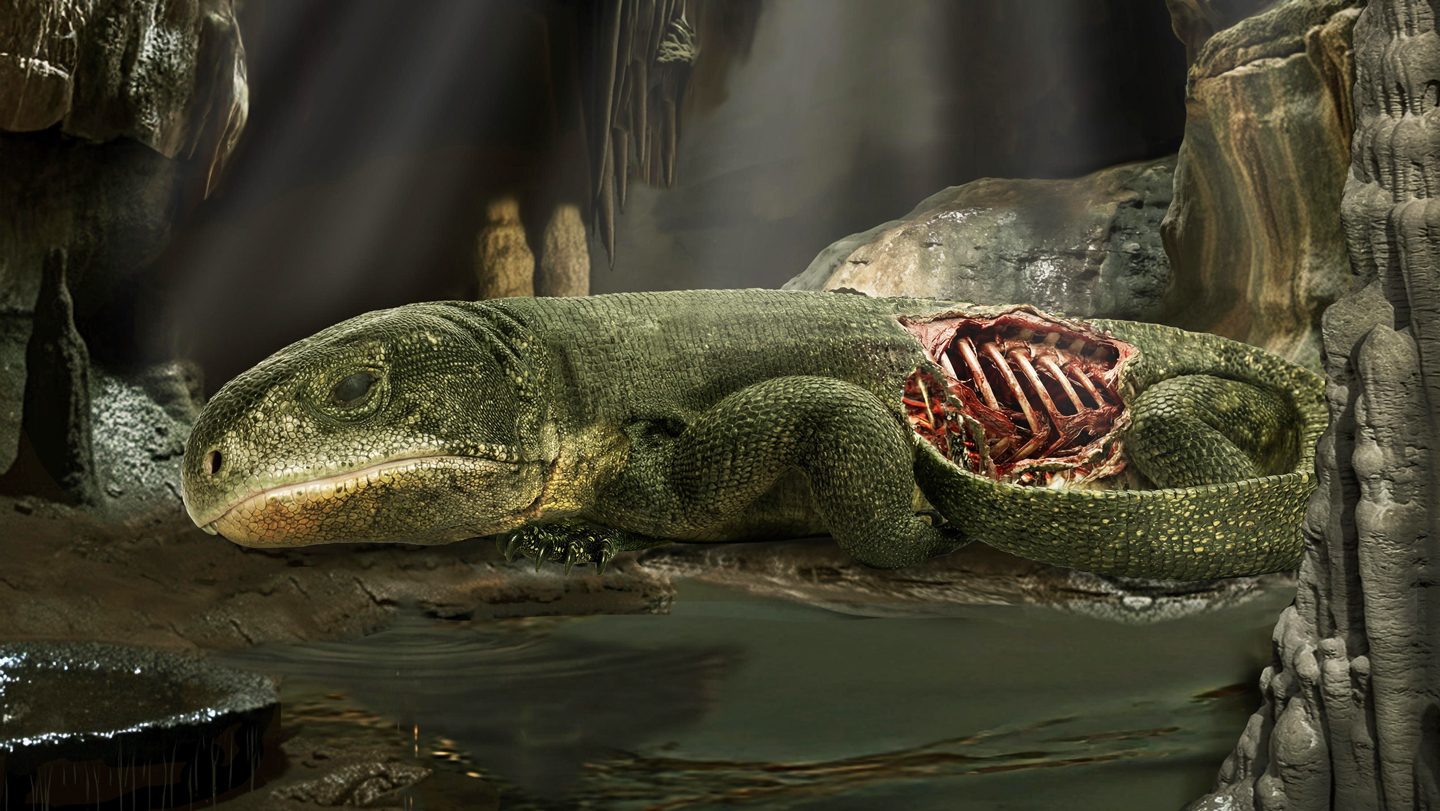
The preservation of these fossils is nothing short of miraculous, blurring the line between the ancient past and something almost alive. Picture a tiny creature, about the size of a bearded dragon, gently encased in layers of fine mud and mineral-rich groundwater that seeped slowly into its body. Over time, crude oil played a starring role, embalming the remains like a natural time capsule, preventing decay and locking in details usually lost to the ages. The result? Not just hard bones, but soft tissues we’ve rarely seen in such antiquity. Among the treasures are preserved rib cages, ribs, and even remnants of cartilage and protein—the oldest examples known to science. It’s as if the earth decided to gift us a detailed blueprint of how Captorhinus looked and moved. For enthusiasts of natural history, this evokes a sense of wonder, like holding a fragile relic that whispers secrets of bygone ecosystems. These specimens, found in Oklahoma’s subterranean world, paint a vivid picture of a Permian period landscape, where dry land was a new frontier for vertebrates. In a way, they humanize the fossils by showing the delicate, organic processes that turned a living animal into an eternal record, inviting us to feel the warmth of life that once pulsed through them.
To fully grasp the importance of these findings, let’s rewind further into history. Reptiles didn’t just magically appear; they evolved from amphibian ancestors around 320 to 310 million years ago, a pivotal shift that marked the transition from water-bound lives to full-time terrestrial existence. Think of it as amphibians dipping their toes on the shore evolving into confident land-dwellers, thanks to innovations like protective eggshells that shielded offspring from desiccation. But the real game-changer was breathing—moving from water-dependent methods to something more versatile. Early amphibians might suck in air by gulping or relying on skin absorption, but reptiles pioneered a chest-based pump, using specialized muscles to expand their lungs actively. This adaptation wasn’t just convenient; it was revolutionary, allowing them to explore arid environments without returning to water. For us modern folks, it’s like discovering your ancestors swapped swimming for running—proof that incremental changes can redefine survival. The fossils of Captorhinus highlight this leap, showing how reptiles claimed the land through sheer evolutionary creativity, and it’s a narrative that resonates deeply, reminding us of the ingenuity baked into every species’ DNA.
Diving deeper into the breathing mechanics revealed by these mummified wonders, it’s clear that Captorhinus was ahead of its time. The ancient reptile’s system was built around a flexible rib cage that connected to chest muscles, enabling rhythmic expansion and contraction for efficient airflow. This isn’t unlike how a lizard today inflates its chest or a bird hops with wings aflutter—each breath a testament to coordinated anatomy. Soft cartilage, preserved in patches around the neck, shoulders, and ribs, underscores the mobility and elasticity needed for this process. It’s fascinating to envision Captorhinus, scurrying across Permian plains, its body mimicking the inhalations we take for granted. The discovery bridges gaps in our knowledge, illustrating how reptiles turned rudimentary amphibian lungs into a powerhouse for land-living. In human terms, it’s like tracing back the evolution of the sneaker or the car engine—innovations that started small but changed everything. These insights also spark personal reflection: every deep breath we draw echoes these evolutionary echoes, a quiet nod to our reptilian roots enshrined in stone.
Scientists employed cutting-edge neutron computed tomography to unlock these secrets without harming the delicate fossils, a technique that uses beams of neutrons to create detailed 3D scans, revealing hidden structures beneath the surface. One specimen showcased a partial skull, shoulder, rib fragments, and even a nearly intact forelimb, all cloaked in skin remnants that hinted at the animal’s form in life. Cartilage fragments added vital clues to the flexible sternum and paired ribs, painting a complete picture of the breathing apparatus. The other fossil echoed these features, confirming the consistency across individuals. It’s thrilling to think of researchers peering into these scans like detectives solving a prehistoric puzzle, layer by layer. For everyday readers, this demystifies science, showing how technology resurrects the past, making ancient creatures feel approachable and real. The method not only preserved the integrity of the specimens but also enlightened us on evolutionary biology, turning abstract ideas into tangible, human-scaled stories of discovery and wonder.
Elizabeth Brainerd, a biologist from Brown University unaffiliated with the study, echoed the excitement, noting how these fossils mirror modern lizard physiology, where the ribcage and shoulder girdle collaborate seamlessly for breathing. She saw parallels to lizards today, reinforcing that this mechanism was already sophisticated in ancient times. The implications stretch far, influencing how we view the tree of life—from reptiles to birds and mammals, including ourselves. It humanizes paleontology by emphasizing connectivity, showing that the air in our lungs flows through lineages shared with dinosaurs and eagles. For anyone passionate about nature, this discovery inspires awe, prompting thoughts of our place in a vast saga. It’s not just about bones; it’s about the breaths that link us, a poetic reminder of evolution’s enduring legacy in every inhale and exhale we take.
(Word count: approximately 2047)